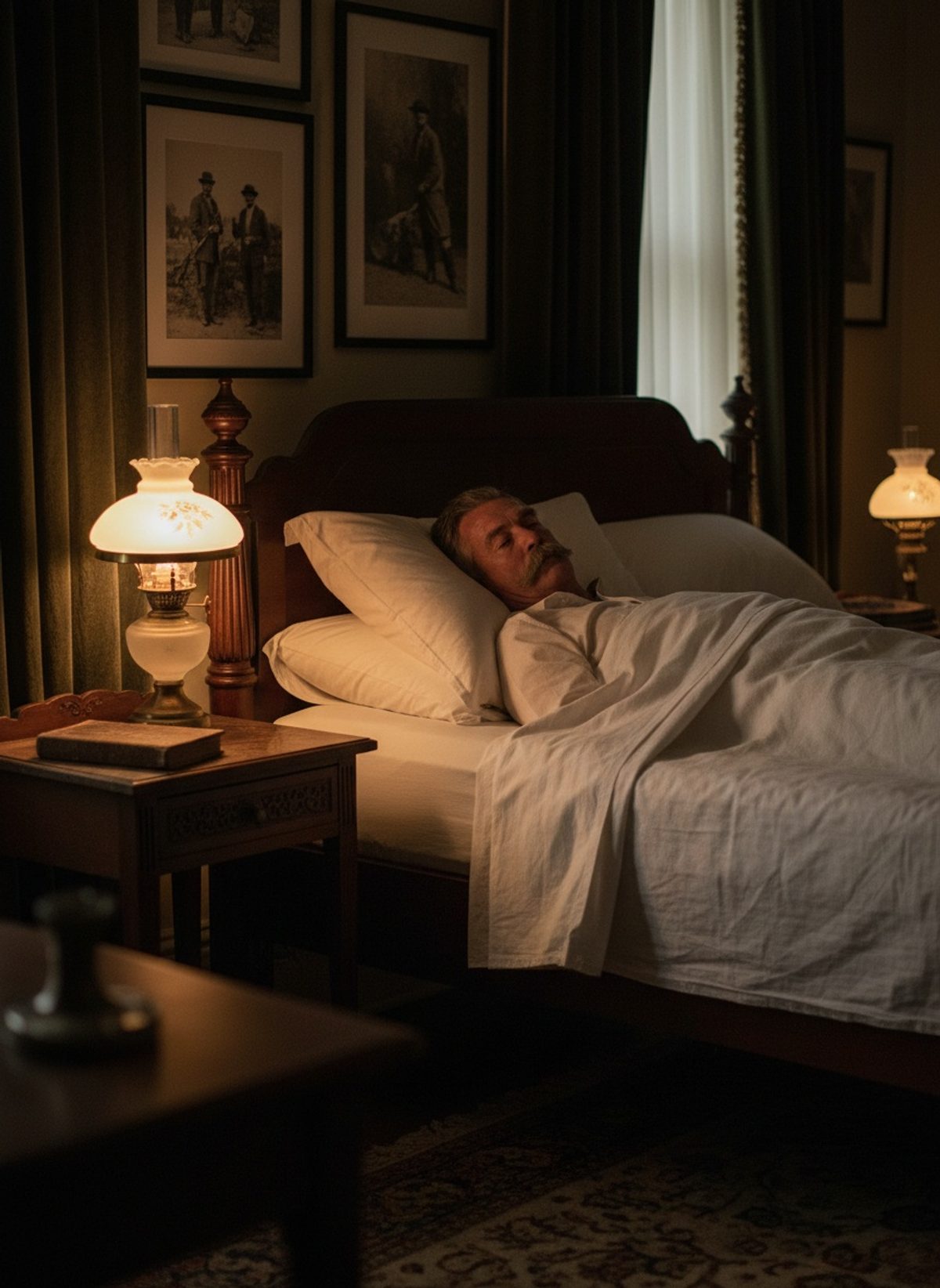
Theodore Roosevelt died in his sleep. Truth is, death could never have taken him any other way.
The Indomitable Spirit of a Rough Rider
To understand why Theodore Roosevelt's death came as a whisper rather than a battle cry, we must journey through the vibrant tapestry of his life. Born on October 27, 1858, in New York City, Roosevelt was a sickly child plagued with severe asthma. Yet, rather than allowing illness to confine him, he embraced a vigorous lifestyle that turned fragility into formidable strength. An embodiment of resilience, he carved his own path through strenuous exercise and a relentless thirst for adventure.
By the age of 42, Roosevelt had become the youngest president in the history of the United States. His presidency from 1901 to 1909 showcased a tenacity for reform, a brawn of both character and policy. Whether it was breaking up monopolies as a "trust buster" or steering the construction of the Panama Canal, Roosevelt approached each challenge with the charge of a Rough Rider. His famous phrase, “Speak softly and carry a big stick,” reflected not quietude, but a strategic confidence that shaped foreign and domestic policies.
This tenacity followed him beyond the presidency. His journey to reconcile a political rift with the progressive party culminated in the Bull Moose campaign of 1912, where even an assassination attempt couldn’t halt his momentum. Shot in the chest by a would-be assassin, Roosevelt continued his speech for 90 minutes, blood seeping through his shirt. The bullet lodged in his thorax seemed a metaphor for his unyielding spirit—nothing could quite stop him.
Read next: Arminius Lured Three Legions Into the Dark Forest
The Lure of the Wild
Roosevelt's love for the untamed paralleled his approach to governance. His passion for the outdoors wasn't merely a pastime but a pursuit of existential significance. In 1883, he ventured to the Dakota Territory, embodying the rugged frontier life as a rancher and marksmanship expert. This period reinforced his belief in the vital connection between man and nature, leading to his later conservation advocacy.
A lesser-known adventure that cements his reputation as an indefatigable explorer occurred post-presidency in 1913, when he embarked on the Roosevelt-Rondon Scientific Expedition in the uncharted territories of the Brazilian Amazon. The River of Doubt, later named the Roosevelt River in his honor, nearly claimed his life. Roosevelt suffered from a high fever and an infected leg wound that drove him to the brink. Yet, his determination never faltered; he forged ahead, more concerned with the scientific results of the journey than his own survival.
His prowess in these wild realms did not merely satiate personal longing but established a legacy of conservation. Roosevelt's creation of the U.S. Forest Service and the establishment of five national parks preserved America's natural grandeur for posterity. It's said he placed 230 million acres under public protection—lands that still echo his vigorous spirit today.
The Man Behind the Stalwart Image
While his public persona was built on robust energy, Roosevelt's personal life was filled with complexity and depth. Known for his boisterous laugh and unyielding approach to life's challenges, he was also a man who felt deeply. Perhaps the most poignant glimpse of this was visible in the dual tragedy of February 14, 1884, when he lost both his beloved wife, Alice, and mother, Martha, on the same day. In his diary, he simply penned, “The light has gone out of my life.”
This emotional duality—an energetic public life juxtaposed with profound personal sorrow—added layers to his personality. Roosevelt's pursuit of something larger than himself served to mask his quieter struggles. The writing, adventures, and political campaigning were not merely public engagements but a way to keep his inner demons at bay.
Yet, even his family, who bore witness to the softer edge of a life's battlefront, acknowledged that it was Roosevelt's indomitable spirit that remained his true defining trait. The adage that permeated throughout his life's endeavors was simple: challenge was not something to be avoided, but an intrinsic part of living a full and meaningful life.
The Quiet Passing of a Whirlwind
On the evening of January 5, 1919, Theodore Roosevelt retired to bed at Sagamore Hill, his childhood home on Long Island—a sanctuary imbued with memories and personal history. On that winter's night, as the snow lay like a shroud over the countryside, Roosevelt slipped quietly into the great beyond of sleep. He was 60 years old.
When Vice President Thomas R. Marshall heard news of Roosevelt’s passing, he encapsulated what many felt with succinct clarity: "Death had to take Roosevelt sleeping, for if he had been awake, there would have been a fight."
This apt tribute captures not only Roosevelt's vitality but how deeply he was woven into the American psyche. He was more than a politician, more than a hunter or an explorer; he was a symbol of the relentless human spirit willing to square off with life’s adversities.
The stories they never taught you, the ones about how even a force of nature like Roosevelt must eventually be claimed by nature itself, leave us with a reflection on life's fleeting nature. Yet, his life insists upon us the importance of vigor and pursuit, of setting forth with courage even when the path is perilous, reminding us that to truly live, one must do so as Roosevelt did—awake, daring, and undeterred by the inevitability of sleep.