His greatest weapon was his mind. Epaminondas reinvented the art of war on a warm July day in 371 BCE at the Battle of Leuctra, reshaping the fate of Greece with startling simplicity.
The Unseen Rivalry
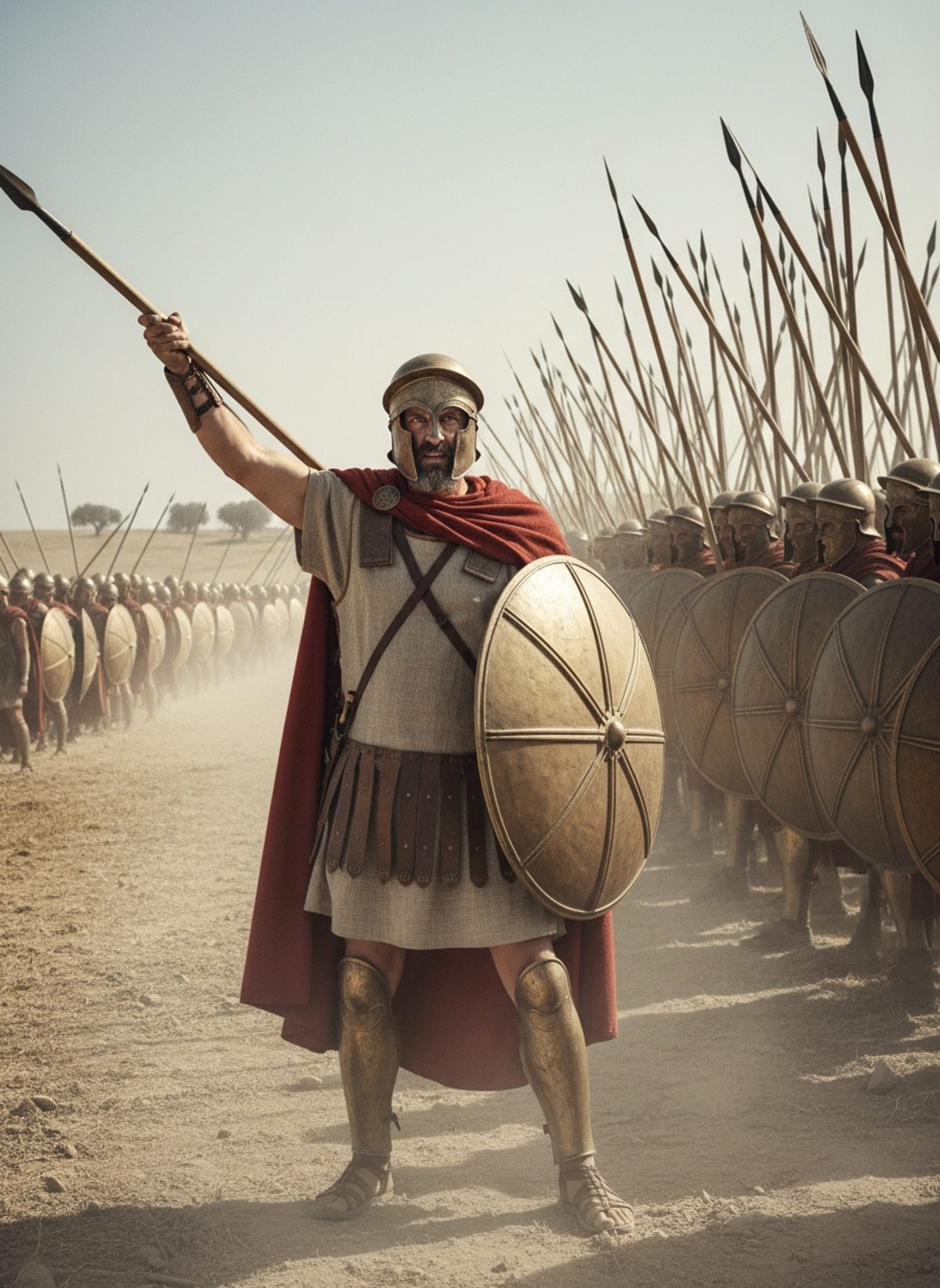
In the centuries before Epaminondas, the Greek world had witnessed the rise of Sparta as an indomitable military power. Known for its disciplined citizen-soldiers, Sparta’s phalanx formation—a tight-knit military unit that moved like a single-minded creature—was the key to its long, unbeaten record on the field.
The Spartans, trained from boyhood in the art of war, became synonymous with military prowess, fearsome and seemingly invincible. Yet, amid this myth of martial perfection, a new power was silently stirring in the north—Thebes.
Thebes had been under Sparta’s thumb for many years, but Epaminondas had a vision of liberation and dominance. His intellect and innovative approach to warfare were his tools. While others stood in awe or fear of Sparta's reputation, he saw vulnerabilities.
Read next: Kennedy Warned the UN That the Next War Would End Humanity
He recognized that their unyielding right-wing formation, with King Cleombrotus leading the most elite troops, was as much a weakness as it was a strength. He devised a plan not to meet them with comparable might but with unexpected cunning.
Epaminondas defied convention with audacity. He devised a seemingly reckless yet strategically brilliant move: the oblique formation, an innovative diagonal deployment, which concentrated his forces on one side. While the traditional battle line offered symmetry and balance, Epaminondas conceived an asymmetry that would forever change military tactics.
At Leuctra, he massed his left wing fifty shields deep, stacking it with his most elite soldiers. The rest of his line, including the right, was much thinner—a risky unevenness previously unthinkable in Greek warfare.
This was not just an adjustment of numbers but a psychological game-changer. The psychological weight shifted with his formation, as he thrust his strongest fist directly into the heart of the Spartan force.
The Day Myth Was Shattered
The morning of the battle dawned, cloaked in tensions as thick as the fabled helmets of the Spartans. War cries pierced the air as the two armies clashed on the Boeotian plains near the village of Leuctra. Without warning, the Theban left wing crashed into the unsuspecting Spartan right with an intensity of thunder. This was not a clash of equals—a force of thirty thousand Spartans awoke to a tactical whirlwind.
Epaminondas used controlled power in shaping this left wing into a sledgehammer. The Spartans, accustomed to superiority, faltered. Their legendary formation, once a seemingly invincible wall, was now a scene of confusion and chaos. The diagonal line methodically drew the Spartan forces into a trap of their own making.
As battleground dust mingled with the cries of battle, the Spartan king Cleombrotus lay mortally wounded, his fall further fueling the dissolution of order within the Spartan ranks. Epaminondas's calculated gamble paid off as 700 Spartans, including Cleombrotus, met their ends, marking the fall of a centuries-old myth.
The sight and reality of Spartan blood soaking into their own soil marked a turning point in Greek history, bringing a new order to the tumultuous Greek world and thrusting Thebes into the forefront of Greek power.
Read next: Flavius Aetius Stopped Attila at the Catalaunian Plains in 451
The hue of Spartan invulnerability dimmed that day, and the allure of Theban leadership shimmered into being. Helots, once enslaved by Sparta, glimpsed freedom, and the fear of the Spartan cloak began to unravel.
Redefining Greek Warfare: Why It Matters
Epaminondas’s seismic victory at Leuctra set the wheels in motion for a decade of Theban hegemony, reshaping alliances and reimagining the possibilities in Greek politics. His approach revealed a truth hidden in plain sight: that even the mightiest could fall if challenged with ingenuity over brute force. Epaminondas not only refought battles but rewrote the concepts of strategy and power in the Greek world.
This achievement was a move against the tides of tradition, a bold stroke of brilliance that carved out space for innovative thought in military leadership. Epaminondas had not only won a battle; he had opened a doorway for the sagacious application of intellect over mere physical dominance, a lesson that echoes across the ages.
The battle at Leuctra resonated far beyond its borders, shaking even distant empires. It highlighted faith in adaptive thinking and laid the groundwork for what would expand into tactical evolutions seen in later eras. It cleared a path enabling the eventual rise of Alexander the Great, whose own military genius can trace roots back to the fields of Leuctra.
While Epaminondas’s reforms and Theban predominance did not persist beyond his death in 362 BCE, they were pivotal keystones on the path leading to larger hegemonic shifts across Greece. More than simply a tactical intrigue, the Battle of Leuctra serves as a stark, compelling reminder of the potent harmony between wisdom and valor, where a single, bold idea transformed the tide of history.