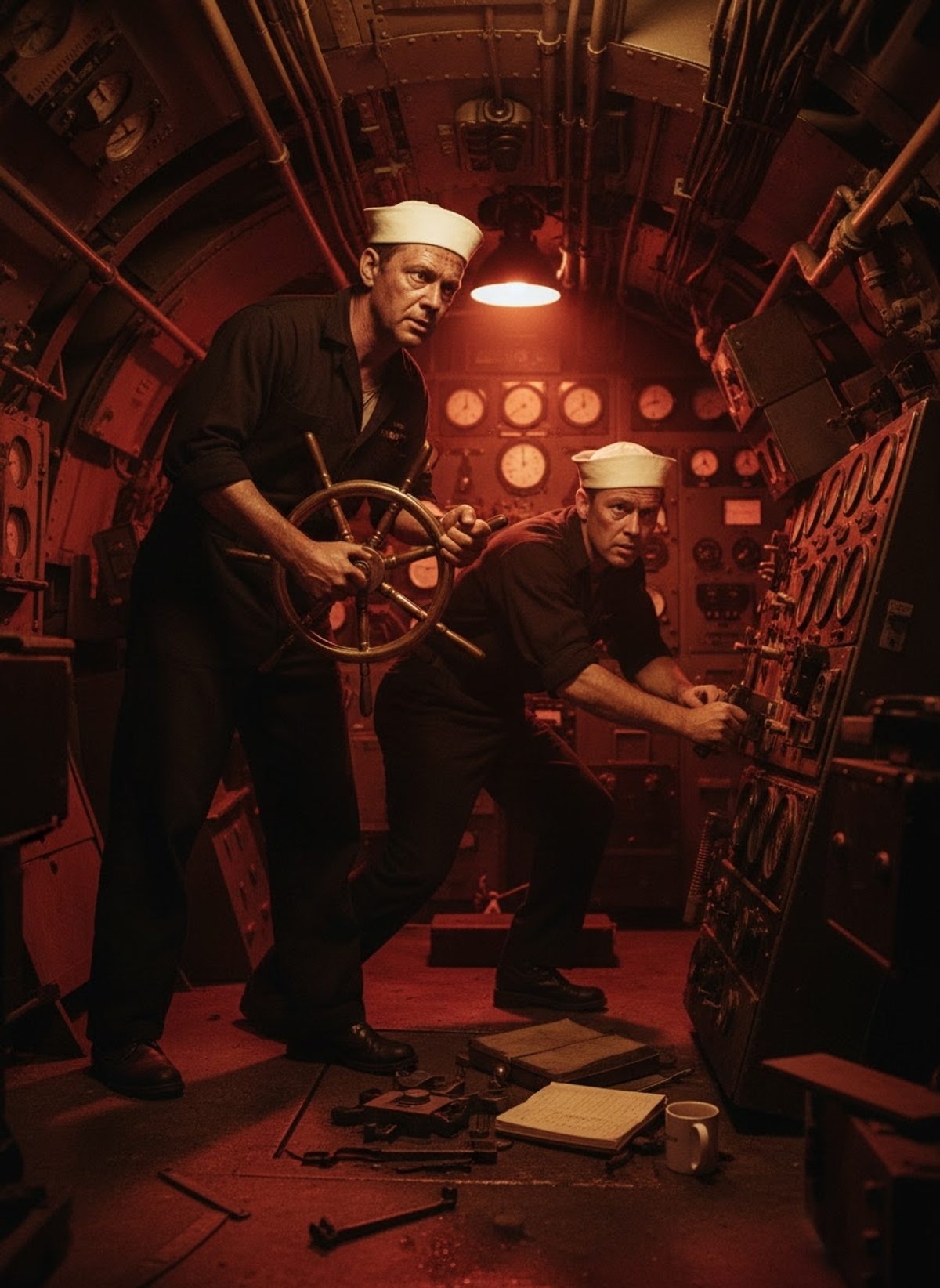
USS Chopper was conducting a routine drill. What happened next made history in ways the crew never expected.
The Unassuming Balao-Class Submarine
The USS Chopper (SS/AGSS/IXSS-342) wasn’t the newest or most advanced submarine in the United States Navy. But since her commissioning in 1945, she had dutifully served across oceans, a participant in post-war training missions and NATO exercises. Bearing the name of the aggressive game fish Pomatomus saltatrix, Chopper found her place amidst the flurry of Cold War naval operations, stationed primarily out of Key West, Florida.
Able to operate at an average depth of 400 feet, the Balao-class submarine exemplified post-World War II submarine innovation, albeit within the realm of diesel-electric propulsion. Her hull's strength was designed for safety and durability but wasn't invincible. Yet, on February 11, 1969, during an anti-submarine warfare exercise with the destroyer USS Hawkins off the coast of Cuba, the Chopper faced an unexpected test that would push her beyond designed limits.
That morning, the sea was a calm gray canvas as Chopper glided at a steady 150 feet, shadowing her surface companion. The drill had commenced smoothly, with exercises that both submariners and surface crews could accomplish with practiced ease. But the peaceful naval ballet was shattered in an instant. A sudden electrical failure would hurl the Chopper from her routine into an aquatic nightmare.
Read next: USS Intrepid Buried Its Dead on the Hangar Deck, November 1944
From Steady Course to Near Catastrophe
Chopper's control systems flickered offline without warning, resulting in a chain reaction that sent this seasoned underwater vessel into a downward spiral. With her power lost, she began to tilt. Minutes later, she went from a slight down angle to a dizzying 45 degrees, her bow hurdling toward the depths at increasing speed. Communication lines inside the sub went dark, leaving crew members grappling with silence and system failure.
In the tight confines of the maneuvering room, sailors worked against the clock, their own pulse tempos. Ken Taylor, the senior chief petty officer, took decisive action in the absence of orders. They engaged the motors full astern and activated ballast tanks to staunch the dive, yet Chopper's descent continued. An estimated 1,011 feet below the surface was the furthest any crew dared to imagine.
Seconds turned to moments as the hull groaned, a faithful ship's anguished protest against the crushing ocean pressure. Yet just when catastrophe seemed certain, the crew's interventions began to take hold. The submarine's bow, furiously racing toward the deep, leveled before laboriously pointing back upwards. The Chopper began to ascend, her resurgence equally swift and unpredictable, now on a new trajectory straining upward toward the surface.
Breakthrough, Then Breakwater
As Chopper rocketed upward, the crew braced against the violent motions. One could imagine the clatter of unsecured instruments, the barking of commands echoing through her steel corridors. In under two minutes from the power loss, Chopper stunned her crew by breaching the surface with ferocity sufficient for the forward section to clear the sea completely.
Chopper launched bow-first from the waves, a marine missile defying the improbability of submerging within moments of potential implosion. The site was as awe-inspiring as it was terrifying, leaving both crew and any spectators within sight lines breathless. With her propulsion systems finally responding, Chopper regained control, making her eventual descent relatively controlled. But she had one more deep dive to listen to her own momentum dragging her hull down below once more before final equilibrium was achieved.
The vessel stabilized, floating exhausted yet intact. In the reporting that followed, tales of the events would stress the unique physics and strained human effort that occurred below decks during those harrowing minutes. Crew members recounted the event with expressions impossible to script: Their experiences offered a narrative straight from fiction but anchored in precise reality.
Read next: Arminius Destroyed Three Roman Legions in the Teutoburg Forest
Beyond the Depths of Expectation
The events of February 11, 1969, would mark the end of Chopper's active service career. The submarine returned to port for an extensive damage assessment. The ordeal had proven too taxing on her frame—a testament that even steel has its limits. Although it did not sink, components of Chopper sustained damage severe enough that it never re-entered full service, culminating in her decommission and striking from the Naval Vessel Register later that year.
The story of the USS Chopper wasn't strictly unique; other submarines faced critical moments that bordered catastrophe. Yet, those frantic few minutes consolidated Chopper's place in history. It served as a chilling reminder of the unpredictable interplay of machinery, nature, and human ingenuity. The submarine became not only a vessel of naval memory but a haunting monument of the precariousness ever underpinning Cold War machinations beneath the ocean's surface.
For those interested in the overlooked tales of naval history, Chopper's harrowing journey illustrates the myriad challenges faced by servicemen and women in defending beneath the world’s waves. The accident served as a poignant reminder of the immense risk and expertise demanded by underwater exploration as the submarine race heated amidst superpowers bound in silent tension.
Here was a story bridging the thin line between disaster and the miracle of survival—a reminder of humanity's limits when confronting nature but also its resilience in engineering triumph over adversity.