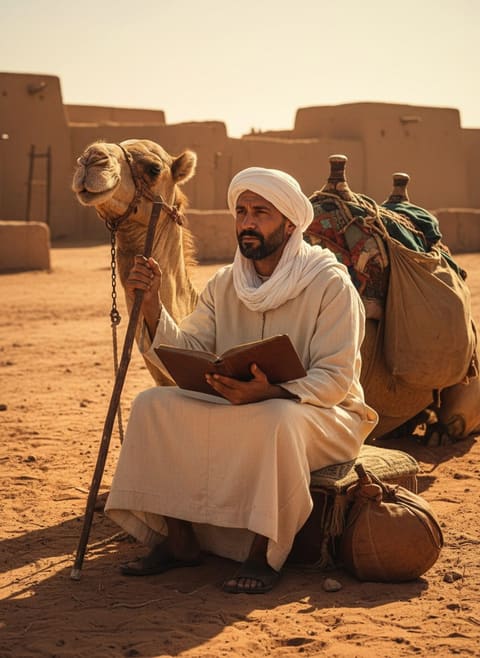
October 2, 1187. The air in Jerusalem was thick with anticipation as Saladin’s troops entered the city. The flags of the Ayyubid dynasty fluttered in the wind, marking a critical shift in the city's power dynamic. Yet, contrary to the bloodshed expected after such a conquest, Saladin chose to wield compassion as his weapon of choice.
A City on the Brink
Jerusalem had been a battleground for centuries, a prized jewel fought over by countless warriors and empires. The Crusader states, established in the wake of the First Crusade, had governed the city since 1099, their rule marked by the notorious mass slaughter following their conquest.
The Christian forces had fortified Jerusalem extensively, making it a bastion of European influence at the heart of the Islamic world. In contrast, the Muslim reconquest of the city sparked fears of another tragic cycle of violence and retribution.
Saladin's forces laid siege to Jerusalem in September 1187, following their decisive victory at the Battle of Hattin in July of the same year. The defeat at Hattin was catastrophic for the Crusaders, as it decimated their knights and captured their most prized relic, the True Cross.
Read next: Godfrey of Bouillon Refused a Crown in Jerusalem in 1099
Now, as Saladin loomed at the gates, the situation within Jerusalem was dire. Disease and despair clung to the city's crowded streets, with hospitals filled beyond capacity. Amidst the chaos of crumbling Crusader morale, a forgotten segment of the population sought help: the sick and the destitute, confined to hospital beds without hope.
Mercy Amidst Conquest
Saladin, born Salah ad-Din Yusuf ibn Ayyub, drew from the principles of chivalry and religious piety that defined much of his rule. His decision to prioritize the city's sick surprised many, not least because Saladin's opponents often portrayed him as a fearsome warrior bound by no ethical restraints. However, his actions after capturing Jerusalem tell a different story.
The historical precedent for a conquering army in the medieval period, especially one of religious conflict, was typically one of ruthless retribution. Yet, as soon as Jerusalem capitulated on October 2, 1187, Saladin's focus shifted from military conquest to humanitarian relief.
He ordered his own physicians to aid the stricken in the city's hospitals, sparing no expense in procuring the necessary medicines. Saladin's move was as strategic as it was compassionate; he understood that winning the hearts of the populace could be as crucial as defeating them on the battlefield.
The Muslim physicians entered the hospitals, their presence both a reassurance and a marvel. They worked alongside the remaining Christian healers who chose to stay, a rare collaboration that bridged the religious divide. Saladin ensured their medical practices continued uninterrupted, while he covered the costs personally—a significant gesture that defied the expectations of victors seeking retribution.
A Documented Act of Nobility
Contemporary accounts of Saladin's benevolence spread with astonishing speed, so profound was the impact of his actions. European chroniclers, accustomed to the brutal cycle of medieval warfare, recorded his deeds with a mixture of astonishment and admiration, despite the enmity between their cultures. This largesse and mercy laid the groundwork for the burgeoning legend of Saladin that would spread across both Muslim and Christian territories.
Saladin's recapture of Jerusalem not only restored Islamic rule but also redirected the course of the Crusader states. It marked a rare instance where conquest led to clemency rather than chaos. The orderly and compassionate transition, facilitated by ensuring the well-being of the sick, was a stark contrast to the violent Crusader occupation that preceded it.
Read next: Nikephoros Phokas Retook Crete From the Arabs After 135 Years
This strategic benevolence had far-reaching implications. Saladin's emphasis on mercy and justice strengthened his reputation as a ruler who embodied the ideal of *jihad* as a personal, internal struggle for righteousness. It also fostered respect even among his adversaries, setting a precedent for how conquered cities could be integrated into larger political realms through kindness rather than subjugation.
Lessons from a Forgotten Chapter
Saladin's entry into Jerusalem is more than a tale of military triumph; it is a narrative of unexpected humanity in an era often marked by brutality. His acts underscore the power of mercy in times when violence was the norm. Saladin's approach in 1187 reminds us that leadership tempered with empathy can transcend the immediate goals of conquest and resonate across cultures and centuries.
Even today, where divisions often define political landscapes, Saladin's example of compassion amid conflict offers a compelling reminder that the true strength of a leader can be measured by their ability to forge connections even amidst contention.
The decision to weave compassion into the fabric of governance demonstrates that even amidst the harshest strife, the choice of kindness holds the enduring power to transform societies for the better, leaving a legacy that echoes long after the immediate clash of arms has faded into history.