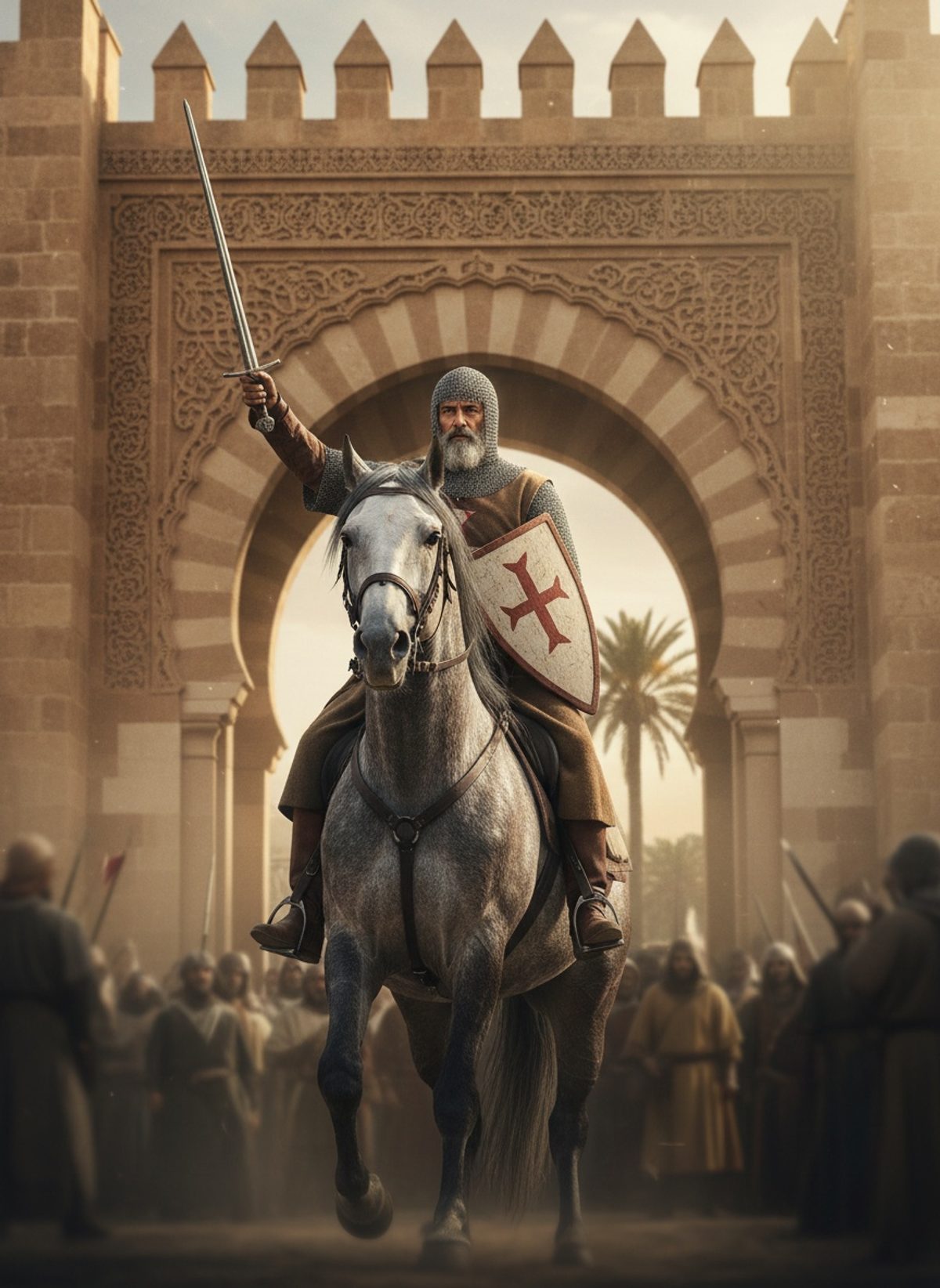
June 15, 1094. The first light of dawn revealed the silhouette of Valencia just beyond the horizon, a city that had resisted conquest for decades. Situated on the eastern coast of the Iberian Peninsula, Valencia had grown into a coveted prize due to its strategic location and cultural allure. At its gates now stood Rodrigo Díaz de Vivar, better known as El Cid, a man whose name would soon become synonymous with the city itself. Commanding a motley army composed of both Christians and Muslims, Rodrigo was about to etch his name into the annals of history, not as a servant of a king or religious cause, but as a sovereign operating on his own terms.
El Cid, born into the nobility of the Kingdom of León and Castile in 1043, had already led a life marked by extraordinary military prowess and complex allegiances before his eyes ever set upon Valencia. Known for his formidable combat skills, he was a knight whose honour transcended the simplistic borderlines of Christian and Muslim. Exiled by his own king, Alfonso VI of León, under murky circumstances, Rodrigo Díaz was nevertheless relentless. His exile was a transformative chapter, propelling him into the service of Muslim rulers in Zaragoza, which cultivated his reputation as a tactical genius commanding diverse forces. Such alliances were not just strategic; they bespoke a nuanced understanding of the religious and political landscape of medieval Iberia that few possessed. Despite his temporary banishment, El Cid retained the respect of both Christian and Muslim foes.
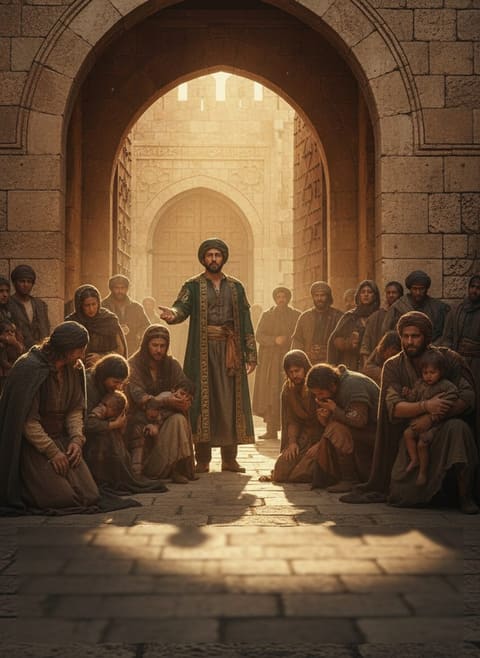
The conquest of Valencia was not initiated under a royal banner but undertaken by El Cid as a private enterprise. And yet, as the tented field outside Valencia hummed with anticipation that June morning, the men who fought under his banner didn’t consider him an outlaw — they considered him a leader of unparalleled mettle. His army laid siege, and after a grueling blockade, Valencia fell into his hands by that same autumn. When Rodrigo entered the city through the monumental gates, it was not as a conqueror, but as a steward dedicated to its prosperity. Valencia thus became the jewel of his independent lordship, an unorthodox realm united not by the divisions of faith but by a shared allegiance to the man whom they now called "El Campeador".
Rodrigo Díaz de Vivar's rule over Valencia was characterized by pragmatic governance. He showed no desire to eradicate the Muslim influences that flavoured the city's rich tapestry. Instead, he embraced them, encouraging trade and cultural exchange that invigorated Valencia's economy. Markets, libraries, and baths flourished under his rule, and Muslims, Christians, and Jews found relative peace under his governance. It was this very dexterity that allowed him to rule amidst a patchwork of identities, each coalescing under the banner of a man who seemed destined for the history books.
By 1099, El Cid's tenure reached its zenith, both in terms of internal prosperity and external pressures. His dominion over Valencia had not gone unchallenged. Throughout his reign, Rodrigo faced incessant threats from aspirant conquerors — notable among them was the Almoravid general Ibn Tashfin, who sought to reclaim the city for its Islamic rulers. Yet, each time he was challenged, El Cid met these hurdles not just with military might, but with a striking diplomatic finesse that elicited begrudging respect even from those who sought his downfall. On the plains outside Valencia, and within its ancient walls, his legend was cemented as battles were fought and won not merely through bloodshed but through negotiations that often spared the blade. Remarkably, despite numerous skirmishes, neither Valencia nor El Cid ever fell to an opposing hand during his lifetime.
Read next: He Walked Into the Mongol Camp. He Left With a City.
However, fate is never to be swayed by the will of mortals. In the summer of 1099, Rodrigo Díaz de Vivar passed away within the city he had molded into a testament of his will. His death came not from the swords of foes, but from what many presume to be natural causes, leaving a vacuum that foresighted rulers often dread. Yet, his death did not spell the immediate end of his reign over Valencia. In those desperate hours, it was his wife, Jimena Díaz, who embodied the indomitable spirit of El Cid. In an act both pragmatic and legendary, Jimena ordered her husband's corpse to be armored and positioned upon his trusty steed, Babieca. It was a ruse that bought precious time, allowing Valencia's inhabitants to rally under the visage of their 'undefeated' lord — a stratagem that staved off outside aggressors and held the city steadfast for another two years.
Jimena's resourceful leadership extended El Cid’s legacy until she was ultimately forced to surrender Valencia in 1102. The city came under the Almoravid control, but by then, the narrative of El Cid had already taken root, flowering into myth. Visitors and conquerors who stood at the city gates for decades afterward could scarcely do so without invoking his name, without feeling the shadow of his enduring presence. El Cid’s life and death left an indelible mark, not borne of endorsement from a noble lineage but penned by the singular force of one man's audacity to forge his own destiny.
Today, the saga of Rodrigo Díaz de Vivar offers more than a historical anecdote; it echoes with modern resonance across the plains of Iberia. In an era where allegiances were narrowly defined by a singular faith or crown, El Cid’s diverse alliances illuminate the complexity of a medieval world often simplified in retrospection. It presents a story of unity amidst diversity, where governance rose above sectarian rifts to embrace a more inclusive body politic. El Cid’s life and his unparalleled command over Valencia exemplify how unyielding leadership can wield both sword and diplomacy to carve a unique legacy. This tale gives us a distinctive mirror — one reflecting not just the past we inherited but the myriad ways in which humanity could transcend division today. The reader, perched firmly in the present, may gaze upon El Cid's undying legend and find that history, far from being just a recollection, is a beacon illuminating pathways ahead.