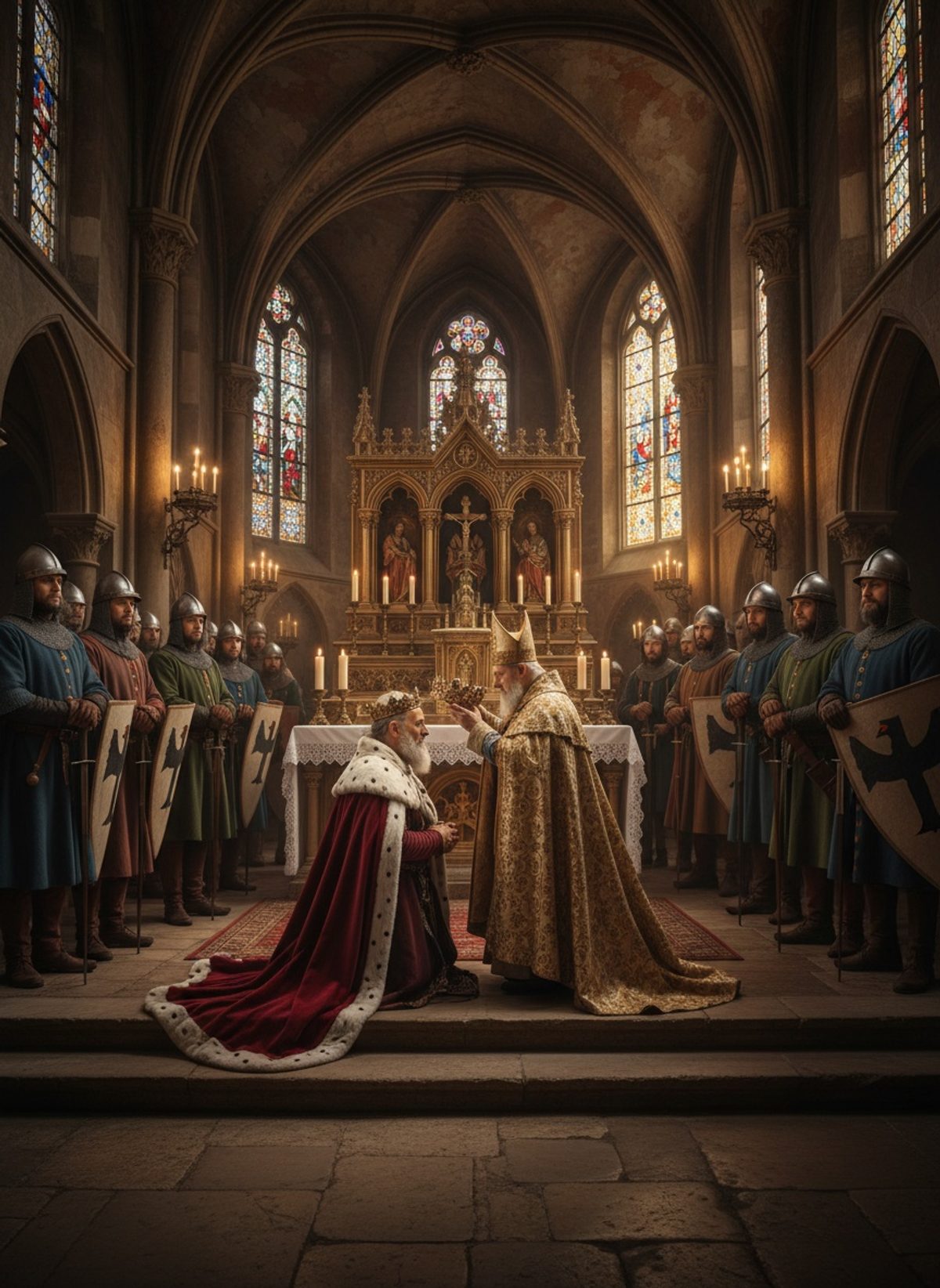
Before he knelt in Kraków Cathedral, Władysław Łokietek had been a fugitive. He had lived in exile, his homeland a patchwork of divided duchies and foreign rule. Yet, through determination and sheer tenacity, he would become the first king of a reunited Poland in 200 years—a feat few believed possible.
The Land of a Hundred Lords
For over two centuries, Poland had been a realm without cohesion, its royal crown a mere memory. Political fragmentation followed the death of Bolesław III Wrymouth in 1138. His will decreed that Poland be divided among his sons, ushering in an era of disunity. Dukes ruled their own fiefdoms, often as much their own masters as the masters of Poland itself.
Compounded by foreign dynasties creeping into Poland’s internal politics, the integrity of the Polish state frayed. German, Bohemian, and Hungarian kings exploited these divisions, annexing land and influence. Kraków, once the pulsating heart of Poland, became but one of many competing centers, a sad illustration of a country broken and scattered.
A Duke Defiant
Amid these swirling political chaos and ambitious rivalries stood Władysław Łokietek. Born in 1261, he was a duke of modest stature but of towering ambition. His origins vested him with claims to both Kuyavia and Kraków, territories frequently threatened by powerful neighbors. Early on, Władysław faced setbacks, including a stint in exile after Henry IV Probus seized Kraków.
Read next: Ibn Battuta Crossed 75,000 Miles and Wrote It All Down
Although diminutive in stature, Łokietek became a central figure in Polish politics, not through the might of military prowess alone, but through diplomatic cunning and persistence. He fought tirelessly not only for his birthright but for the prospect of a unified Polish kingdom.
His journey was marked by a series of defeats and resurgences, persistently reentering the Polish political scene with renewed vigor. Unlike other nobles who succumbed to the temptation of foreign alliances, Łokietek anchored his ambitions in the hope of a Poland governed by Poles.
The Ascent to Kingship
By 1306, fortune turned in Władysław’s favor. As Wenceslaus II of Bohemia's fortunes waned, Łokietek seized the opportunity to take control of Kraków. Yet the path to kingship remained fraught with challenges. Rival claimants and hostile regimes perched ominously on every flank, biding time to strike.
Łokietek embraced a multifaceted strategy, marshaling both bold alliances and militaristic maneuvers. Key to his strategy was aligning with the Church. The most decisive leg of his journey was securing papal support, which culminated in being crowned in 1320 at the royal church of Wawel Cathedral. At long last, a devoted duke rose as the crowned king of a region yearning for unity.
His coronation not only symbolized a sovereign renewal but also highlighted a diplomatic victory. At a time when ecclesiastical endorsement could legitimize kingship beyond disputes, his crowning was as critical a political maneuver as governing itself.
The Rewoven Tapestry
As King Władysław I, he faced the daunting task of maintaining coherence. His kingdom, though crowned once more, stood merely at the brink of consolidation. Border disputes, notably with the Teutonic Knights, and internal noble dissent posed ongoing threats.
Yet under his firm gaze, Poland assumed a sturdier construct. He succeeded in bringing various factions into a more cooperative stance, according pivotal roles to those keen to bolster the vision of a unified realm. He instated measures cementing Kraków as once again the nation’s capital—both in spirit and administration.
Read next: Niccolò Acciaioli Ruled Greece From a Florentine Bank
An astute realist, he pursued alliances with neighboring states, forging a bulwark against potential invasions. His marriage cemented ties with Lithuania, augmenting diplomacy with familial fidelity.
A Crown Realized
By the time of his death in 1333, Władysław had built the scaffolding for a kingdom, once thought irretrievably lost. His reign did not merely restore a title or throne—it marked the rekindling of Polish identity. He passed on the crown to his capable son, Casimir III, who would continue the foundations laid by his tenacious father.
Władysław I's legacy remains woven into the very fabric of Polish sovereignty. His life captures the timeless human struggle against the status quo's disintegration. It reminds us of the profound impact of collective identity and the perennial endeavor to gather fragmented pieces into a tapestry sewn anew.
Through Łokietek’s trials and triumphs, we glimpse the narrative of a nation reborn. His tale underscores the resilience imbued within leadership bound by fidelity to heritage and the relentless pursuit of that which unites above that which divides.