He had every reason to claim the throne. Simon de Montfort chose a different path.
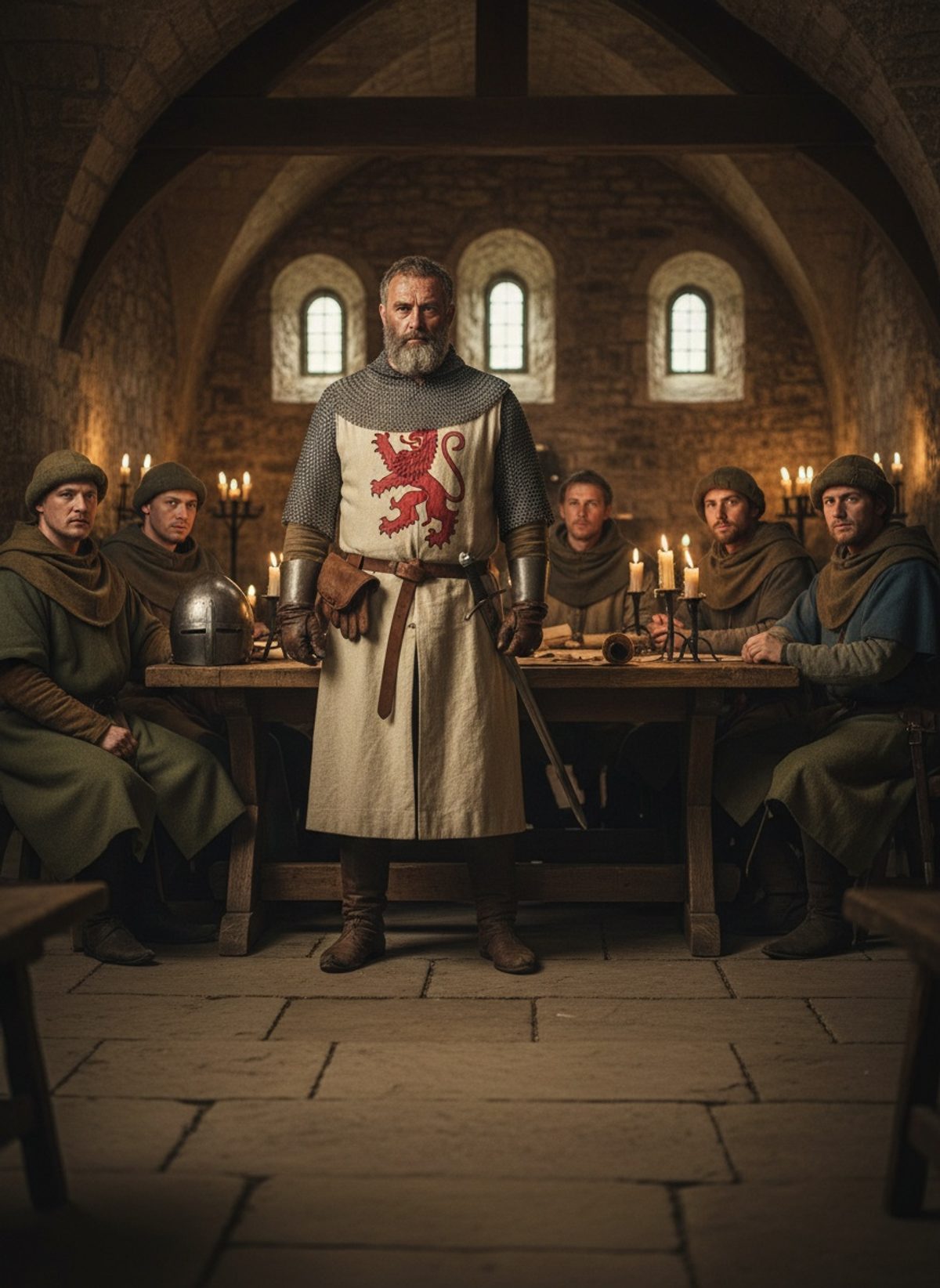
In the tumultuous year of 1264, Simon de Montfort, the 6th Earl of Leicester, did what few others have done in the annals of power - he challenged a king and redefined the governance of a nation. Born around 1208 into a lineage both noble and contentious, de Montfort emerged as a pivotal figure during the Second Barons' War against King Henry III of England. This conflict was no mere squabble among highborn; it was a profound clash over the essence of kingship and the rights of the governed.
De Montfort's journey to this point was unconventional. Arriving in England from France in 1229, Simon was an outsider, estranged from his inherited lands by familial arrangements with his brother Amaury, who had forfeited his rights in England for their family's assets in France. Despite these beginnings, Simon quickly gained favor at the English court, particularly with Henry III, who saw in him a blend of courtly grace and martial prowess. This alliance, however, would sow the seeds of future conflict between them.
The challenges of Henry's rule were not solely of his making. England was a realm of complex feudal relationships, economic pressures, and shifting political allegiances. Yet, under his reign, discontent among the barons grew, fueled by perceived royal excesses and mismanagement. It was into this boiling cauldron that de Montfort stepped, not just as an opportunistic noble but as a man driven by a vision of reform that encompassed more than personal ambition.
Read next: Władysław III Ordered a Charge. His Men Followed Him In.
By the Battle of Lewes on 14 May 1264, de Montfort had risen to become the leader of the baronial rebellion. His forces clashed with those loyal to the king near the Sussex town, a confrontation that ended in a resounding victory for de Montfort. The king himself was captured and displayed the removal of direct power from Henry's grasp into the hands of his former ally. England was now gripped by a seismic shift in governance led by a charismatic yet equally polarizing figure.
However, the triumph on the battlefield was only the beginning of de Montfort's extraordinary political venture. As the de facto wielder of power, he convened what is now considered the first English parliament recognizable to modern eyes. This 1265 assembly was groundbreaking, transcending the medieval norm by summoning not only barons and church officials but also representatives from each county and, most notably, commoners from significant towns. It was a meeting that altered the course of English constitutional development, a moment of democratic experimentation that, astonishingly, arose from the chaos of civil war.
Yet, Simon de Montfort's tenure was far from a utopian episode. Alongside his parliamentary innovations, his record was marred by brutal acts against the Jewish community; expulsions from Leicester and heinous massacres in London, Worcester, and Derby left stains on his legacy. For all his progressive strides in political representation, de Montfort's means often betrayed the period's harsh realities. His grasp on power, lasting just over a year, was as tumultuous as it was transformative.
Read next: He Chose a Stone Cell Over the Throne of Saint Peter
Despite his political savvy and reformist ambitions, de Montfort’s rule was precarious. He faced growing opposition from the remnants of royalist forces rallying under Henry's son, Prince Edward, the future Edward I. The defining contest awaited at the Battle of Evesham on 4 August 1265. There, de Montfort's vision and life met their violent end. His forces were outmaneuvered and overwhelmed by a newly emboldened royalist army. His death was not only a personal tragedy but a brutal, decisive encounter for the baronial cause; his body was mutilated, his head sent as a grisly token to a royalist ally.
In de Montfort’s defeat, the notion of reform did not die. Instead, he inadvertently laid the groundwork for future constitutional developments. His dramatic rise and fall embodied the enduring struggle between authority and advocacy for reform, a harbinger of future epochs where citizen representation would evolve from the sparking tendrils he ignited. In the scaffolded ruins of his efforts, England would slowly but surely inch closer to a parliamentary democracy, albeit centuries in the making.
Despite the controversy and contradictions of his actions, de Montfort’s attempt to broaden political participation has echoed through history, a radical gesture from a tumultuous time. In seeking retrospectively to understand his motives and maneuvers, we are reminded of the fragility and bold promise inherent in democracy's early stirrings—an inheritance profoundly rooted in the decisions of those who dared to recalibrate the scales of power. While some may view him as a tyrant who held the noose and sword, others rightly perceive a man who, in one fleeting fever dream of power, chose to cut the binding ties and extend an invitation to history itself.