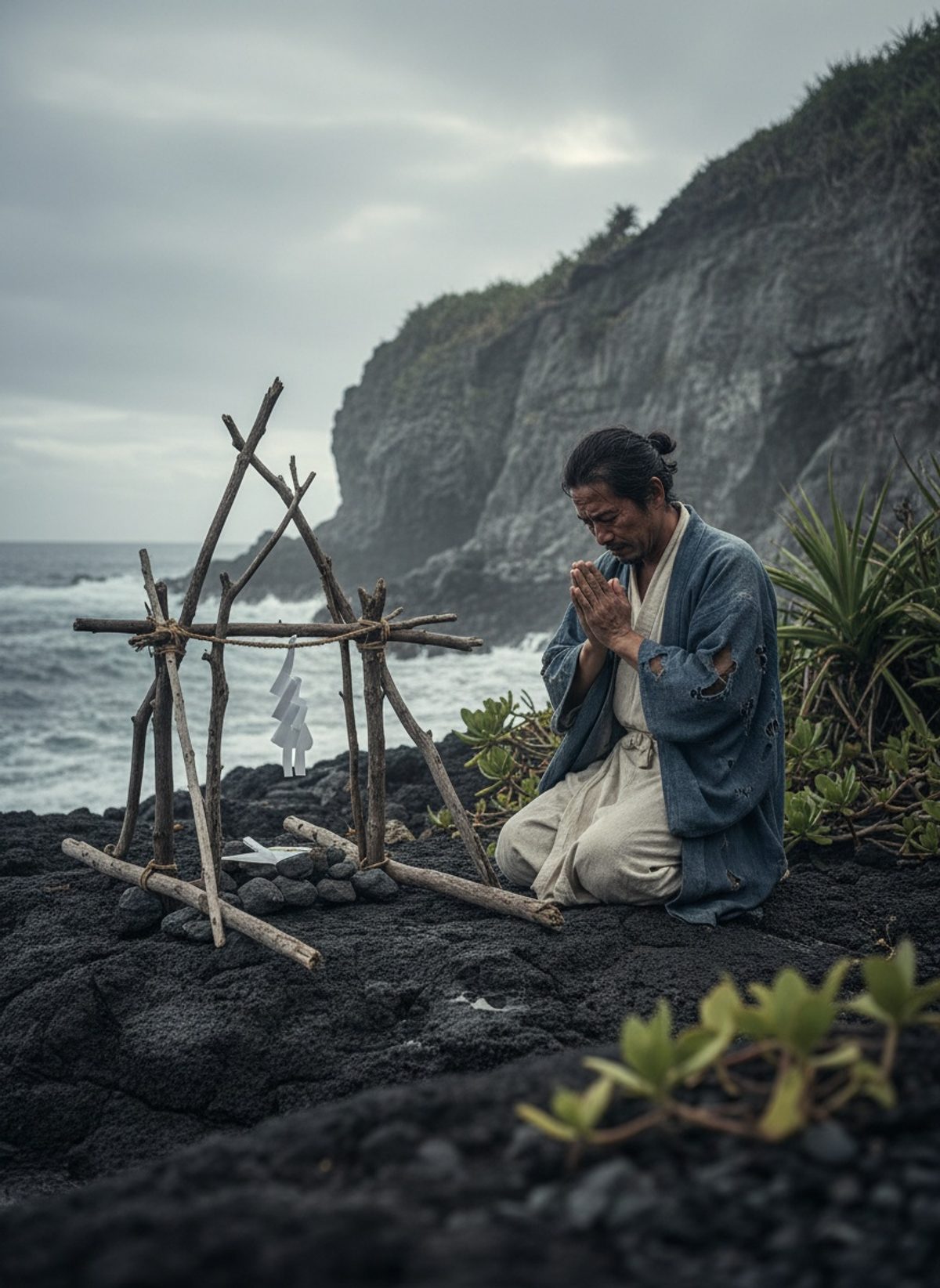
The sulfurous smoke choked the air as Yasuyori squinted against the harsh sunlight beaming down upon the black volcanic rock of Kikai-ga-shima. The desolate island seemed to stretch out endlessly, its unwelcoming shores a testament to his dire predicament. Exiled from the Heian court, stripped of title and position, Yasuyori was to be forgotten, cast aside as if his life in the capital had been nothing but a fading dream. But as his eyes adjusted to his barren surroundings, he felt an ancient stirring of determination. This isolated land, forsaken by time and convenience, would become the improbable canvas of his enduring legacy.
In the heart of the 11th century, Japan was a land of courtly intrigue and delicate politicking, its elite woven into a tapestry made of rigid rules and unyielding etiquette. Yasuyori had been a man of commendable standing—a court physician whose skills and insight had earned him the respect and envy of many in the palace halls. Yet, a single twist of fate, a misstep or perhaps the machinations of rivals, had condemned him to exile. With no paper to record his thoughts, no tools to ease his burdens, and no allies to offer solace, his existence on this desolate island promised nothing but solitude.
The first harsh winter on Kikai-ga-shima seemed to mirror the cold reception he had faced when first exiled. The winds shrieked a mournful tune, and the seas surrounding him surged with a daunting power. Yasuyori, however, was not one to submit easily to despair. He wandered the shores of the island, gathering driftwood and discarded remnants of the ocean to fashion a place of quiet reflection. With each piece meticulously placed, he built a shrine to honor the kami and spirits he hoped would offer guidance and perhaps a path to redemption.
In the quiet solitude of his sanctuary, Yasuyori found a new rhythm, one dictated not by the rigorous schedules of Kyoto's court but by the elements and his own deepening introspection. The shrine, simple yet profound, became both his refuge and his place of worship. Draped against the stark contrast of ancient volcanic cliffs, it stood like a beacon of hope amidst despair, a symbolic defiance against the sentence imposed upon him. Loose strands of dried seaweed and shells adorned its entrance, each piece selected for its unique connection to the world beyond his remote prison.
Read next: Xuanzang Walked Into Enemy Lands. He Carried Nothing But Questions.
As the years passed, Yasuyori's days were filled with rituals and prayers. The shrine became a place where he could converse with the past, a spectral gathering of memories and decisions that had brought him to this desolate juncture. When he closed his eyes in meditation, he could almost hear the rustling of court robes, the whispers of gossip and intrigue that had once governed his life. He meditated not just for his redemption but for the peace of those he had left behind, hoping his silent prayers could reach across the vast sea that separated him from the imperial court.
Human spirit has a way of thriving even in the most unlikely circumstances. Neighboring fishermen and island wayfarers soon found solace in the serenity Yasuyori had cultivated. Stories spread of the nobleman-turned-hermit who built a sanctuary with nothing more than the remnants of the sea. Over time, his tale transcended the island, traveling by word of mouth, reaching the ears of those who had once revered him. It became a story of finding purpose amidst despair, a rare narrative of second chances forged in the shadow of volcanic cliffs.
The years rolling into decades came to soften the bitterness of his exile. Time has a way of reshaping perception, and the distance from the capital increased the mystique surrounding his story. In the aftermath of twenty years of solitude, fate conspired once again to offer a path back to the world he had been forced to leave. With the emperor's pardon, Yasuyori found himself navigating the familiar yet altered pathways of Kyoto, the air filled with a faint scent of cherry blossoms mingled with nostalgia and regret.
Walking through the capital streets, the past fused with the present in a bittersweet crescendo. Court whispers had also softened, the once insurmountable barriers of disgrace blended into tales of resilience and growth. Yasuyori was different now—a man who had faced the abyss and found purpose in isolation. What he returned with was not a plea for power or recognition but a deep understanding of life's impermanence, and the knowledge that one's influence is not measured by titles or boundaries but by the legacy of resilience and hope they leave behind.
As he stood once more at the edge of the court, the glow of lanterns flickering in the night shadow, he realized that the shrine on Kikai-ga-shima was more than a relic of survival; it was a profound emblem of the human spirit's undying desire to find meaning in the face of adversity. Yasuyori's story, woven into the fabric of Heian Japan, reminds us that even when cast away by society, the heart can build sanctuaries of hope and resilience that echo across generations long after the empires that imprisoned them have faded into history.