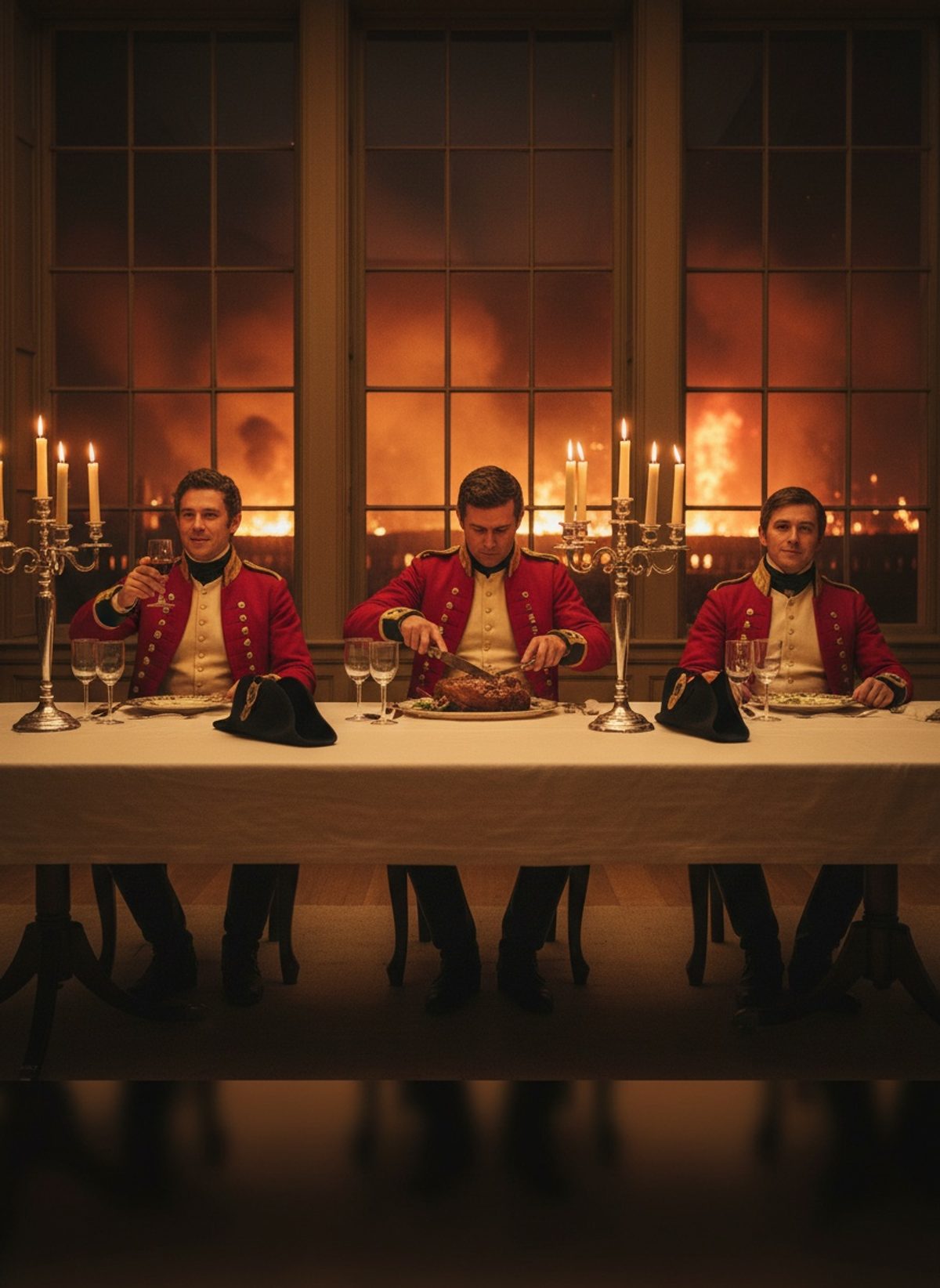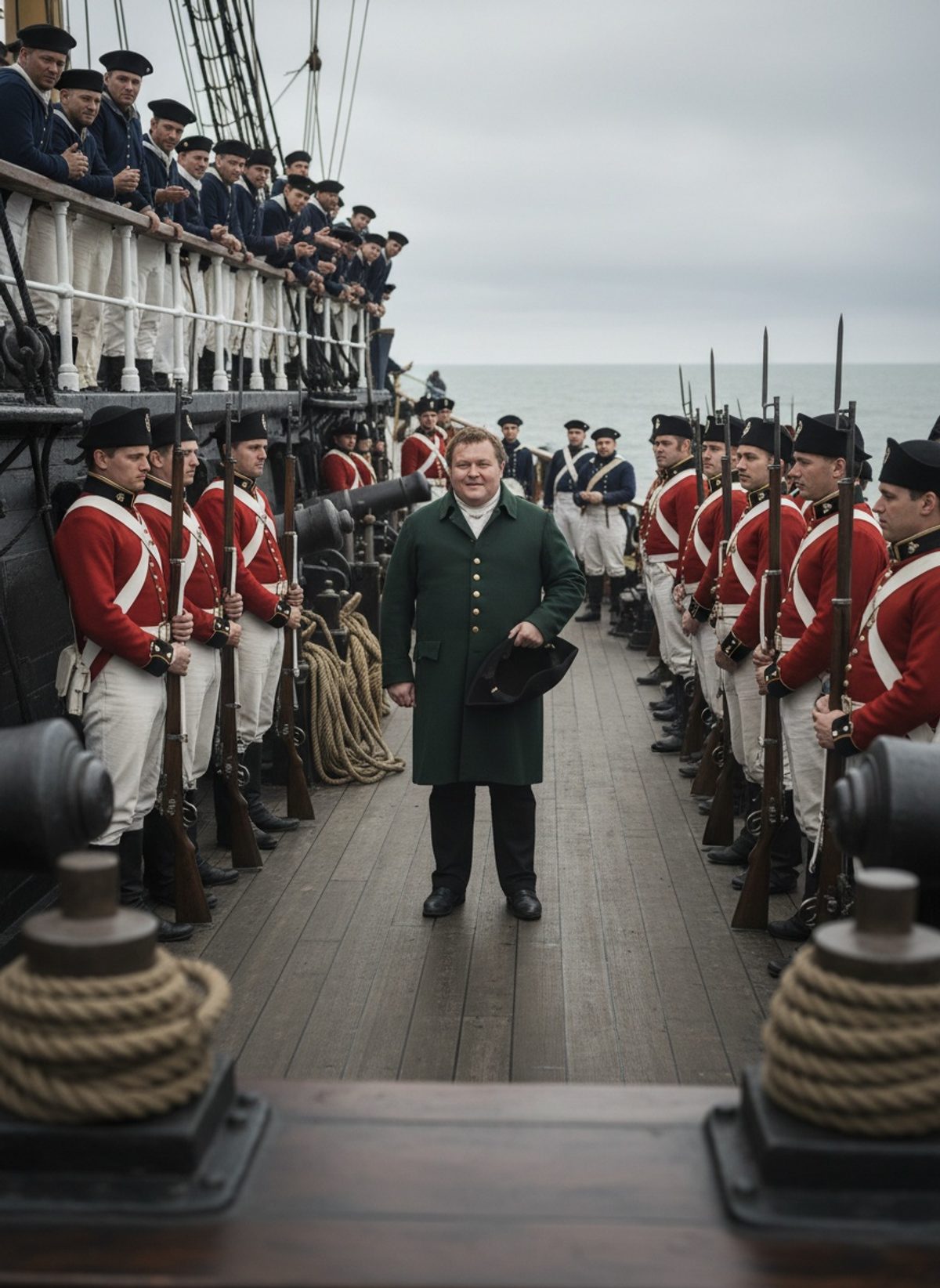
He was not content with victory. He wanted to save every last survivor.
An Unexpected Act of Valor
In the early months of 1797, the clash between two formidable naval powers — Britain and France — was as fierce as the biting winds off the Breton coast. While battles at sea were commonplace, acts of humanity were rare jewels, glittering brightly against the dark backdrop of warfare. On a cold, restless night, Captain Edward Pellew of the British Royal Navy broke the mould. After defeating the French frigate Virginie, he made an unorthodox decision not to pursue further glory, but to reach out and rescue the very men who had moments before been his mortal enemies. This wasn't just a story of military triumph; it was a testament to human compassion amidst conflict.
The Iconic Clash at Sea
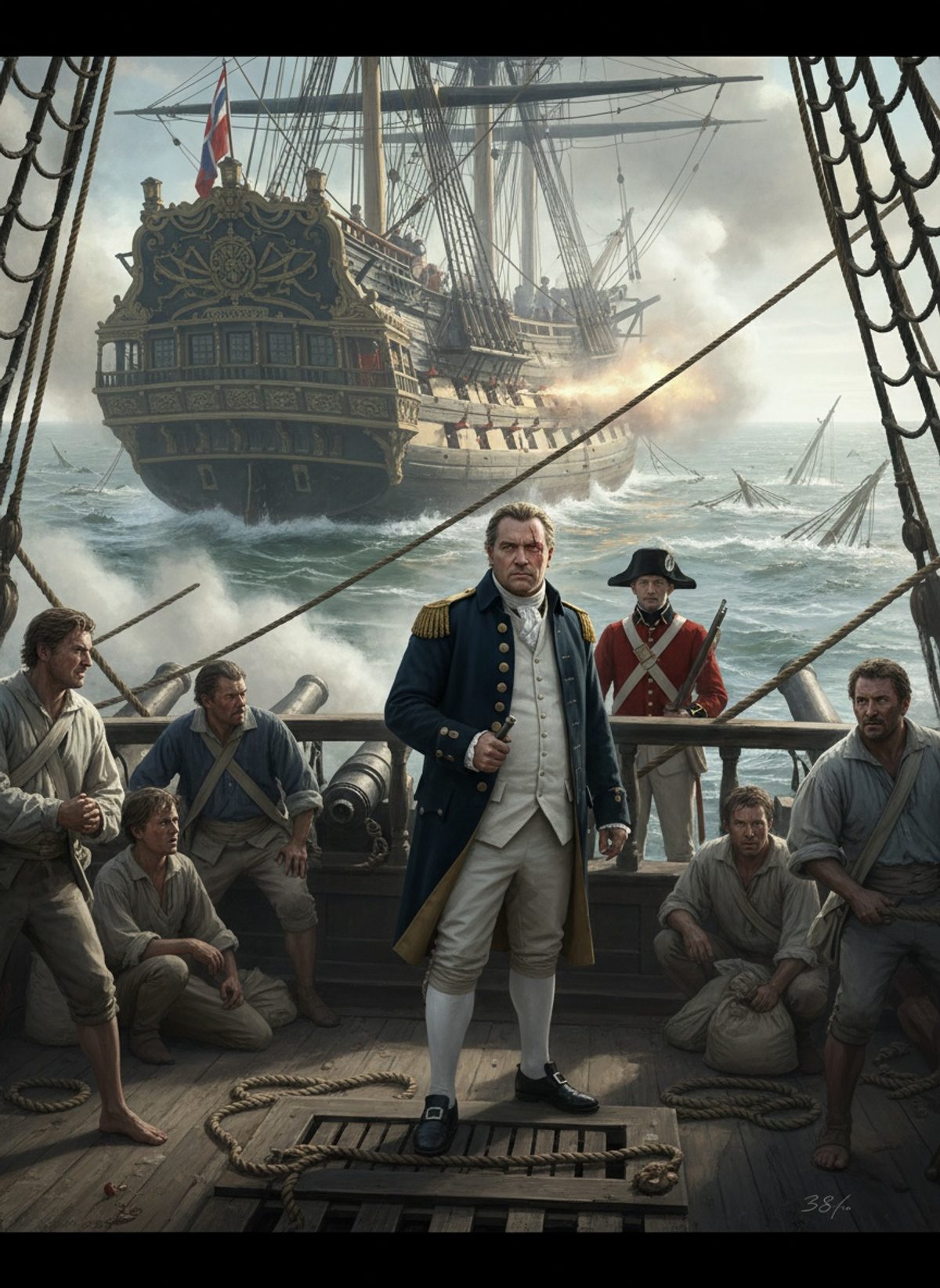
The tense air of January 1797 enveloped the English Channel as Captain Pellew commanded the HMS Indefatigable, a ship renowned for its speed and firepower. Under the cover of darkness, Pellew's crew engaged the larger French frigate Virginie, sparking a furious battle. Cannon fire tore through the icy night, and the two ships exchanged broadsides with relentless determination. The ferocity of the engagement was echoed by the violent waves, which threatened to overpower even the most seasoned sailors.
Yet, amidst the chaos of splintered masts and booming artillery, the British crew maintained their formidable resolve. After an intense confrontation, the supremacy of the HMS Indefatigable prevailed, leaving the French frigate crippled and adrift in the wintry sea. For many, this signalled a moment to bask in victory — a time to celebrate another triumph over Bonaparte's forces.
Read next: The Day a British Captain Stood Between Slaves and the Sea
A Captain's Conscience
However, Captain Pellew's mind was focused not on the spoils of war, but on the men who desperately clung to life amid the wreckage and freezing waters. The code of warfare in that era often left defeated enemies to fate, yet Pellew's moral compass pointed elsewhere. He saw beyond the accolades of his superiors, feeling the weight of his duty not just as a leader, but as a human being.
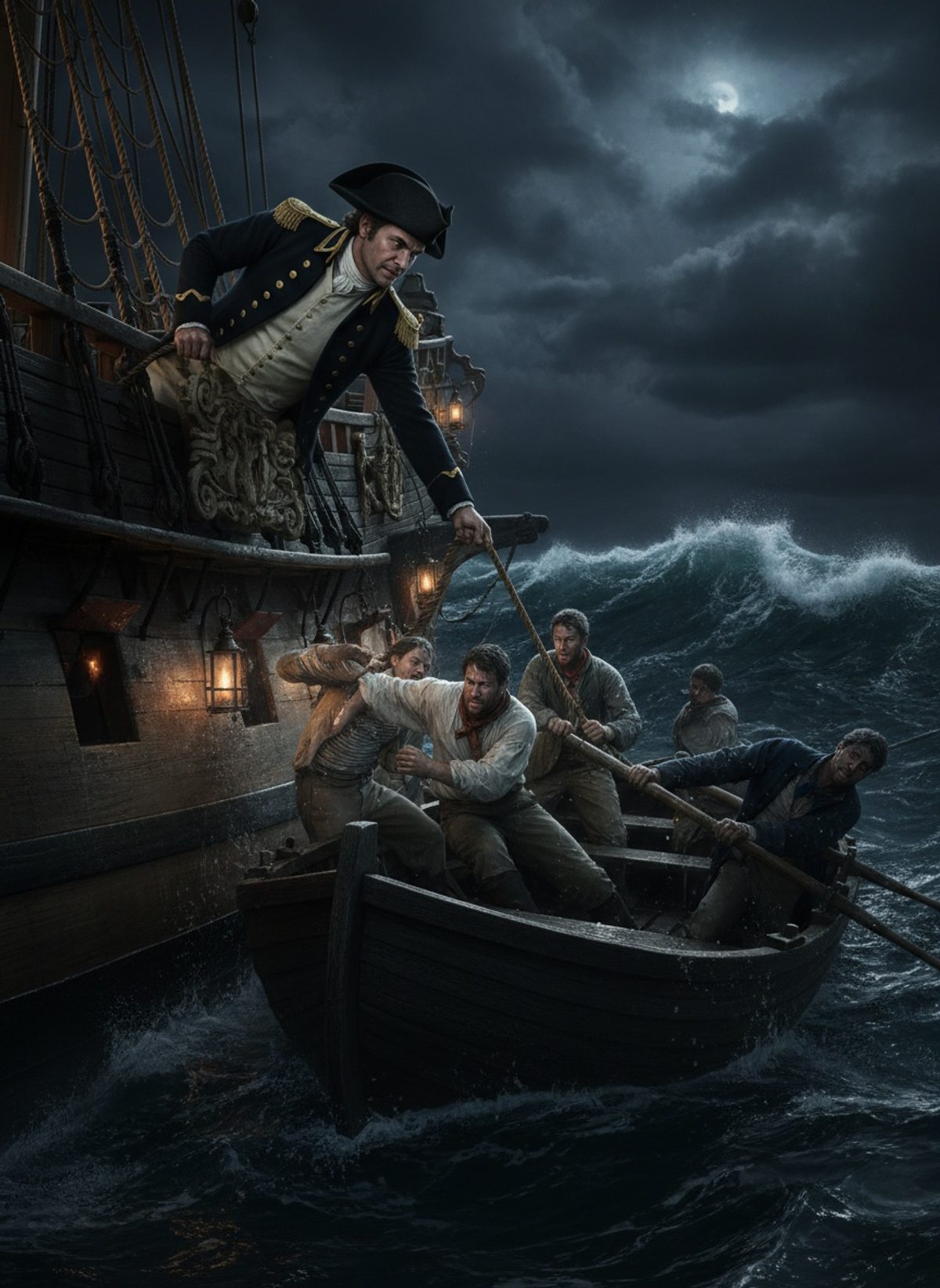
With a sense of urgency, Pellew ordered his own men into action — not to engage an enemy, but to rescue them. It was an unprecedented move, one that perplexed and inspired those who served under him. Amid the lingering echoes of battle, British sailors rowed out into the cold unknown to save the very men they had sought to kill merely hours earlier. Lanterns were lit to pierce the inky darkness as they searched the water for survivors.
A Rescued Enemy, A Tearful Gratitude
Each sailor plucked from the sea was a testament to their captain's empathy. As hypothermia's grip began to ease its hold on the rescued Frenchmen, a profound sense of gratitude emerged. For the defeated crew of the Virginie, who had felt death's icy embrace, Pellew's mercy was as significant as any military victory. It offered to them not just life, but dignity.
Among the rescued was Virginie's captain, who, overwhelmed by the unexpected compassion, wept openly. Tears mingled with the sea's salt as he expressed thanks, not in words, but in the universal language of emotion. In that moment, the animosities of battle dissolved into a shared respect for life and courage. Neither side was blissful at war, but this act of mercy provided a brief window into shared humanity that so often disappears amid the haze of conflict.
Beyond the Horizon
Edward Pellew's legacy would not be limited to his tactical acumen or naval triumphs. His actions aboard the HMS Indefatigable on that frigid night in 1797 highlighted a critical truth that often eludes those in power: the greatest victories are not always those carved in stone but those etched in the heart. War strips away humanity, yet Pellew, against the grain of expectation, demonstrated its indelible presence amidst war’s brutality.
This story, nearly lost to the annals of time, serves as a poignant reminder how one man's courage and compassion can defy death itself. Captain Pellew's bravery that night illustrates an enduring lesson — that honor can shine even in the darkest times, a beacon guiding humanity toward understanding and respect. In today’s world, as in that pivotal moment, such reminders charge us to embrace empathy over enmity, courage over conflict.