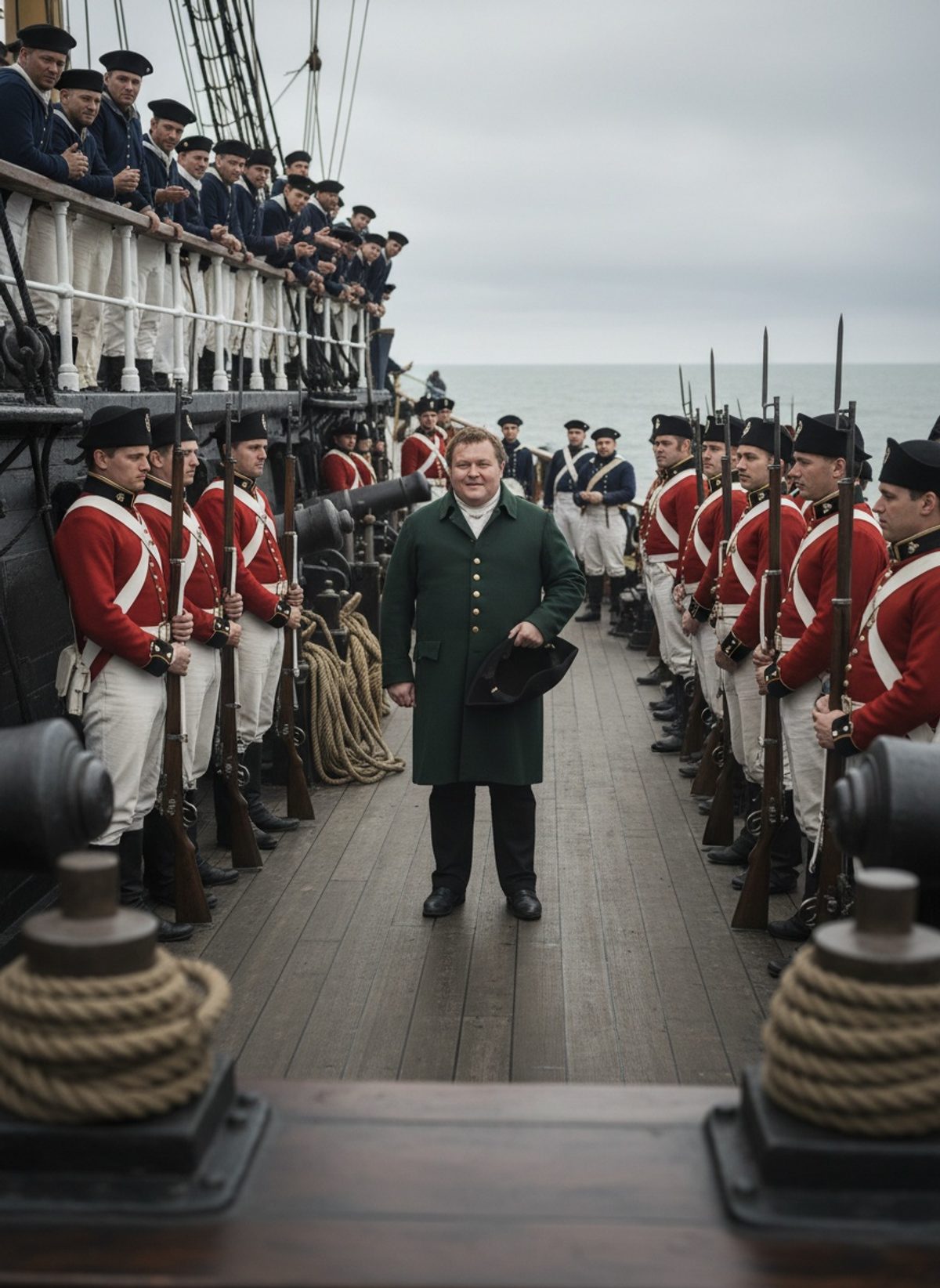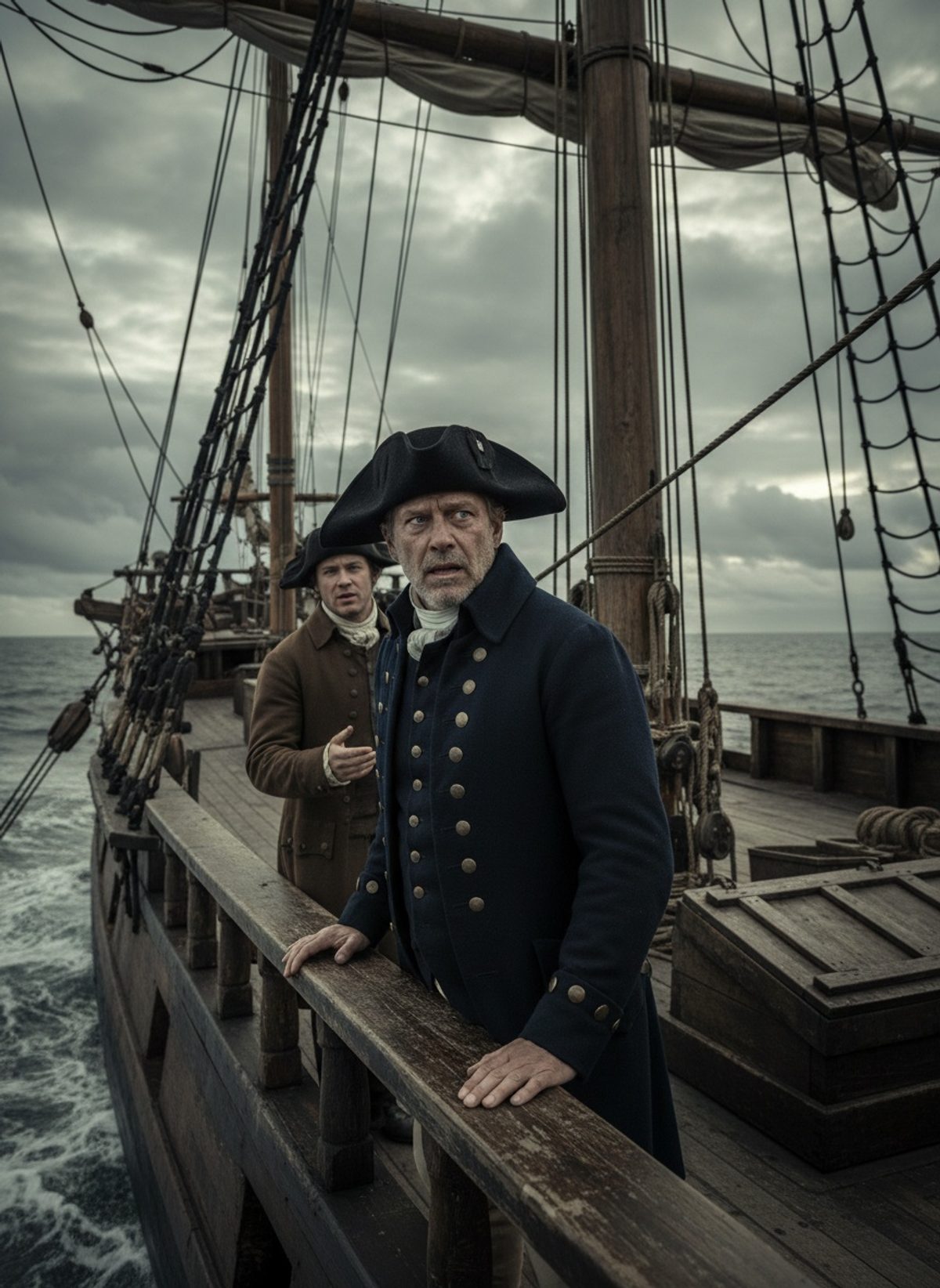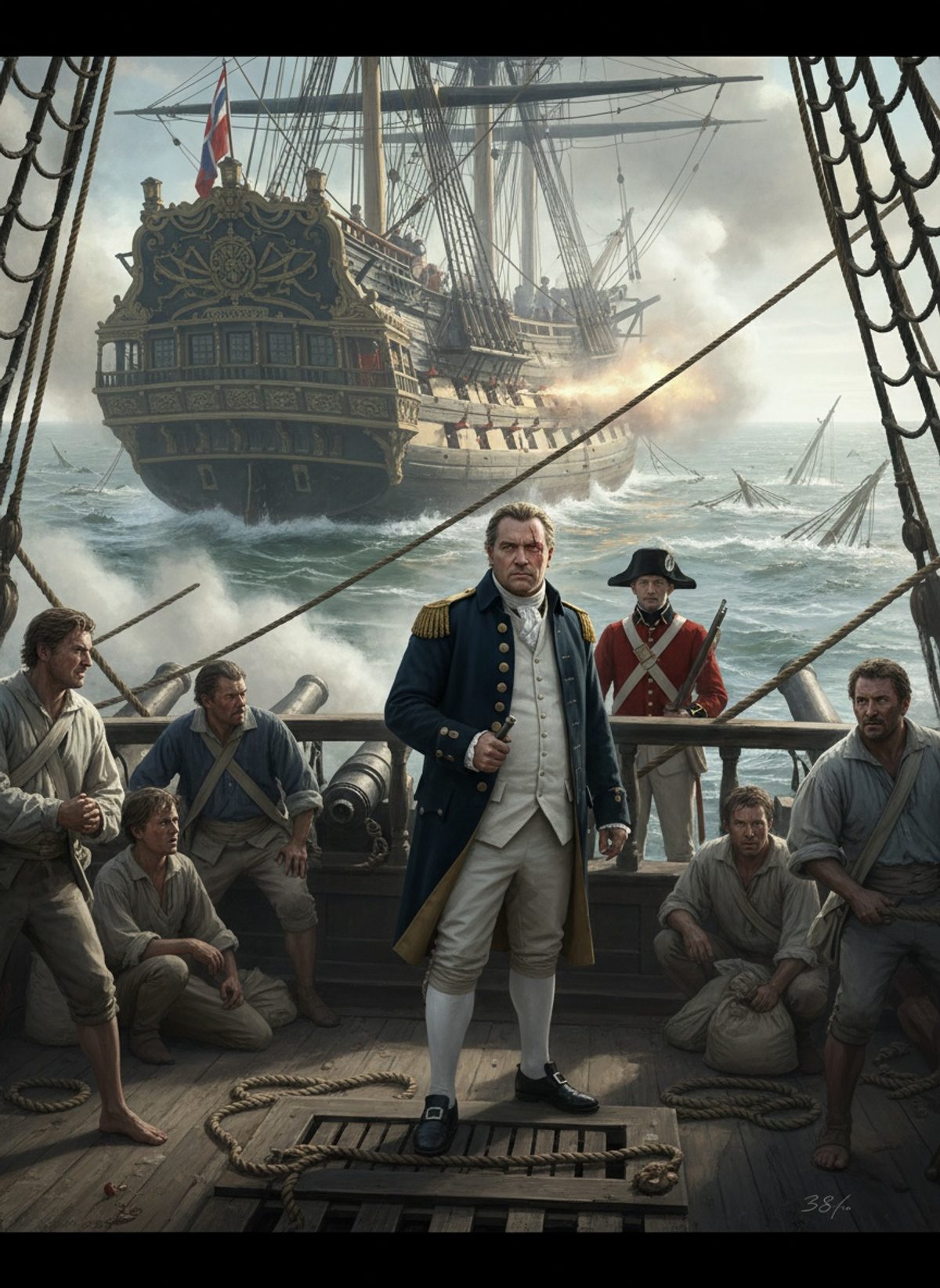
The waters off Cape St Vincent shimmered under the weak February sun, the horizon a smeared line between the pallor of the sky and the restless sea below. The sound of waves gently slapping against the hulls of the ships drifted through the air, mingling with the anticipatory creaks of wood and the distant cries of men readying for battle. Overhead, the clouds shifted in sullen masses, dragging shadows across sails taut with the cold wind. Yet amidst this scene of expectancy lay the potential for a seismic shift in naval dominance—a mere signal could tip the scales in favor of one nation over another.
The Signal Ignored
The order came with a ripple of uncertainty, a signal to break off the attack and disengage from the Spanish fleet. For many officers, such a command, emanating from the admiral in command, was unquestioningly absolute. Yet, one officer peered through his spyglass not for obedience, but for opportunity. Horatio Nelson, with one functioning eye and a reputation both feared and revered, metaphorically turned a blind eye to the command. Raising the telescope to his blind eye, he famously proclaimed, "I really do not see the signal." With those words, he cemented his place in history, defiantly ready to alter the course of the confrontation.
The junior commodore’s audacious move came at a time when clarity and decisiveness were paramount. The age of sail was an era where communication across naval lines was fraught with challenges, and a single misunderstood signal could doom an entire fleet. Yet here, Nelson’s rebellious choice did not sow confusion—it bred determination. He saw through the smoke and spray a chance for a different outcome, one where retreat was not the only option but rather a prelude to victory.
A Clash Unleashed
With the British fleet maneuvering under the command of those bolstered by Nelson’s defiance, the atmosphere shifted from one of defensive retreat to ferocious engagement. The skies roared with the boom of cannon fire, acrid smoke billowing up to merge with the cloud-dappled heavens. Men shouted orders as they navigated the wooden decks, the scent of gunpowder mingling with salt air in a violent symphony of war. Spanish ships, formidable and bristling with power, attempted to reposition, only to find themselves met with the full force of British resolve.
Read next: The Day a British Captain Rowed Into a Burning Ship to Save His Enemy
The stakes were more than mere tactical success; they were linked to the broader theater of the Mediterranean struggle. British naval dominance, critical for maintaining the blockade and keeping Napoleon’s forces at bay, hung on the outcome like the heavy mist clinging to the sea. Nelson’s ability to not only confront but reject the original command spurred his men to fight with a unity of purpose, intently aware that their efforts could seal the fate of Britain’s influence over the waters.
One Man’s Defiance, A Nation’s Glory
As the battle reached its crescendo, the Spanish fleet, bearing the brunt of the engagement, began to falter. Inspired by Nelson’s unwavering conviction, other commanders followed suit, deploying their vessels with newfound vigor. The sight of British flags unfurling defiantly against the sky was a potent image—a symbol of a nation’s tenacity distilled into sails and cannons. News of the battle, and of Nelson’s pivotal role, would soon reverberate throughout the halls of power back in Britain, where the public, starved for victories, hailed their naval hero.
Nelson's decision to engage rather than withdraw was not merely about prevailing in a single encounter. It spoke to larger truths about leadership and the ability to perceive fleeting moments of potential amidst chaos. In defying orders, Nelson did not merely reject authority; he redefined what could be achieved when valor outweighed caution. His victory at Cape St Vincent went beyond personal accolade, forming the crux of a strategic ascendancy that consolidated British naval superiority in the region.
Aftermath and Legacy
The aftermath of Cape St Vincent rippled far and wide, influencing not only naval strategy but also the morale of a nation. News of the victory emboldened Britain at a time when the winds of war with Napoleonic France were intensifying. Nelson, propelled into the limelight, became a touchstone for British national identity—a figure whose legacy was woven into the collective memory long before the Battle of Trafalgar etched his name into eternity.
Yet beyond the accolades and medals lay a more nuanced tale about the interplay of duty, defiance, and destiny. In choosing to act against direct orders, did Nelson simply see clearer, his single eye perceiving what others overlooked, or did he tap into a deeper understanding of the tides of warfare—an intuition that charted a course away from convention and towards triumph? The Mediterranean was won, but within that victory lies a question for the ages: when does the courage to defy become the greatest show of allegiance to one’s nation?
In the stillness that followed, as the guns silenced and the air cleared of smoke, the waters off Cape St Vincent echoed with the sound of history being rewritten. The day a one-eyed admiral sailed into the line of fire was not just a clash of ships but a testament to the power of individual will and the impact of a single decision on the fate of empires.