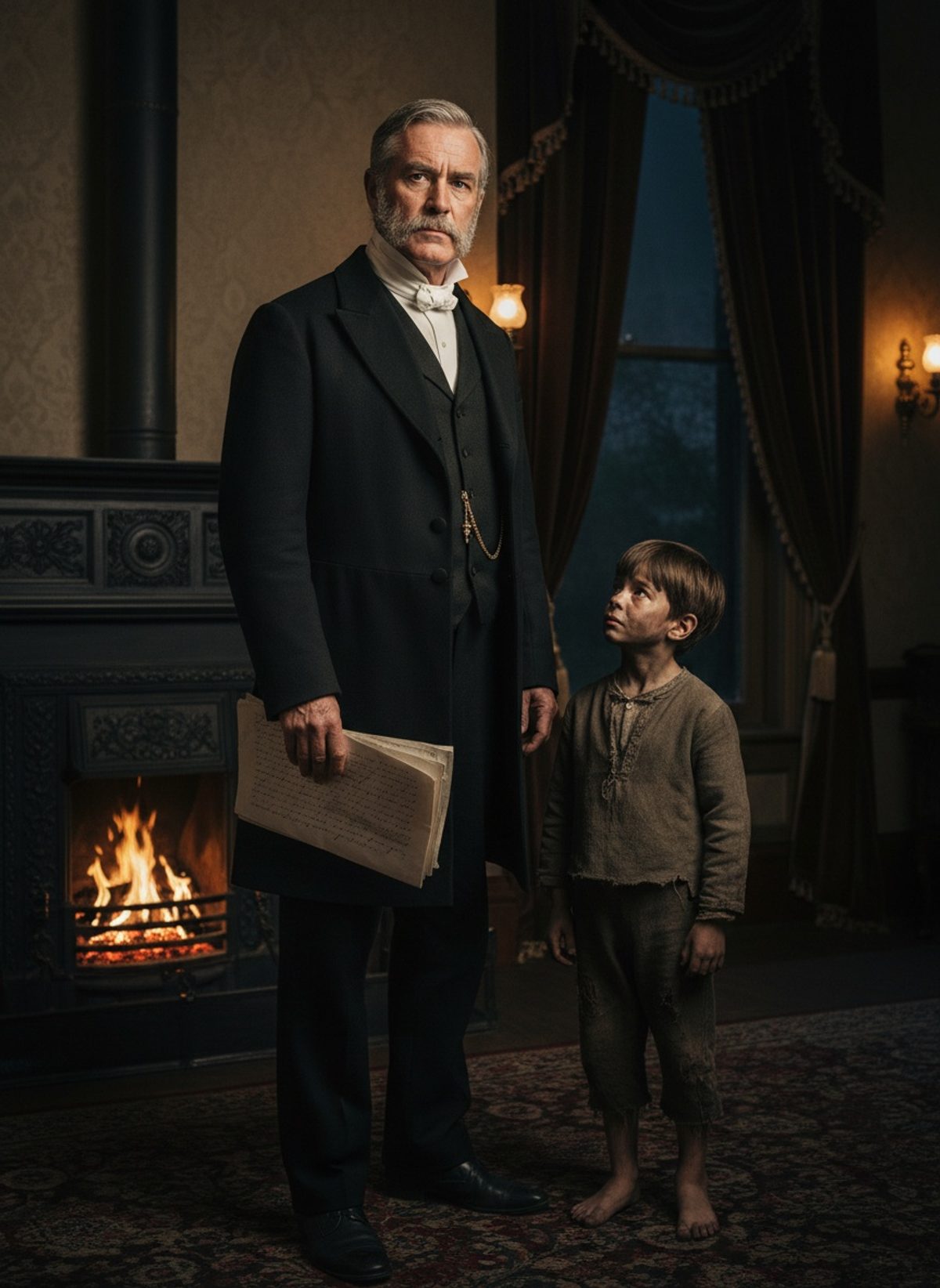
Anthony Ashley Cooper was a quintessential English gentleman. Yet, beneath the polished veneer, he never could ignore the cries echoing from London's chimneys.
In 19th century England, child labor was an abominable yet seemingly indelible part of urban life. While great fortunes spun tales of grandeur in London's commodious drawing rooms, a different tale unraveled in the tight, ash-coated labyrinths above the townspeople’s heads. Here, children as young as four were thrust into a world of suffocation and darkness, where prosperity was a distant reverie. They were the chimney sweeps, and their plight drew the unyielding attention of Anthony Ashley Cooper, the 7th Earl of Shaftesbury—an advocate undeterred by ridicule and parliamentary resistance.
Born into privilege in 1801, Anthony Ashley Cooper could have easily basked in the comforts of his status. Instead, he became a relentless crusader for social reform, impelling the Victorian elite to confront the stark disparity between wealth and the everyday misery of the lower classes. In those days, Parliament was no ally to progressive reform; it was a fortress of resistance. The grim underworld of labor exploitation at the time was not just tolerated—it was endorsed as a mechanism of economic prosperity.
The horrors faced by young boys shoved into claustrophobic tunnels were well-documented yet often brushed aside. Death by asphyxiation, severe burns, and debilitating respiratory diseases were common fates. Those who survived bore permanent scars—both physical and psychological. Running the risk of invisibility, these children's shadows flickered only when the hearth deserved attention. Yet their cries found a voice in Ashley Cooper.
Read next: The Day a Vicar's Son Gave the World Its First Anaesthetic
Twenty years. That's how long Ashley Cooper waged his war against this vile practice. With Parliament entrenched in its old ways, maneuvering through its intricacies felt like storming a medieval castle armed only with words and compassion. He stood time and again in a chamber that seemed more concerned with tradition than transformation. The laughter and dismissive jeers from his peers did not discourage him. They ignited a determination to honor the humanity so casually stripped from those children up in the smoke.
London, 1875. The air was tense with anticipation as Ashley Cooper strode into Parliament for one final battle. Over the years, he had built incremental support, crafting alliances with reform-minded politicians and stirring the conscience of a nation through vigorous campaigns and impassioned speeches. The groundwork had been laid long ago. Now, with the House filled with murmurs of potential change, he prepared to make his case one last time with the kind of fervor and sincerity that had come to define his life's work.
It was a scene thick with drama and perhaps a sense of inevitability. The room, flecked with sunlight that painted the somber walls with flickering patches of gold, bore witness to Ashley Cooper's eloquent pleas. Words hummed with the intensity of battles fought and lost, of victories anticipated yet stymied. The argument was basic humanity—no child should suffer for the conveniences of another's comfort.
His declaration was crystal clear, and as each sentence punctuated the air, the collective energy shifted. For a moment in that grand hall, the usual coldness of Parliament thawed, if only by a degree. Men adjusted their posture. Silence draped itself around them as the weight of his words settled. Could they continue to allow such cruelty to exist, hiding behind customs and capitalism?
The Child Chimney Sweeps Act of 1875 was born not just out of necessity but morality. Finally, the legislation made it illegal to employ children in sweeping chimneys. Here was an act, at last, crafted not merely as a paper shield but as a true bastion of protection for those who had none. The door to children's freedom opened, creaking under the toll of years spent closed. That day, Ashley Cooper's journey came full circle—not with the triumph of a singular man but with the liberation of countless young souls.
Some might say Anthony Ashley Cooper forced the conscience of a nation. True enough, but perhaps more importantly, he highlighted the capability of empathy intersecting with persistence. The passage of the law was a glistening beacon in an era of reform, promising that those shadows won't light hearths anymore; they would chase dreams instead. The vote that day shamed the assembly not through insult, but by making neglect impossible to ignore.
Though much has changed and many battles have since been fought and won, the echoes of this story remain pertinent today. Rarely do we witness the whole picture at first glance; often, it requires someone to ask pointedly: at what cost the warmth of our comforts? Ashley Cooper's story is a reminder to condemn the invisible chains in our midst and to tirelessly chisel away at the walls of indifference. Because sometimes, it takes the courage of conviction to force through the first ray of change. With eyes lifted to the sooty skies, Anthony Ashley Cooper—and the chimney sweep's son who would no longer face wild flames—proved that the smallest of sparks can ignite the grandest of fires.