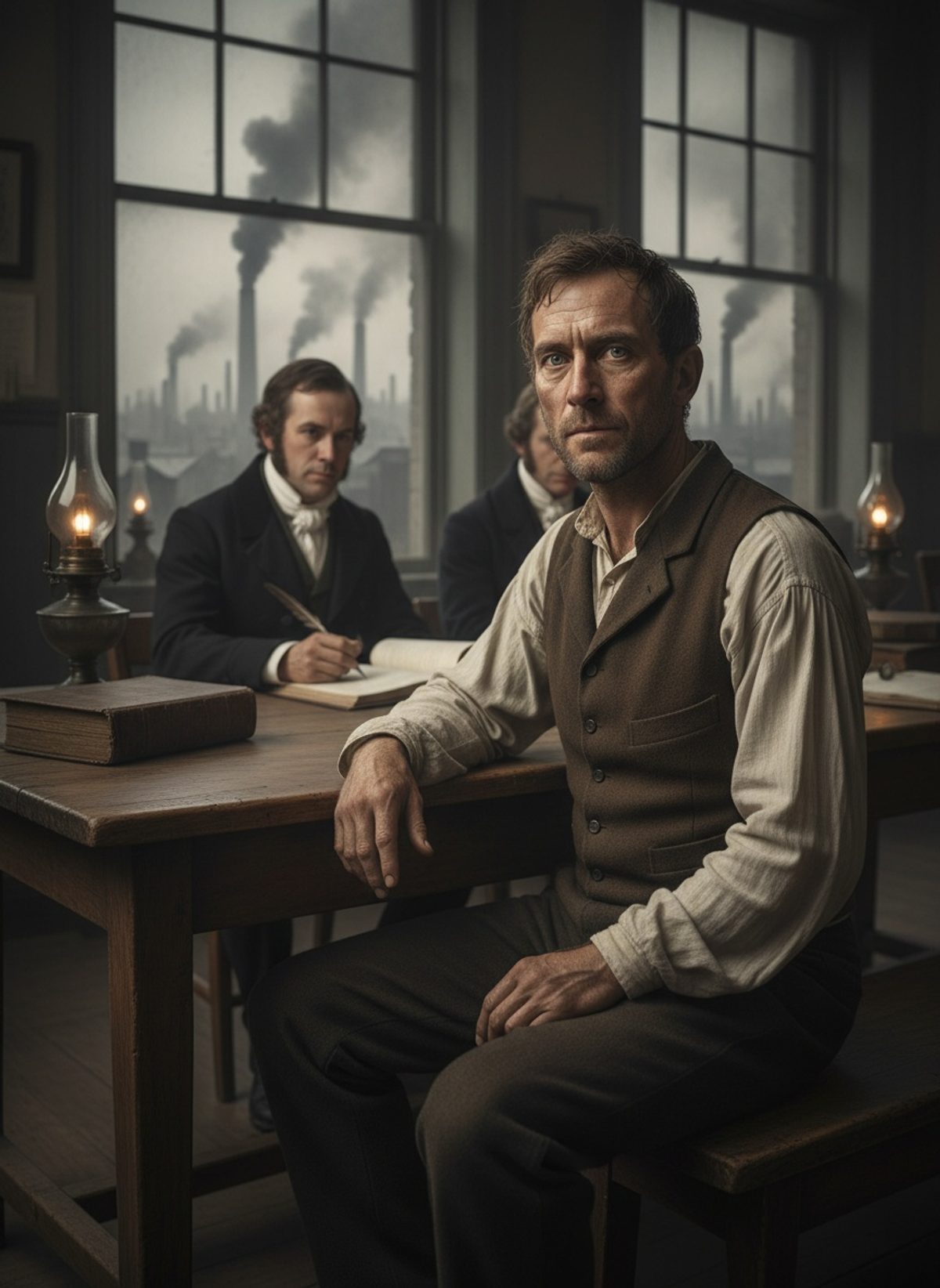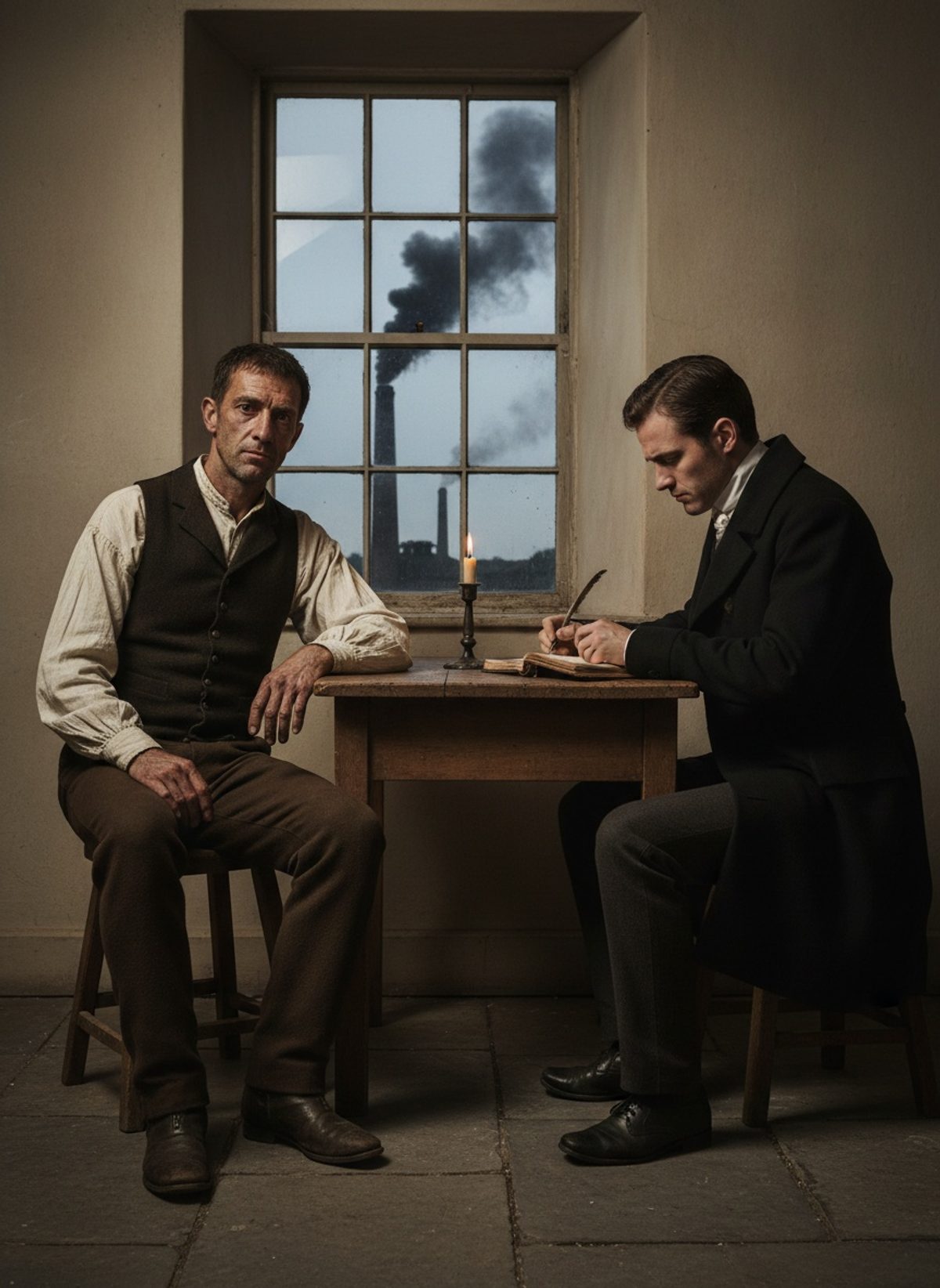
A guttural clang echoed through the iron belly of the mill, punctuating the relentless hum of spinning looms. Young Robert Blincoe steadied himself, the coarse cotton fibers scratching against his skin as he squeezed through the tight, thrumming machines that seemed to breathe with a life of their own. Just seven years old, he was an orphan in a crowded room of sweat and dreams, both stifled by the clamor of industry.
Born into harshness, Blincoe's existence was shaped by gears as much as by fate. The year was 1832, and the air in Manchester was thick with revolution—the Industrial kind. Vast cities were expanding, their smoky breath reaching into the sky while below, children like Robert toiled in anonymity, living as though each day was a breath held too long. Their tender hands fed the insatiable machines, their frail bodies often at the mercy of the machinery and the men who oversaw them.
Each sunrise ushered in another day of endless chatter from the giant looms, and amidst the creaking wooden floors and the sharp, fetid smells of oil and sweat, young Blincoe tried to survive. For many, the factory was more a mausoleum than a workplace, marking the end of light, learning, and laughter. Yet, somewhere within Robert, a vigilant flame refused to flicker out.
One wouldn't have seen it then, in those oppressive hours, but Blincoe was already imagining a canvas beyond his immediate world—a world shaped not by the hands of those who didn’t care to understand, but by principles of justice and dignity. This unlikely voice would soon rise above the clamor of the industry, drowning out its mighty pistons and clattering gears. But before it could, it had to endure its harshest trials.
Read next: The Day a Weaver's Son Defied Parliament for the Children
As he curled into himself inside the hard stone dormitory each night, Robert carried not just the scars upon his skin but the story of each bruise. The rhythm of the factory still drummed in his ears long after the machines had stilled. These nights, filled with desperation and a profound sense of entrapment, forged in him a resolute spirit—one that would later become his most powerful tool.
It wasn't until years later, when he encountered the compassionate pen of John Brown, a journalist with both curiosity and heart, that Robert saw a new path emerge. Brown, appalled at the condition of child laborers, recognized the extraordinary within the ordinary tale of this resilient young man. With Blincoe’s scars as a map, he crafted a narrative so compelling that it would reverberate throughout England, echoing even within the austere halls of Parliament.
The testimony Robert Blincoe provided was not merely the confession of a survivor but a clarion call for change. His words, written with raw honesty, described an existence so brutal that it left members of Parliament and citizens alike aghast. Every chilling detail about life in the cotton mill laid bare more than suffering—it documented the systematic dehumanization that was industrial child labor.
His account illuminated the profound dissonance between the rapid progress of the era and the stagnant morality of those who profited from child labor. A nation that prided itself on advancement and benevolence was confronted by the realities of a gilded nightmare built on young backs. This stark truth, finally articulated in Blincoe's potent narrative, was undeniable.
The cumulative impact of such advocacy bore results; legislation that sought to regulate and limit child labor began to take form. The conversation began to shift from one of mere acceptance to active reform, bolstered by the momentum of an awakened conscience. Blincoe himself, once an anonymous thread in the fabric of industrial Britain, had woven a legacy of change.
In the end, Robert Blincoe was more than the sum of his tribulations. He was an agent of transformation, his journey from silence to voice echoing the very ideals that would ultimately redefine an era. Through his struggle, he called attention to a tendril of humanity lost amid the steely roar of progress.
This narrative reminds us of the power of a single voice among the multitude. Blincoe's courage to speak his truth reminds us that beneath the shadow of any great machinery can lie stories of darkness, but equally, stories of hope. Despite the passing years, his message endures, an enduring ember in the ongoing quest for social justice—a testament to resilience and the profound impact one life can have on so many. As history continues its unending march forward, it beckons us to wield whatever influence we possess, however small, in service to a future kinder and more just for every child to come.