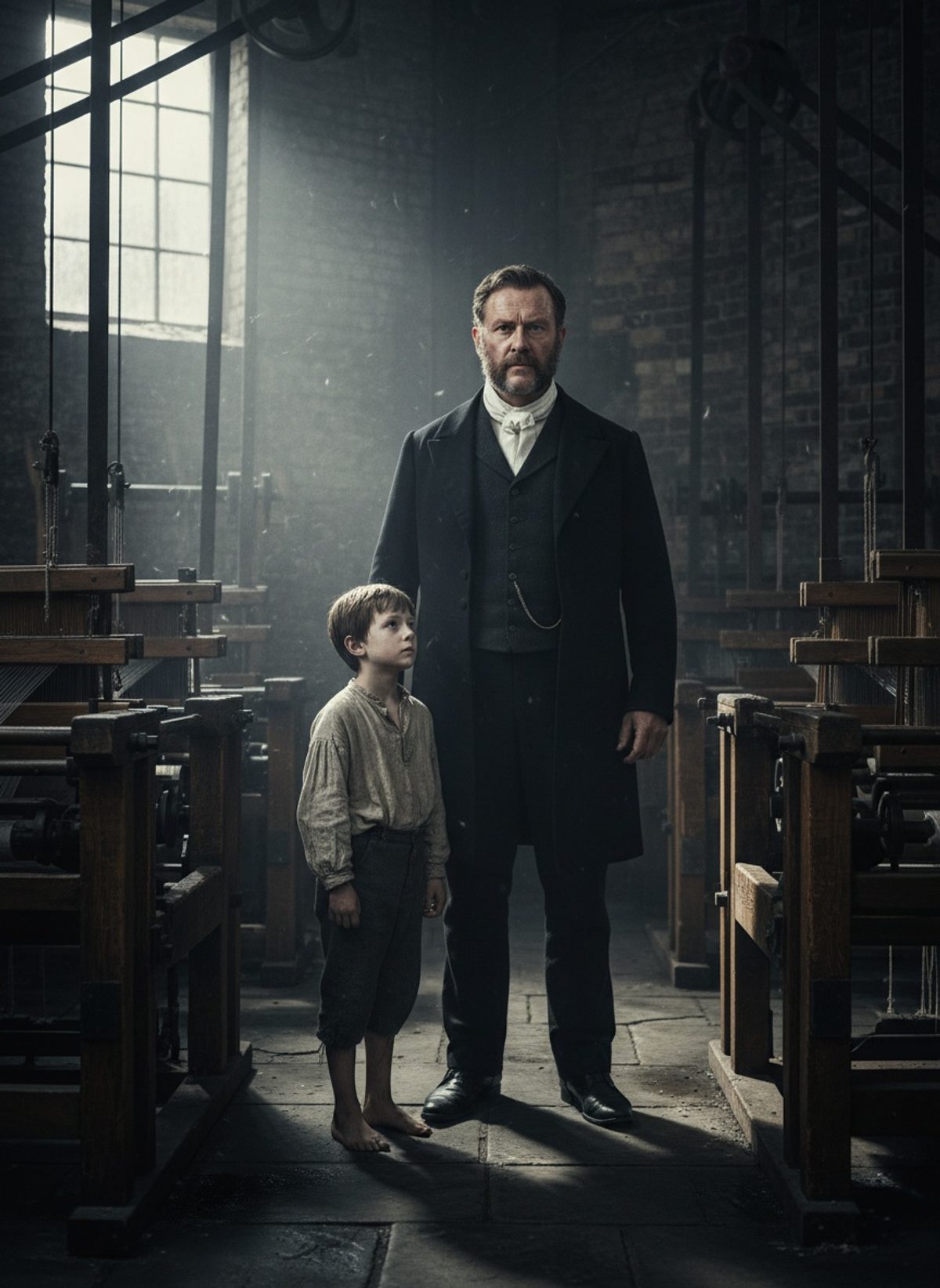
September 1833. The cobblestone streets of Manchester reverberated with the determined steps of one man, his hands trembling with anticipation and resolve. Robert Blincoe was about to confront his past in the most public of arenas — a government inquiry into the conditions of England’s infamous cotton mills.
The Dark Heart of the Mills
The dawn of the Industrial Revolution was a time of extraordinary change and profound exploitation. In the bustling industrial heartland of England, vast factories hummed with the relentless production of goods fueled by human labor. Yet beneath this façade of progress lay a grim reality: the mills of Manchester, and indeed across England, were filled with children as young as seven, pressed into service by circumstance and coercion.
Their days were long and unforgiving, marked by the relentless grind of machinery and the cruel watch of overseers. Many were orphans or pauper children, traded into apprenticeship by parish officials eager to relieve themselves of their care. In these mills, children worked up to sixteen hours a day in hazardous conditions, with little regard for their frail bodies or tender ages. They faced constant dangers: limbs caught in machines, the inhalation of cotton fluff leading to lung diseases, and the persistent threat of physical punishment for the slightest mistake.
Robert Blincoe had experienced these horrors first-hand. Abandoned as a child, he was apprenticed to a cotton mill, where he witnessed and endured unspeakable hardships. His journey from the workhouse to the factory was a common one, but Blincoe would rise from this trial as a voice of truth and change.
Read next: The Day a Collier's Son Gave the Mines a Voice in Parliament
A Testimony That Echoed
As Blincoe appeared before the government commissioner in 1833, the weight of his memories must have been palpable. He was there to share not only his personal torments but also those suffered by countless children still trapped in the mills. His testimony was not for the faint of heart; it painted a picture with strokes of suffering and brushstrokes of deep injustice.
Blincoe recounted the names of his captors, the mill owners who had grown wealthy at the expense of innocence. Every revelation was not without its risks. By daring to speak out, he defied a powerful industrial class, one that had the means and motivation to silence detractors. Yet his words flowed with gripping clarity, unveiling the stark reality hidden behind the mill walls.
His courage did not go unnoticed. Blincoe’s testimony became a pivotal moment in the push for reform, galvanizing public sentiment against the exploitation of children. The commission he addressed would eventually contribute to the passage of the Factory Act, an unprecedented piece of legislation aimed at curbing child labor and setting the groundwork for labor rights.
The Quiet Resistance of Ordinary Lives
Despite the fear of reprisal, Blincoe's narrative inspired others. The comfort of anonymity could not sedate the fierce indignation growing among those aware of the millchildren's plight. Reports emerged in the form of letters from mill workers and doctors testifying to the appalling conditions. It was a quiet form of resistance, but no less revolutionary in a society dominated by industrial moguls.
The conditions described were not merely damaging; they were life-defining. The stories of malnourished children falling asleep at their looms, only to be beaten awake, were paired with accounts of escape attempts driven by sheer desperation. These testimonials painted an indelible image for those who could afford to look away.
If Blincoe served as a clarion call, these lesser-known voices formed the chorus that made it impossible for society to ignore the mills' dark secrets. Together, they fostered an environment ripe for change, challenging the narrative that industry came at the necessary cost of human suffering.
An Ongoing Legacy
The Factory Act of 1833 marked a watershed moment, one that could not have been achieved without the bravery of individuals like Robert Blincoe. Though the Act was far from perfect—limited in scope and poorly enforced—it represented a significant shift in social consciousness and legislative priorities, laying the foundation for future reforms.
The story of Blincoe and the inquiry in Manchester is a reminder of the power of testimony, the ability of one voice to be a conduit for justice. In a time when many were complicit through ignorance or avoidance, his words, and those of nameless others, cast a light into the darkest corners of industrial society.
Today, we continue to grapple with the balance between industrial progress and human welfare, a debate that still echoes with Blincoe’s courage. It’s a sobering testament to the resilience of the human spirit and an enduring call to ensure that economic advances do not trample the rights and dignity of the vulnerable. The stories whispered in the clatter of the mills still linger, urging reflection and vigilance in the face of relentless progress.