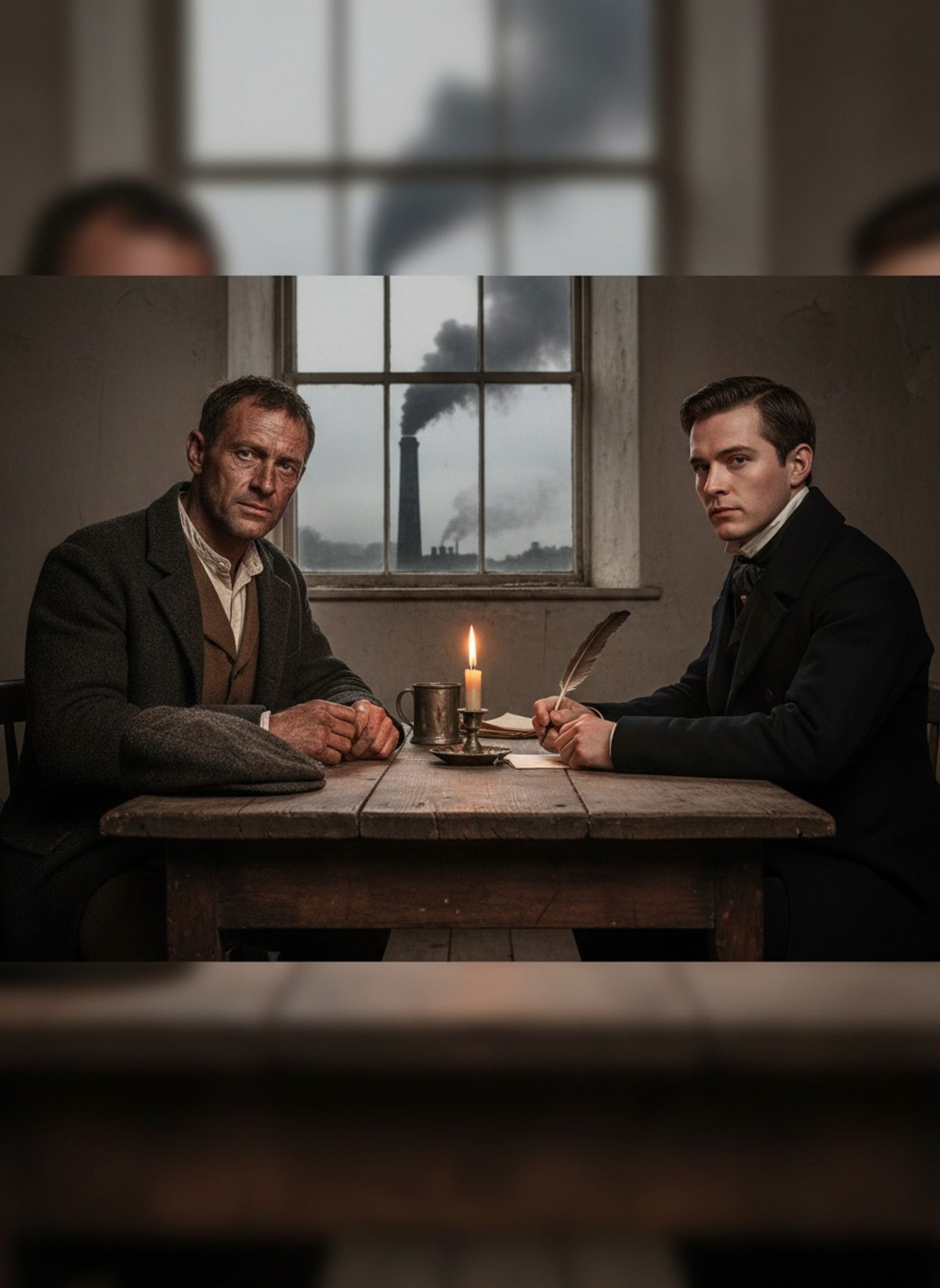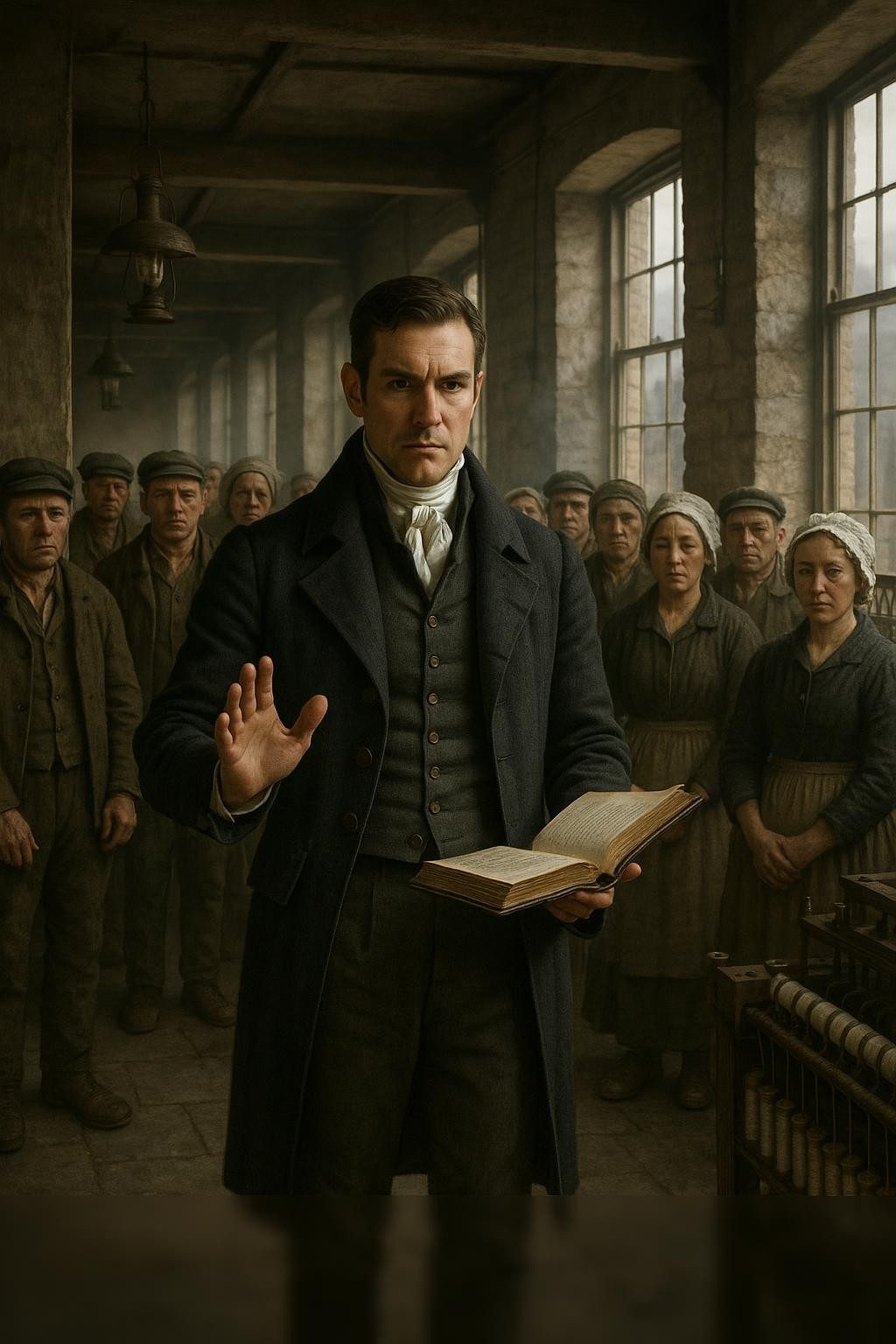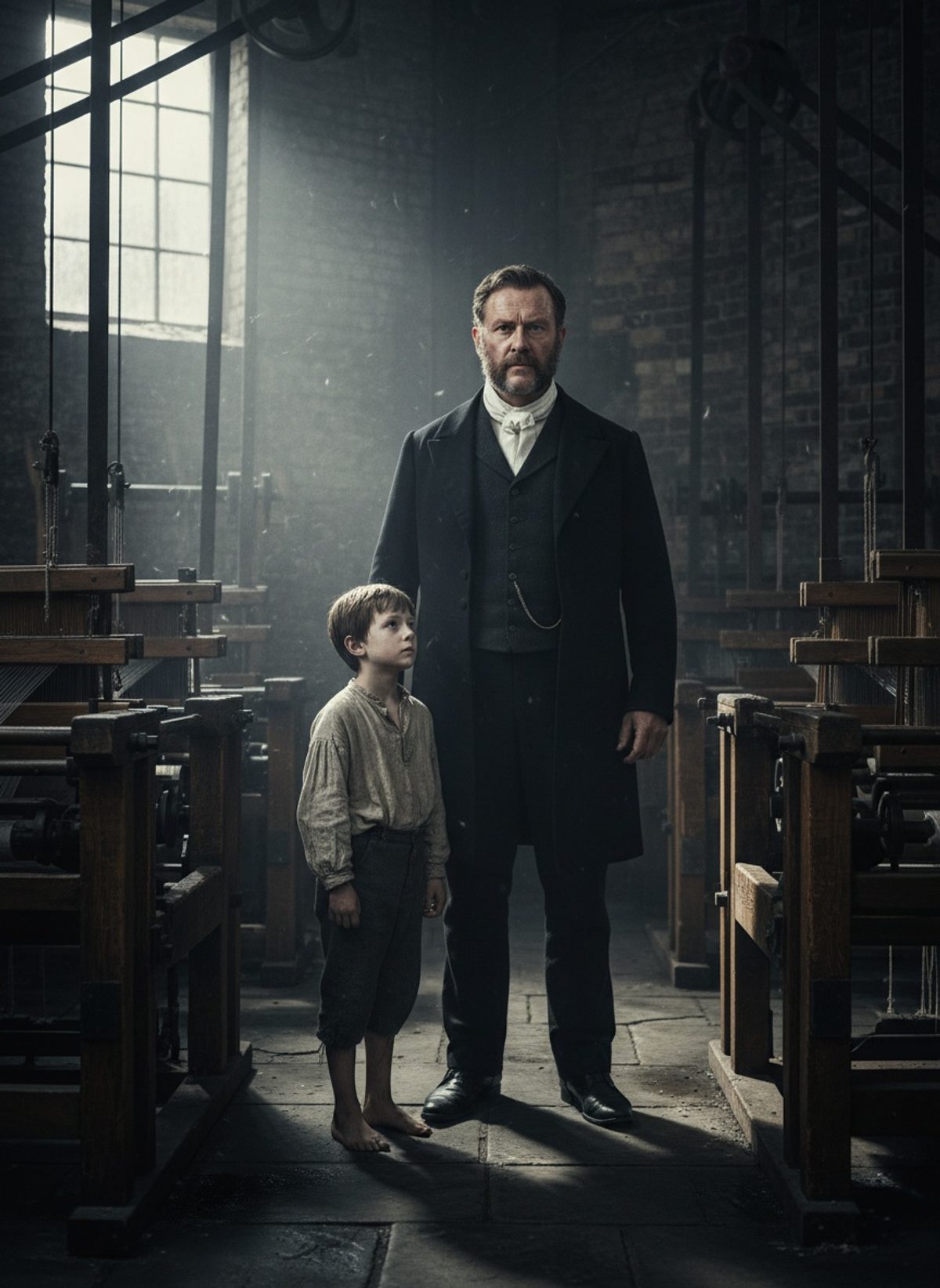
The grey, drizzling skies of Manchester shrouded the city in a somber gloom. The air was thick with the acrid scent of coal smoke from the chimneys that punctuated the sprawling landscape like sooty fingers grasping at the heavens. The clatter of looms echoed through the streets, a relentless mechanical rhythm that underscored the pulse of industrial ambition. In 1833, beneath this brooding canopy, the grit of Lancashire's heartland was decorated with the hopeful yet fading innocence of children bound to the relentless gears of progress. Within the walls of the cotton mills, days stretched from the pale light of dawn to the dim glow of dusk, where the shadows seemed to trap the vestiges of childhood dreams in their murky grasp.
Among the faces clouded by exhaustion and blurred by sweat, the smallest hands turned the largest wheels of Britain's industrial miracle. Children, some barely tall enough to peer over the machines they tended, were integral cogs in the country's burgeoning textile empire. They carried within them a silent burden, laboring without reprieve while their laughter was lost amidst the screams of steel and steam. This was the unsung song of the Industrial Revolution, harsh and unyielding, conducted to perfection under an economy governed by avarice.
Yet, from this chorus of ceaseless toil rose a voice destined to become both a rallying cry and a catalyst for change. Richard Oastler, the son of a humble weaver, found his calling amidst the cotton fibers and conveyor belts. He was not born into power, nor did he occupy a seat with privilege — but his heart had seen the factories' cruelties firsthand, and that was enough to ignite a fire that no storm could quench. Until then, Oastler had lived a quiet life, managing estates with an eye for detail and a diligence that befitted his Yorkshire lineage. But the disparity and desperation he witnessed within the mill's dreary corridors transformed him from a spectator into a prophet of reform.
On that pivotal year, Manchester was a bastion of economic might, yet its prosperity rested heavily on the shoulders of those who could scarcely bear its weight. Oastler's entrance into the political fray was not with fanfare or formal declaration but with an indomitable will. It was by the flickering gas lamps of Parliament that he stood unmoving, refusing to yield until the nation could no longer turn a blind eye. His passion, bolstered by fervent letters and relentless campaigns, distilled into a single imperative: to end the spectacle of child labor that was both a moral outrage and a societal blight.
Read next: The Day a Cornish Engineer Rode His Own Steam Monster
Oastler's mission proved to be as arduous as the lives he endeavored to save. The invincible combination of industry titans and indifferent lawmakers presented a formidable opposition. Some questioned his motives; others doubted his resolve. Yet, with every shake of the head or dismissive scoff, Oastler's determination grew stronger, more unyielding with each submission he crafted, every plea that bore his ink-stained imprint. His cause began to swell with the collective dissatisfaction of an industrial currency measured in lives rather than coins.
While the mills expunged flesh and bottled hope, movements across the country began to stir. The campaign for fabled "Ten Hours Bill," spearheaded by Oastler, sought to put legislative shackles on an unrestrained machine. Why must the bones of the young be the mortar of British prosperity? Oastler asked not for the world, but only that children might see naught but a fair day — where brevity did not rob them of youth nor vice versa. His persistence enlisted allies amongst the disenfranchised, a growing force that defied the notion that silence was the only refuge.
Richard Oastler's legacy bears the scars of his struggles — echoes captured in time that resonate quietly yet profoundly even today. The factories—a stark tapestry woven of steel and suffering—now hold within their silent halls the whispers of a man who dared defy the prevailing winds of inertia. It was not a single victory that defined Oastler's journey, but the indelible melange of resilience and integrity within a battleground not of guns and blood, but of wills and words.
His resolve reshaped the landscape from one dominated entirely by interminable strife into a canvas tinged with empathy and reform. Though 1833 was but a moment upon a broader spectrum, it marked a turning point, daring us to glimpse onto a future where industry did not mock innocence, but embraced it—a testament to the relentless pursuit of justice under the unforgiving gaze of indifference. The weaver's son who defied Parliament not only changed the fate of legions upon factory floors, but firmly entrenched the idea that those who dream anew can weave a world better and ever more just.