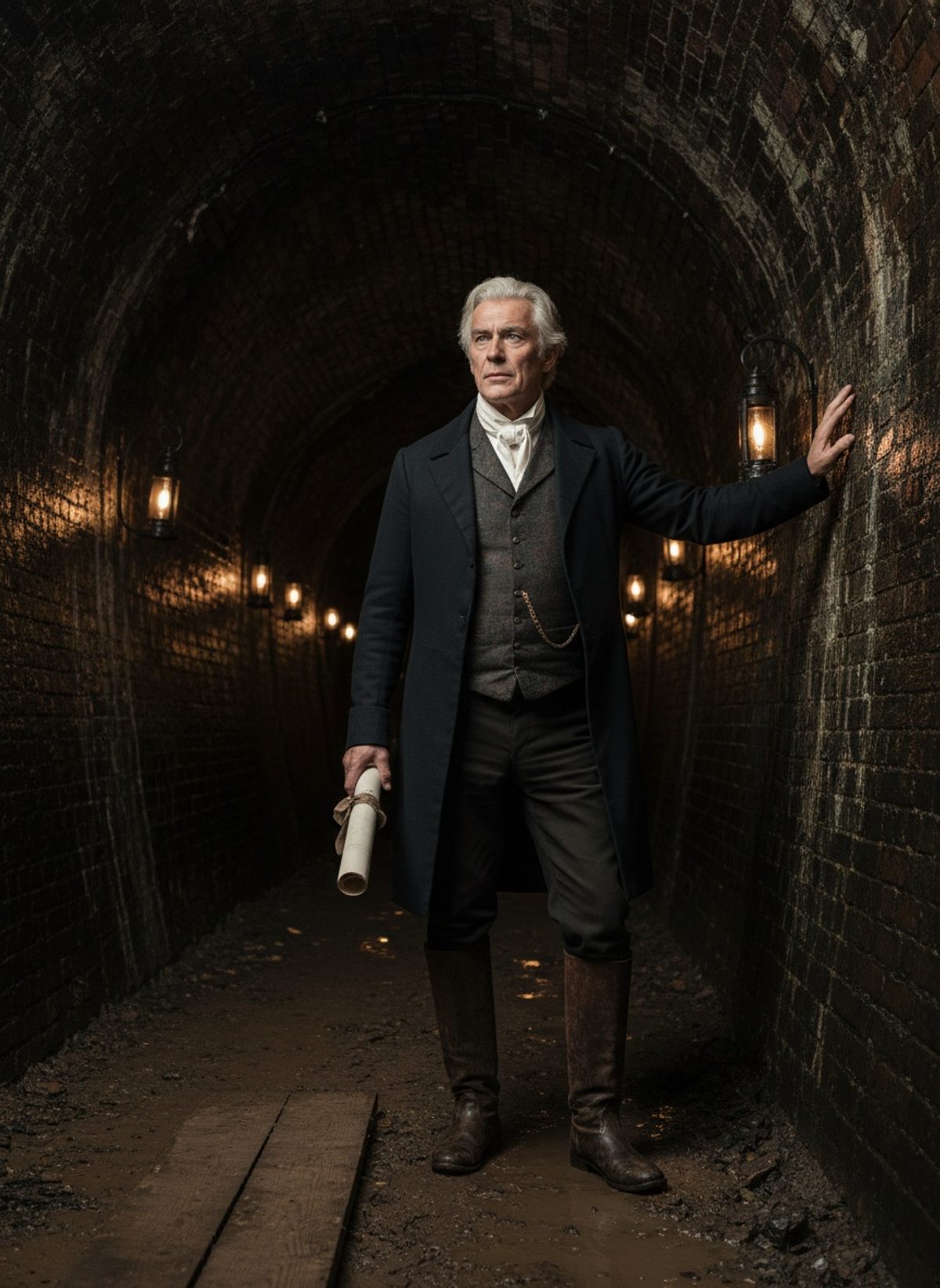
Marc Brunel's name may not be on everyone's lips. Yet, the ground beneath London owes him its secrets.
In 1841, the world watched incredulously as Brunel neared completion of the Thames Tunnel, the first of its kind to burrow beneath a navigable river. It was not just the press or the skeptical experts gawking from above; the River Thames itself seemed intent on thwarting his ambitions. Twice, tumultuous waters had invaded, transforming calm construction endeavors into scenes of chaos and hazard. Floodwaters swallowed men, inundated dreams, and all but drowned Brunel's iron will.
The tunnel, stretching from Rotherhithe to Wapping, was a marvel. Not of simple dug earth and hope—Brunel wielded an audacity in vision akin to Prometheus stealing fire. Early 19th century London was bursting with industrial vigor, yet the city exhibited a hesitancy toward impossible dreams. Bridges creaked under the weight of progress, society clamored for connection, and Londoners scoffed at Brunel's grand venture as mere folly.
But Brunel was not without his unique genius. Inspired by none less than the humble shipworm, whose natural ability to bore into submerged wood lent engineers a novel approach, he invested in an apparatus known as the tunneling shield. Brunel’s innovation was simultaneously simple and complex. A protective barrier, sectioned like the shell of an armadillo and supported by sturdy frames, allowed workers to dig safely while the river bed pressed ominously above them.
Read next: The Day a Mill Owner Kept Paying Wages He Could Not Afford
The journey from concept to near completion was treacherous. The two catastrophic floods left not only water in their wake but a tragedy of men lost, courage tested, and a gargantuan budget woefully exceeded. London, once skeptical, watched now with a grim fascination as resources dwindled and fatality loomed over every decision.
Amidst this backdrop of societal doubt and personal devastation, Brunel himself was unraveling. His health ravaged, exhaustion seeped into his bones as he grappled with not just the responsibility of his workers' lives but with his deteriorating faculties. This was a man whose hearing faltered like the unpredictably shifting mud around him. Each day, the weight of failure encroached closer, deaf to the clamor of success his heart so desperately longed to hear.
Yet on one fateful day, driven by an enigmatic resolve, Brunel walked the tunnel alone. Beneath the earth, with only the sound of dripping water echoing—his silent companion—he declared the tunnel complete. In that moment, Brunel stood amidst a triumph that juxtaposed the ethereal darkness of an unyielding river and the dim light of human progress. It was not a declaration made from ego or bravado, but from intimate gratitude to the unseen hands of history guiding him.
As the world inched toward modernity, Brunel provided not just a passage beneath water, but a blueprint for audacity. His tunnel laid a foundation for the multitude of structures that would soon clutch at the skies and burrow beneath the sodden ground. It reminds us that the pathways we take for granted were once deemed heretical thoughts. In Marc Brunel, the deaf engineer, the world was reminded that silence is not the absence of sound, but the persistence of purpose.
The Thames Tunnel still exists, often overlooked as a mundane feat now shadowed by the towering engineering marvels it inspired. Yet this muted subterranean corridor whispers an immortal truth. It tells of a time when courage dug deep, not just through byways of muck and ruin, but through the fortresses of skepticism and despair. Marc Brunel’s legacy isn’t just the tunnel itself, but the knowledge that history's greatest ambitions often begin in the minds of those who dare to listen, even in silence.