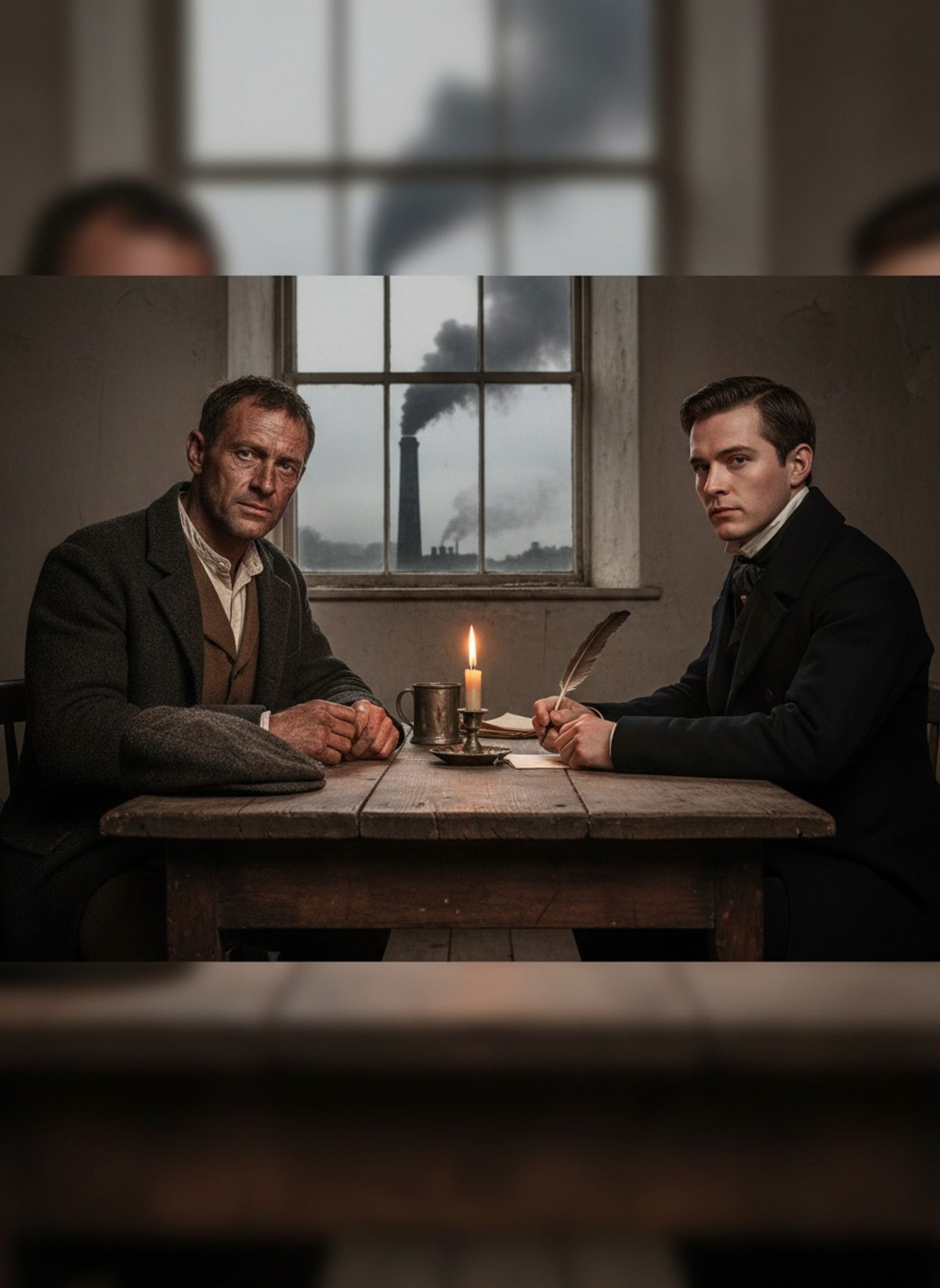
The air was thick with the damp, cold breath of the earth, the kind that clung to skin and seeped deep into bones. The mine entrance loomed like a yawning abyss in the rugged landscape of the Durham coalfields, where the skies above often mirrored the sullen grey of the pit below. It was a place where sunlight was a stranger and shadows danced menacingly in the half-light of flickering candles. Yet deeper, hidden in the belly of the earth, lay an invisible danger even more malevolent than the suffocating gloom: firedamp. A simple spark, an innocent flame, could ignite the gas with catastrophic consequences, turning the mine into an underground inferno. This was a reality faced daily by the men who delved into the coal-rich veins beneath County Durham in 1815. Many never returned to see the light of day again.
Amidst the backdrop of soot-stained skies and the relentless march of the Industrial Revolution, miners plied their dangerous trade, providing the fuel that powered a nation hungry for progress. Coal was the lifeblood of industry, but extracting it often meant gambling with life itself. It was in this perilous context that the need for a safer mining environment became not just important, but urgent. Fires and explosions, like spectral harbingers, haunted the districts, instilling a fear that no amount of experience could quite quell. Each day began with a whispered prayer and ended in fragile relief. But somewhere far removed from this harsh reality, in a modest London laboratory filled with the acrid smell of sulphur and melting metals, one mind turned tirelessly in pursuit of a safer future.
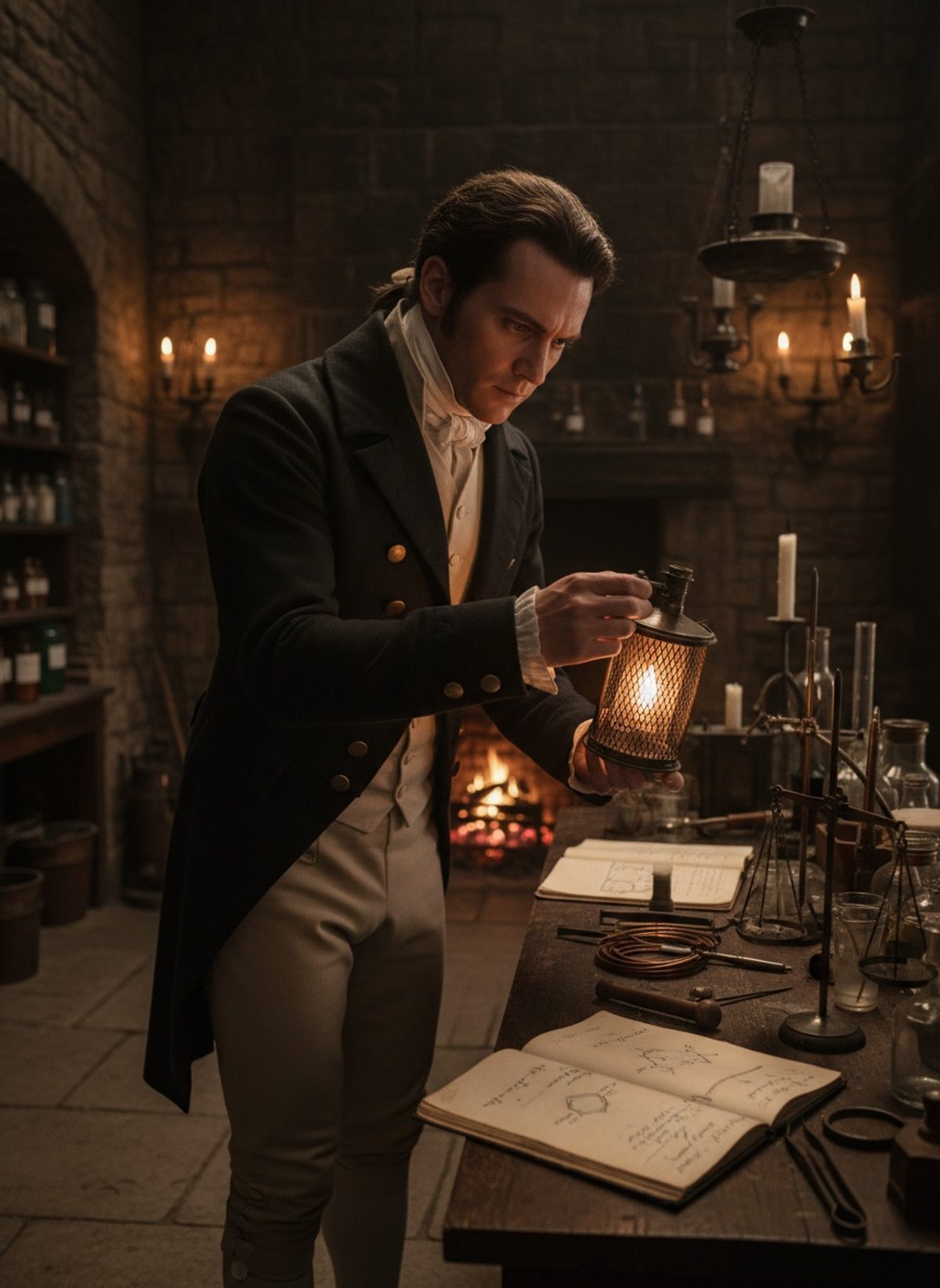
Sir Humphry Davy, a chemist of genius and a true iconoclast, was deeply absorbed in his work. Known for his groundbreaking experiments and probing intellect, Davy was not content merely to observe the world's dangers; he sought to conquer them. With vision not marred by the gloom of the mines, but certainly driven by a clear and pressing need, Davy pondered the fate of the miners with profound empathy. His mind's eye envisioned a device that could bring much-needed light without the deadly potential of its current counterparts.
Davy’s challenge was formidable. Could a lamp burn brightly enough to dispel darkness, yet safely enough to protect the men? Firedamp was a sly killer — odourless, unpredictable, and almost always lethal. Every prior attempt at illumination had seemingly failed, blithely ignoring the hidden dangers that lurked in every tunnel and shaft. History had painted him the scene; now it demanded safety to accompany its stark landscape.
Read next: The Day a Mill Boy Walked Into Parliament and Wept
Using little more than the resources around him and his resolute ingenuity, Davy began a journey into the heart of safety itself. He methodically took apart a standard oil lamp, stripped away assumptions, and began again. What he conceived was revolutionary. Working quickly, within just six weeks, the now legendary Davy lamp took shape. Its brilliance lay not just in its function but in its elegant simplicity: a metal gauze shield, finely woven into a mesh, surrounded the flame. This gauze served as both guardian and gatekeeper, dissipating heat so efficiently that any building gas would remain below its ignition point. The lamp became a beacon of hope encased in metal, a harbinger of safety amidst toil.
In the cozy glow cast by this unassuming invention, Davy’s lamp offered miners their first flicker of genuine hope against the pervasive dread. More than just a lamp, it was a talisman — something tangible and real to hold onto in the darkness. Not simply a tool, but a protector. Throughout the beleaguered coalfields, there was an eagerness, a new guarded optimism like the first light of dawn breaking after a stifling night. It spoke to the promise that danger may yet be met and tamed by human ingenuity.
Yet what truly made Davy’s lamp remarkable was not only its immediate practicality but its enduring legacy. With time, modifications accompanied improvements in technology, but the underlying principles remained. His invention prompted a shift in thinking that went beyond the mines; it was a testament to the transformative power of science. Safety became as integral to industry as efficiency, and the balance between progress and human life was reconsidered.
There are no grand monuments standing proud in the name of the Davy lamp, no statues cast in its likeness. Yet in the shadowed lexicon of history, it cast a bright and unequivocal light on the path towards safer industrial practices. It reminded humanity that those who toiled under a heavy yoke were deserving of more than merely hope; they were entitled to flourish and return safely to their homes at the day's end.
In the softly glowing embers of an evening, when the laborers of County Durham hung up their helmets and set aside their fears, there was a subtle acknowledgment of something more profound than just relief. It was trust — trust in a small light that pieced together lives, guarded dreams, and struck a bargain with fate so that its claim on human lives became less relentless, less inevitable. In this way, amidst the tumult and triumph of the Industrial Revolution, Sir Humphry Davy achieved what many thought impossible: he gave the mines their first safe lamp and, in doing so, smoothed a path through the darkness just wide enough for progress and safety to walk side by side.