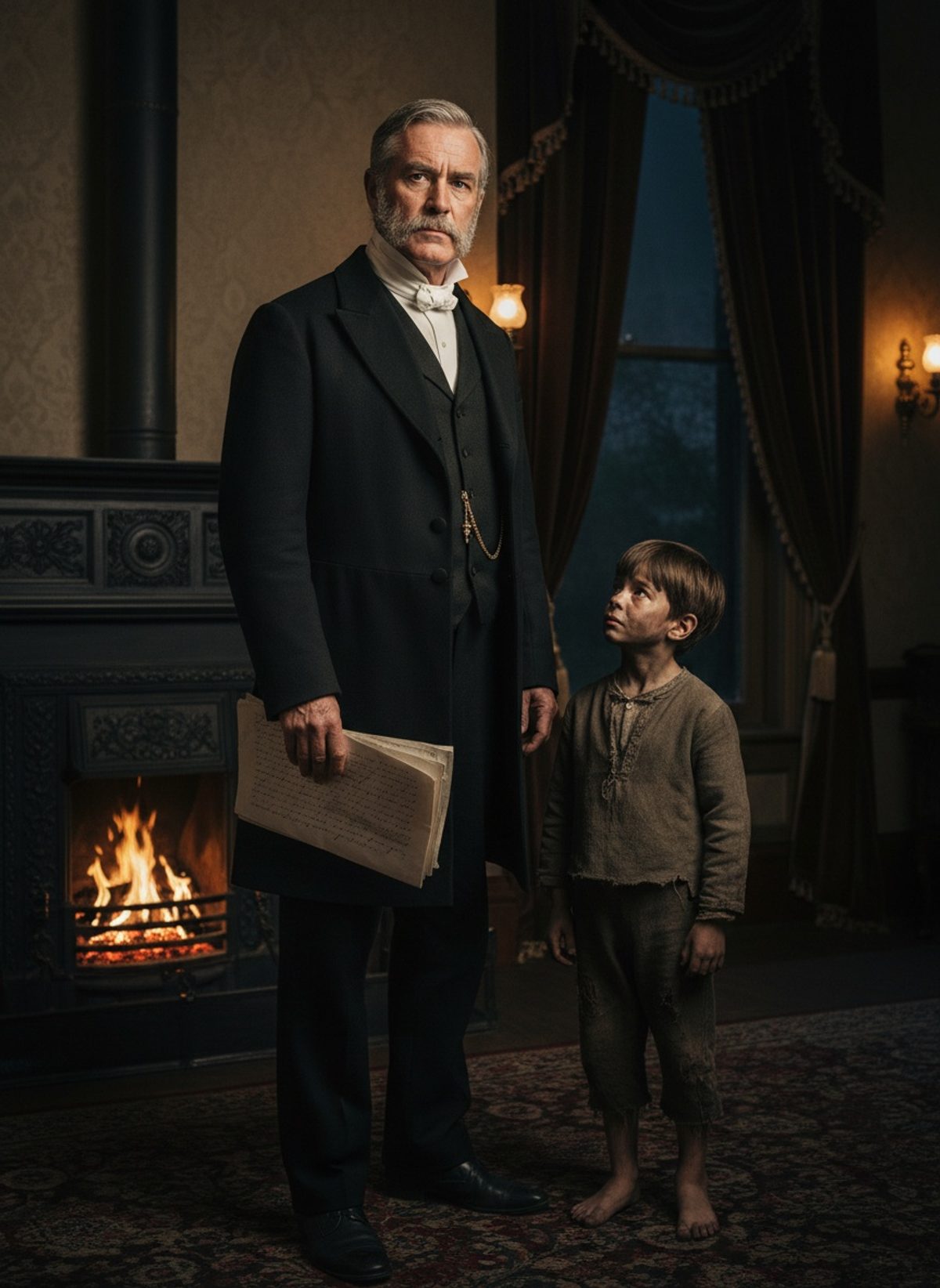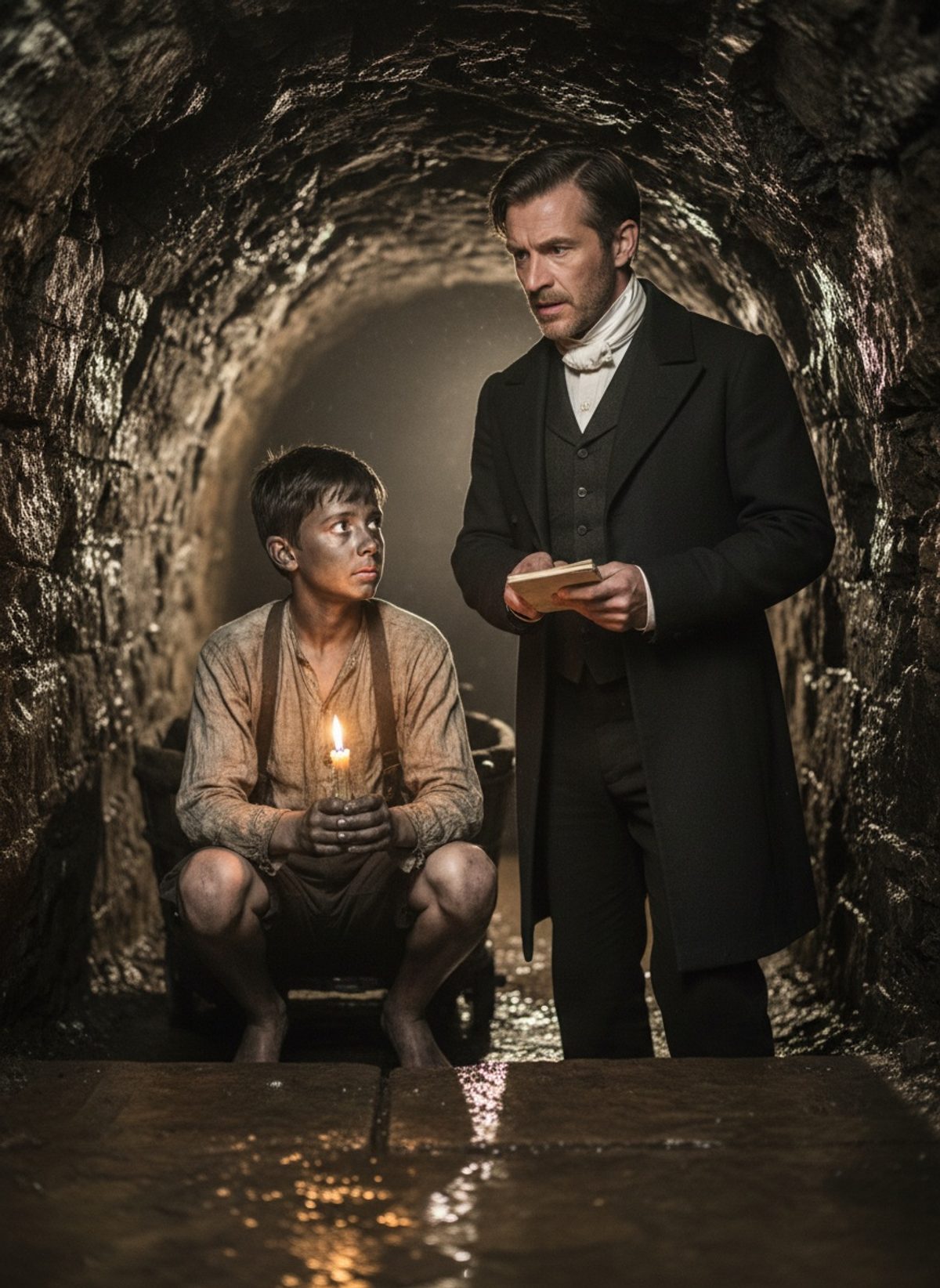
The air was thick and cloying, the darkness almost palpable, a smothering blackness that seemed to go on forever. Down in the bowels of the earth, the only light came from flickering tallow candles, their poor shadows casting eerie patterns across the jagged walls. Among the echoes of picks striking coal and the far-off rumble of wagons, a soft, persistent sound could be heard — the strained grunts of children struggling with their burdens. Lord Ashley's heart pounded in his chest as he crouched to see a pit boy, scarcely older than five, dragging an overflowing coal cart along narrow tracks. Straining with every step, the child's tiny muscles quivered under the weight of the cart that threatened to overcome him.
Ashley had always considered himself a man of conscience, but now his resolve was tested beyond measure. He had heard tales of young children laboring in these infernal caverns, but to witness it firsthand was profoundly disturbing. His descent into the darkness of the Yorkshire coal mine had been prompted by reports filled with dire testimonies, each more heartbreaking than the last. Yet, nothing prepared him for the bleak reality of small figures silhouetted against the glowing flares, their eyes, barely visible, reflecting a weariness far beyond their years.
The mines were a world unto themselves, governed by a ceaseless rhythm that demanded every ounce of strength the young workers could provide. Some mined coal for pennies, others pulled carts like beasts of burden, disappearing into narrow tunnels where even light dared not venture. Ashley's own journey down those perilous shafts had been harrowing, the descent taking him not just by ropes but through the layers of britain's industrial underbelly. It was a stark conviction that these drudges, unseen and unheeded by the rest of the world, bore the true cost of the nation's prosperity.
Determined to carry the weight of what he had seen back into the halls of power, Ashley returned to the surface, his face a mask of grim determination. As his feet touched solid ground and the light of day returned, the memory of the pit - with its stifling darkness and hollow cries – never left him. He made his way back to the House of Commons, each step guided by the resolve to effect change. The plight of these children was etched into his heart, inscribed there by the echoes of their voices. He had to bring their silent cries into the corridors of Westminster.
Read next: The Day a Nurse Walked Into a Workhouse and Refused to Leave
Standing before his fellow MPs, Ashley recounted his descent into the mines. There was a stunned hush as he described the scenes he had witnessed, the bleak confines where boys and girls toiled as if their lives were not their own. His words painted a vivid picture, revealing a world that most of his audience did not know existed. It was a speech that did more than inform; it galvanised. "We must act," he implored, a fervor in his voice that suggested any delay was tantamount to complicity. His raw, unflinching narrative laid bare the question at the heart of the matter: Could humanity allow this cruelty to persist within its own borders?
The weeks that followed saw Lord Ashley's campaign gather momentum. His words were echoed in drawing rooms and debated in pubs. The country was waking up to the exploitation hidden beneath its feet — an exploitation suddenly made unignorable. Calls for reform reached a crescendo as public sympathy coalesced into a movement for change. Ashley was relentless, ensuring that the organized reports and petitions reached every corner of legislative power. His doggedness was not without precedent — he operated within a system where the weight of tradition often fought against the flow of reform. Yet, his was a tide that could not be stemmed.
Eventually, the day of decision came. Sweeping reforms were introduced, aimed at ending the use of children as beasts of burden underground. The new law decreed that the mines were to be the sole preserve of adult labor, forever altering the landscape of Britain's industrial heartlands. It was a rare victory for compassion and humanity over the relentless march of profit. The scars of exploitation might never fully heal, but the legacy of these reforms was the emancipation of childhood from the cavernous tyranny of the mines.
Lord Ashley's tenacity had forged a path from the darkness, with countless children's lives spared from the shadows. The poignancy of the pit boys dragging law through parliament served as a reminder that change could be wrought even in the bleakest circumstances, by the sheer force of witnessing injustice and daring to speak out against it. In an era synonymous with industrial advancement, it was the humanity that emerged from the vice of adversity which illuminated the way forward.
Today, this tale of grit and reform reminds us that history often hinges upon the courage to look directly into the abyss and refuse to look away. What Lord Ashley saw in those tortured tunnels was not merely the exploitation of youth but a reflection of the moral fiber of society. The story of the pit boy who unwittingly helped to drag a law through parliament is more than an anecdote from Victorian Britain—it is a testament to the power of bearing witness, and the relentless pursuit of justice. It leaves us contemplating the shadows in our midst, urging us to face them with the same steely determination to make the world a more equitable place. It is a legacy that still calls to us today, from the silent tunnels of history.