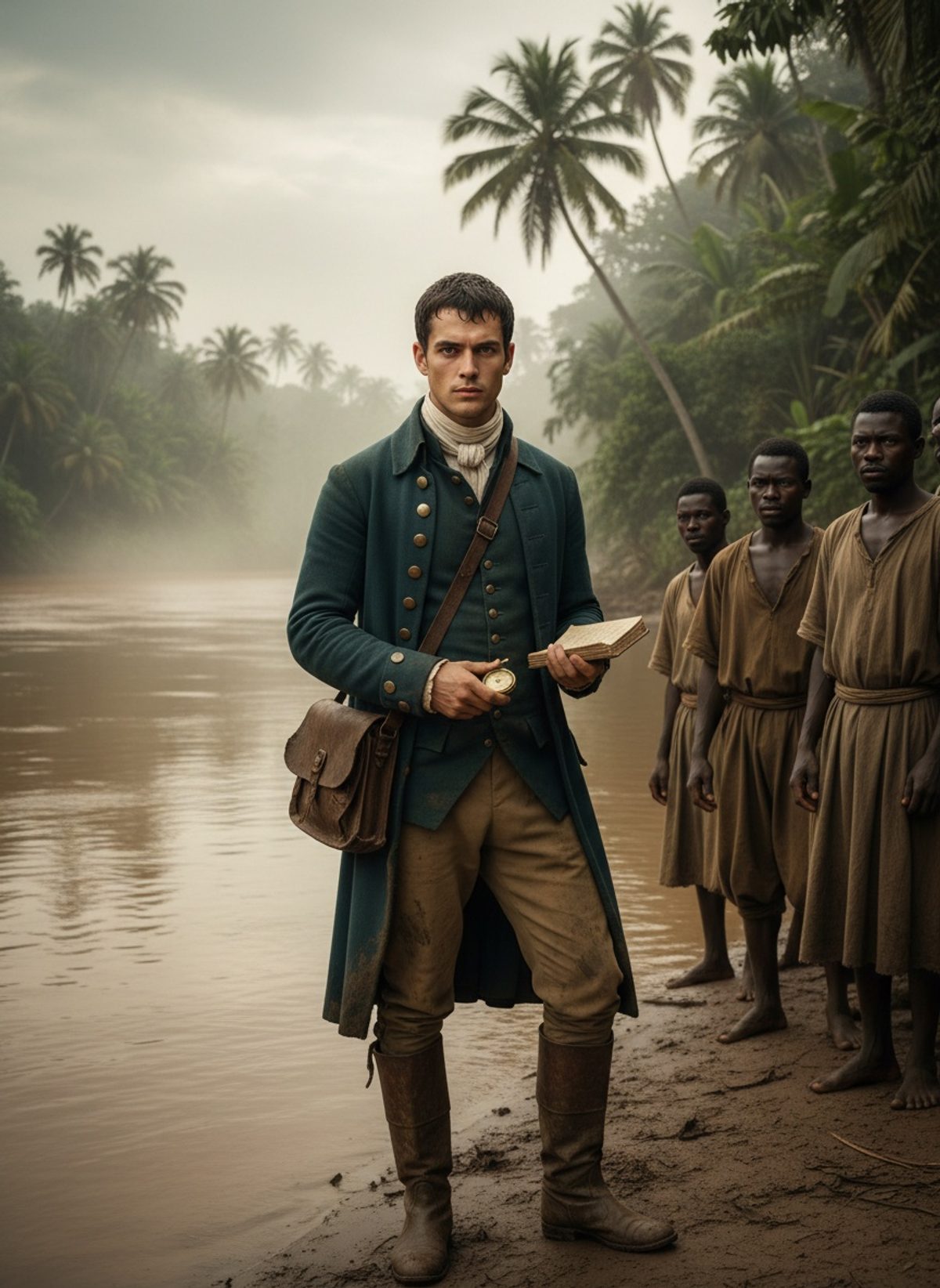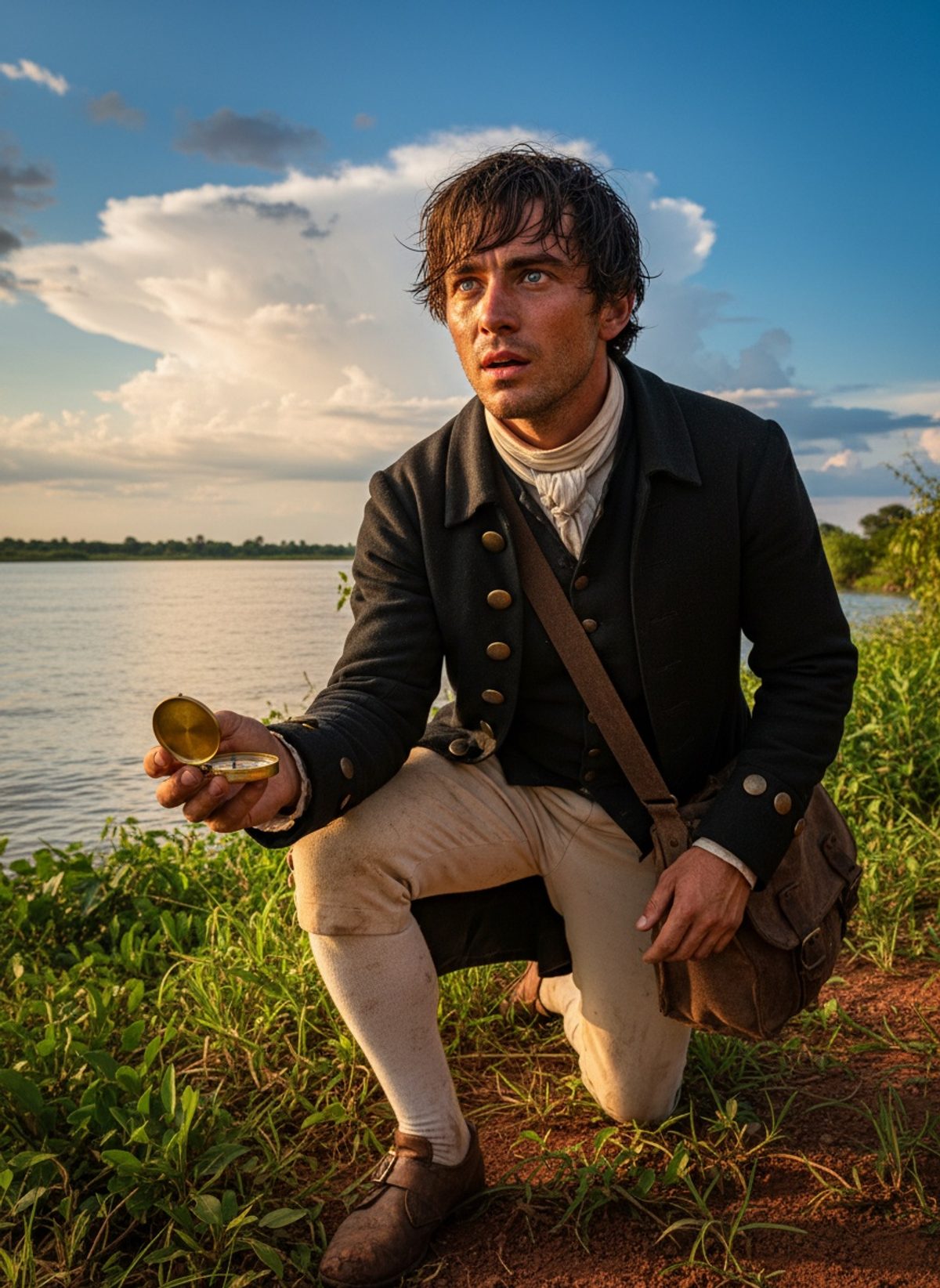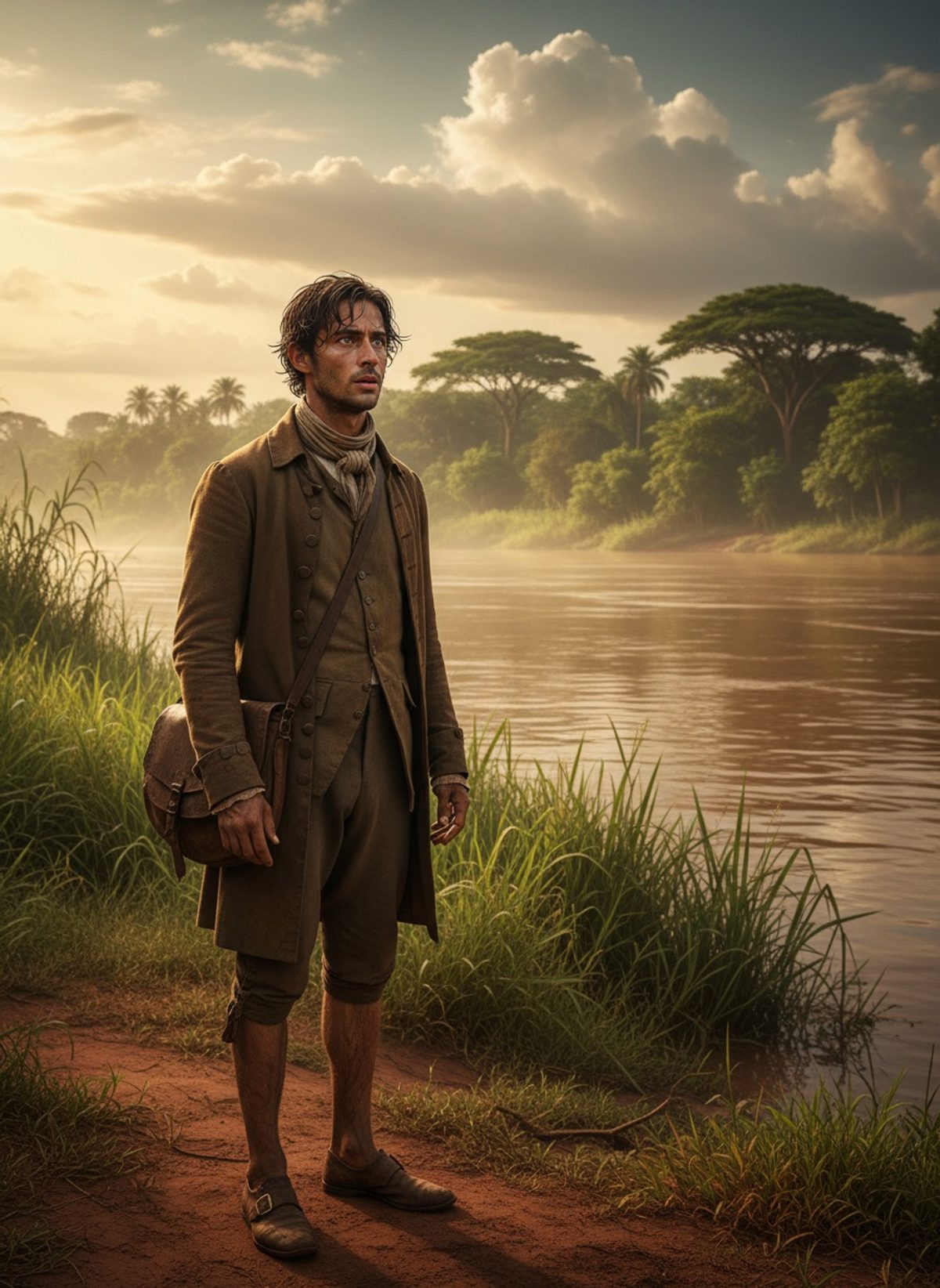
Most Europeans knew the source of the Niger as a mystery shrouded in myth. Mungo Park made it his destiny.
The Perilous Quest in an Uncharted Land
In 1796, the African interior was as alien to Europeans as the moon. And every explorer who attempted to unravel its secrets had succumbed, taking their ambitions to the grave. Yet a young Scottish doctor named Mungo Park, undeterred by the whispers of perils and the clinking of chains that enslaved his predecessors, ventured alone into this vast, unforgiving landscape. What compelled Park was a burning curiosity about the course of the mighty Niger River, one of the greatest geographical mysteries of his time. His arduous journey into the heart of the African continent was fraught with challenges that would have toppled the bravest souls.
Striding across an endless sea of sand, past hostile deserts where even the wind seemed to hiss threats, Park faced robberies, fevers, and the mocking indifference of the wild. Only in his late twenties, he was already a man cast in iron determination. When his local guides abandoned him, stripping him of his compass, his horse—his very lifeline to civilization—Park remained undeterred. Despite being robbed of his resources and cut off from the familiar safety of the world he knew, the decision was simple: press on or face an uncertain demise. So, on he pressed, deep into the bewildering interior of Africa, clutching nothing but his resolute will and an unshakable belief in his mission.
The Revelation: A River Flowing East
Amidst this isolation and constant adversities, there finally came a day that paid reward to Mungo Park’s relentless pursuit—the day of revelation. Feverish and trudging through treacherous landscapes, Park stumbled upon a scene that would forever be etched in his memory. Before him stretched the magnificent breadth of the Niger. It was not just a river— it was the life artery of a land, flowing east in rhythmic grace, carving its path in defiance of earlier European assumptions.
Read next: The Day a Scots Surgeon Walked Into Timbuktu Alone
The moment was profound for Park, yet its implications were seismic for the geographical knowledge of Europe. To witness a river of such grandeur, gliding with a stoic purpose through an ancient world, was to comprehend the magnitude of what had been hidden from European eyes for centuries. Until that moment, cartographers in Europe had been, unbeknownst to them, discussing figments of their imagination, often attributing the Niger’s source to the wrong regions, sketching maps that bore more fantasy than fact. What Park saw washed away centuries of assumptions and sparked new lines of inquiry into the African land and its mysteries.
A Lone Scotsman's Triumph
Park's discovery of the mighty Niger River was not simply a geographic victory but a testament to solitary determination. Unlike the tragic asides of so many explorers whose dreams were left unfulfilled, Park's moment of triumph was a realization of personal and public history. Yet the gravity of the scene was intensified by the solitude with which he experienced it. Here, surrounded by the continent’s silent witnesses, far removed from the bustling knowledge houses of Europe, Mungo Park immortalized himself through sheer grit.
Of course, the journey back was no less daunting—his stolen goods were not miraculously returned. The truth of his discovery had to survive the journey back with him. Yet his lone bearing of witness to the great river played its part in igniting that spark of curiosity in others, reshaping Europe’s understanding of Africa bit by bit. Mungo Park alone entered, and alone he emerged, having rewritten a portion of the world's geography with merely his gaze and his word.
The River's Legacy and Park's Final Chapter
Mungo Park's discovery was not just cartographic; it was a shift in the European mindset. Before his journey, the interior of Africa was perceived as inaccessible to the point of myth; post-Park, it shimmered with a new glint of the possible—a journeyable expanse ripe with untapped compasses for future explorers. His story stood as a beacon for those bold enough to venture beyond the realms of known comfort, illuminating paths for individuals eager to cross cultural and geographic boundaries.
In the realms of exploration, Park's account of the Niger forms a crucial chapter, colored by human tenacity. The river, meandering for over 4,000 kilometers, remains, today, a life-giving force for the numerous communities along its banks. It serves as a bridge across time, linking centuries of explorers' dreams. Mungo Park's narrative reminds us that beyond the boundaries of maps, there lies a world waiting to be engaged with wonder and willingness to walk—with nothing but resilience—where none have dared tread before.