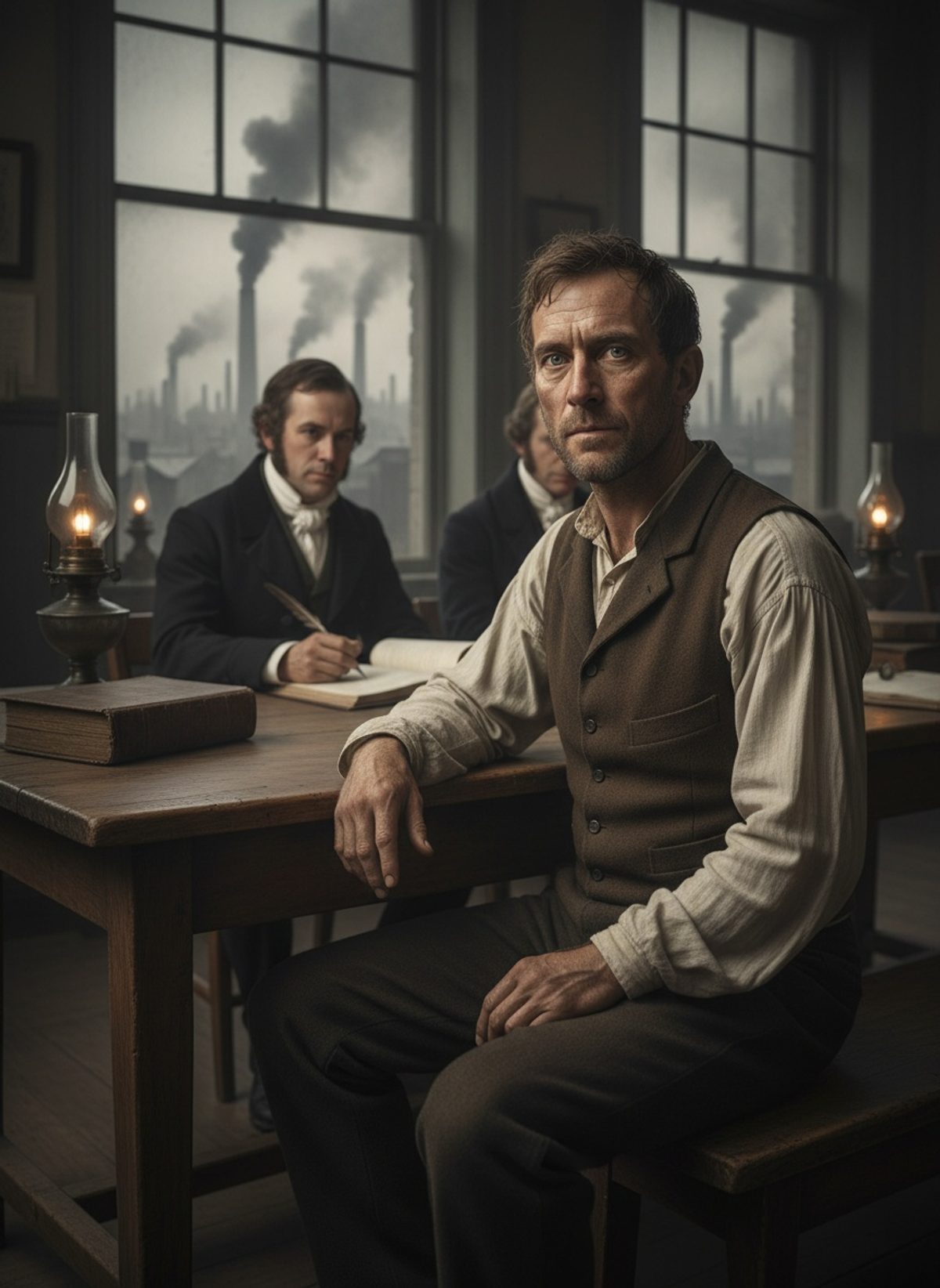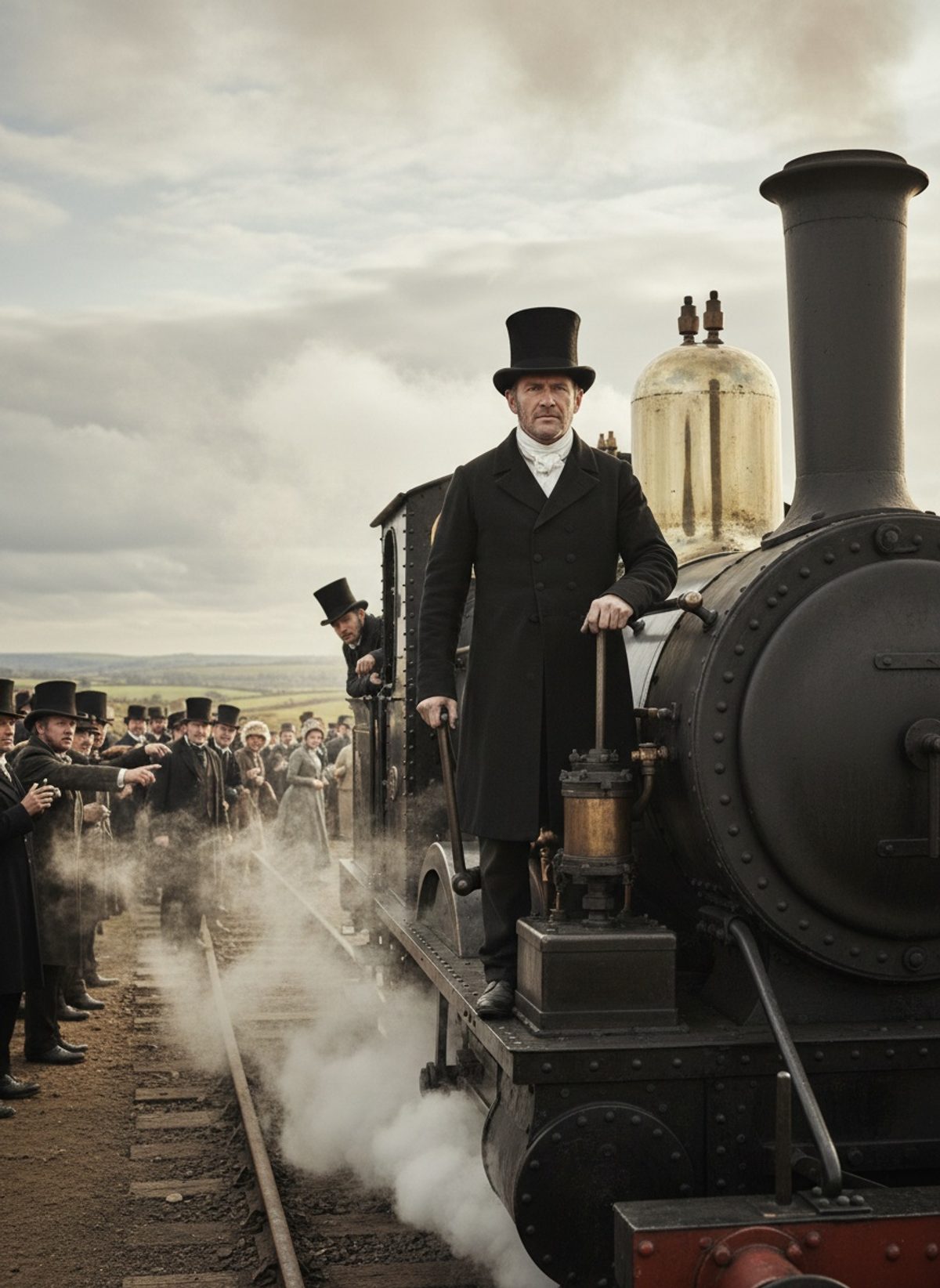
The steam hissed like an angry serpent at Darlington station, enveloping onlookers in a cloudy embrace. George Stephenson, with determined eyes and an air of calm resolve, clambered into the cab of the clanking iron beast known as Locomotion No.1. Whispers of doubt lingered among the crowd, a murmur of skepticism about the contraption's worthiness to haul more than wagons of coal. But Stephenson wasn’t listening; he had a date with destiny, even if no one else believed that great things would unfold on this unassuming September day in 1825.
Setting the Wheels in Motion
In an era where the clattering of horse hooves and the creaking of wooden carts were the symphony of transportation, the notion of iron wheels grating upon iron tracks seemed fantastical, akin to alchemy. For years, George Stephenson, a colliery engineer's son from the quiet village of Wylam, had nurtured a singular dream: to transform the way Britain moved. A man who taught himself to read and write in his late teens, Stephenson was fueled by an insatiable curiosity and a stubborn belief in the power of steam.
While many of his contemporaries scoffed at the idea of a steam-powered vehicle replacing tried-and-true methods of transport, Stephenson painstakingly polished his vision. He had spent years earlier perfecting smaller engines in the collieries, learning to harness steam's fierce power and tame it for practical use. Still, when the Stockton and Darlington Railway Company announced plans for a railway, the idea of carrying passengers alongside cargo was met with derision. Such was the disbelief that Stephenson was dismissed as nothing more than an eccentric tinkerer.
The Day of Reckoning
The morning breeze carried a crisp promise as the clock struck ten. Spectators perched on fences and walls, jostling for a better view of the railway tracks stretching into the misty horizon. Their eyes narrowed with skepticism as Locomotion No.1, like a mechanical colossus, belched thick clouds of steam and began its historic journey. With Stephenson at the helm, it wasn't long before the engine roared to life, moving with a confidence and speed that awed even the stubborn cynics.
Read next: The Day a Weaver's Son Defied Parliament for the Children
The train, pulling wagons that carried not just coal but six hundred passengers eager for this unprecedented ride, picked up speed. Onlookers gasped; some even laughed nervously as the train defied convention, reaching speeds of up to forty miles an hour—an unfathomable velocity in their world of carriages and horses. The rhythmic chugging of the engine melded with the cheers of those aboard the train, creating a cacophony of progress.
Revolutions on the Rails
As the train thundered along the rails, the reverberations of this groundbreaking journey rippled far beyond the steel tracks of Darlington. George Stephenson had not only silenced the skeptics but had ignited a spark that would fuel the age of steam and herald the dawn of the Industrial Revolution. The spectacle of the Locomotion No.1 proved that steam engines could cater to passengers and revolutionize transport, making the world smaller by linking distant cities.
This audacious display paved the way for a new era, steering Britain toward its destiny as the workshop of the world. Railways sprouted like untamed vines across the landscape, stitching together the tapestry of the British Isles with iron threads. They brought with them the promise of the modern age—faster communication, the movement of goods, and the exchange of ideas on an unprecedented scale.
Reflections on an Iron Horse
As the sun dipped below the horizon that transformative day in September, the world had changed—though few realized how deeply at the time. In a day marked not by fanfare but by steam and steel, humanity had taken a significant leap forward. In the decades to follow, Stephenson's vision would inspire countless innovators to explore the untapped potential of industrial technology.
This tale of an unassuming weaver's son reminds us of the audacity required to change the world. It underscores how innovation often comes from the most unexpected quarters and how those dismissed as dreamers may, in fact, be the architects of tomorrow. When Stephenson stepped off his engine that afternoon, no one was laughing anymore. The once-ridiculed notion of steam-powered transportation had unfurled its wings, setting off a chain of events that reshaped the planet.
George Stephenson's journey was indelibly etched into the annals of history as the epoch-making day when an iron horse galloped forth, not just carrying passengers, but propelling humanity into a bold new era.