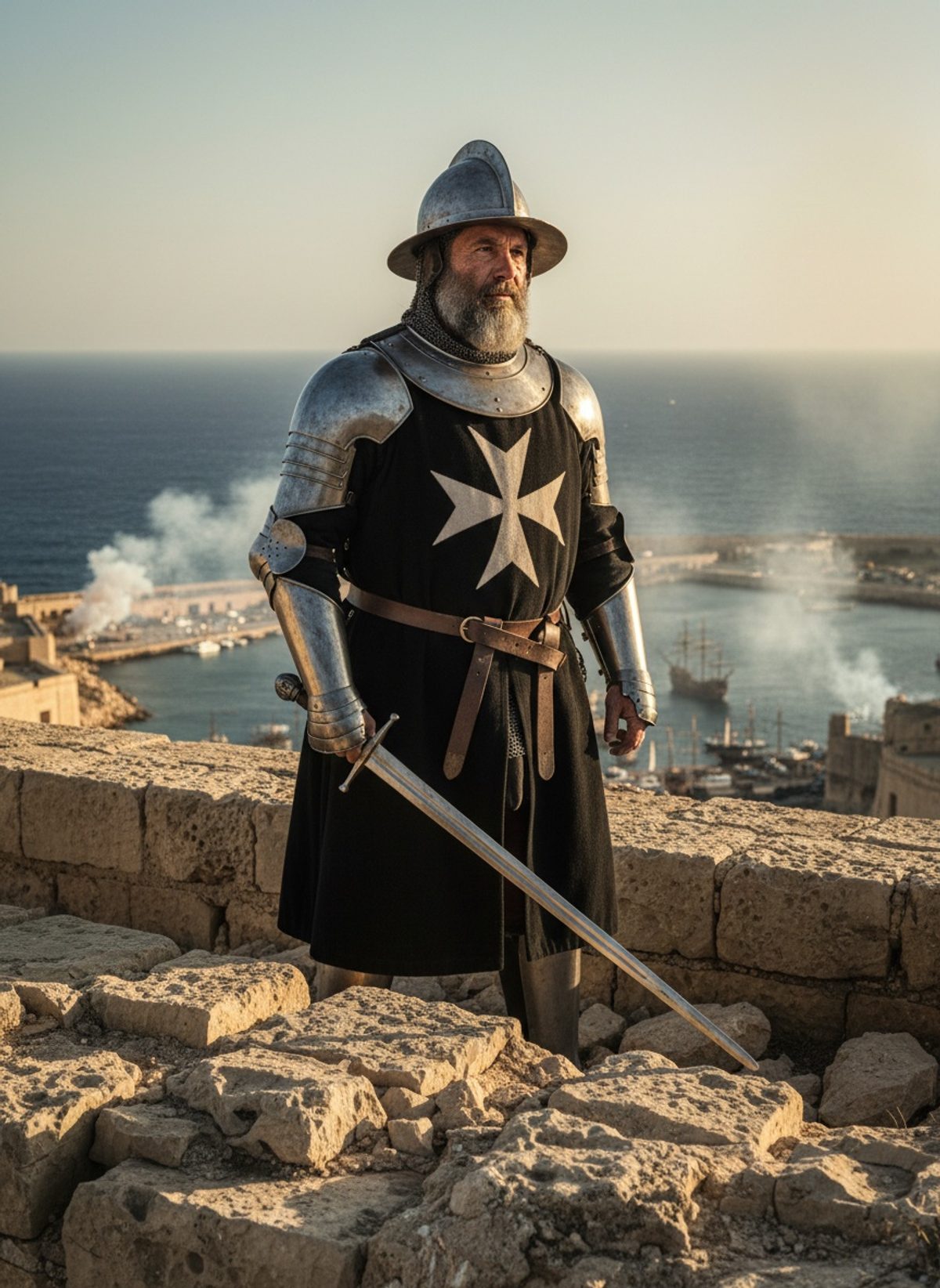
May 18, 1565. The briny Mediterranean breeze blew fiercely over the rocky, sunlit bastions of Malta.
The Gathering Thunder
Under the indomitable rule of Suleiman the Magnificent, the Ottoman Empire had grown into a formidable force in the 16th century, stretching from the gates of Vienna to the heart of the Middle East. Europe trembled beneath the shadow of the Ottomans’ ambitions, and nowhere was this tension more palpable than on the tiny island of Malta. The Knights Hospitaller, once protectors of pilgrims in the Holy Land, had made their fortress home here, defying the sprawling Ottoman power. For Sultan Suleiman, this bastion of Christendom, cavorting with piracy and defiance, was a thorn too sharp to ignore.
In early spring of 1565, Suleiman ordered one of the largest fleets ever assembled under the sultanic banner to set sail for Malta. Forty thousand men equipped with state-of-the-art artillery, infantry, and janissaries, the elite core of the Ottoman army, embarked on this mission. The sea, with its gilded waves and capricious winds, carried this colossus of war towards their diminutive target. Malta was no ordinary prize; it was a strategic gem in the Mediterranean, a bridge between North Africa and Europe. Its formidable fortifications and the valor of its defenders, however, meant that conquering Malta would not be a simple task.
The Anvil of St. Elmo
Upon their arrival in Malta, the Ottoman fleet set their initial sights on Fort St. Elmo, the diminutive northernmost stronghold guarding the entrance to the Grand Harbour. This fort, battered by relentless artillery bombardments and cut off from the rest of the island, became the scene of a ferocity unmatched in the annals of siege warfare. Sir Oliver Starkey, the Knight Commander in charge, together with his beleaguered band of brothers, prepared for the inevitable tide of blood and steel.
Read next: Roosevelt Died in His Sleep. His Enemies Knew Why.
Over four excruciating weeks, the battle for St. Elmo raged. Despite incessant pounding from Ottoman cannonballs that shattered its walls and the ground itself seemingly boiling with fury, the knights and their Maltese allies refused to yield. For every assault wave repelled, the Ottomans redoubled their efforts. It was not until June 23, after a month of grueling conflict, that St. Elmo finally fell. The Ottomans took the broken fort but at a staggering cost. The siege had consumed over 6,000 of their men, including the best of their Janissaries. A sobering reminder that Malta, and its defenders, would not be easily subdued.
The Dance of Death
With St. Elmo conquered, the Ottomans turned their full might on the more massive inland bastions — Fort St. Angelo and Fort St. Michael, as well as the fortified city of Birgu. The Maltese sun blazed mercilessly overhead, seemingly drawing blood from stone as victors and vanquished lazed beneath its oppressive heat. Trench fever spread, and the air reeked of gunpowder and decay.
Jean de Valette, the indomitable Grand Master of the Knights, stood resolute. At seventy years old, his principles were as immovable as the granite walls surrounding Birgu. Despite being outnumbered, de Valette orchestrated a heroic defense, inspiring his men to extraordinary acts of valor. Fortifications were rebuilt under cover of night, and every able hand was put to work. Women and children carried ammunition and water, supporting the knights as far as their strength permitted. Local militia, hardened by necessity, held their own, refusing to be the island's undoing.
Inside the walls, survival intertwined with ingenuity. Maltese defenders employed every available means, from boiling oil to burning arrows, against the persistent Ottoman onslaught. Nightly sorties sowed confusion and inflicted further losses on the besieging forces, turning the siege into a harrowing dance of strategy and sacrifice.
Hope from the West
With the siege entering its fourth grueling month, both sides were teetering at the edge of exhaustion. Yet, unbeknownst to the Ottomans, a crack in their siege was growing wider each day. Europe's princes and kings had not turned a blind eye to Malta's plight. Reinforcements were on their way, mustered by the Spanish King and regional allies, driven by a mix of religious fervor and strategic necessity.
On September 8, 1565, a Sicilian relief force at last arrived, their ranks bolstered with fresh troops and supplies. The Ottoman commander, realizing the tide was turning against him, ordered a disorganized retreat. The abrupt departure from Malta saw the Ottomans leave behind countless dead, shattered by disease, combat, and the island's unyielding resistance.
The Great Siege of Malta, a testament to the fortitude and strategic acumen of the defenders, was over. A mere few hundred knights and local militia had withstood tens of thousands of Ottoman troops armed to the teeth. The triumph sent ripples across the Mediterranean, confirming that the Ottoman Empire was not invincible. The perseverance of Malta's defenders, amidst adversity and overwhelming odds, inspired the Christian world and stymied Ottoman expansion in Europe.
What unfolded on that Maltese rock was more than just a battle of arms; it was a crucible of courage, determination, and sacrifice. Malta's stand in 1565 reminds us — even in our era of blurring lines and shifting frontiers — of the timeless potency of human resilience in the face of insurmountable odds.