The morning sea off Korea's southern coast in July 1592 glistened under a bright, uncompromising sun. The waves seemed to dance rhythmically, whispering secrets of the deep, while the salty breeze carried both a sense of calm and impending conflict. Beneath this picturesque surface, Admiral Yi Sun-sin prepared to change the ebb and flow of history.
Korea's coastline was in peril, the Japanese invasion force striking fear into the hearts of the Joseon Dynasty's defenders. Yet one man refused to let despair reign. With an uncanny charisma and a mind as vibrant as the morning sky, Yi Sun-sin, Korea's ace admiral, readied to face an enemy that seemed insurmountable.
The Forge of Innovation
Yi Sun-sin's fascination with naval warfare had deep roots. Even as a child in Hanseong, now modern-day Seoul, he was known for his bold play-acting of military scenarios. Yet the true testament to his genius would come in the form of a ship that defied both logic and expectation.
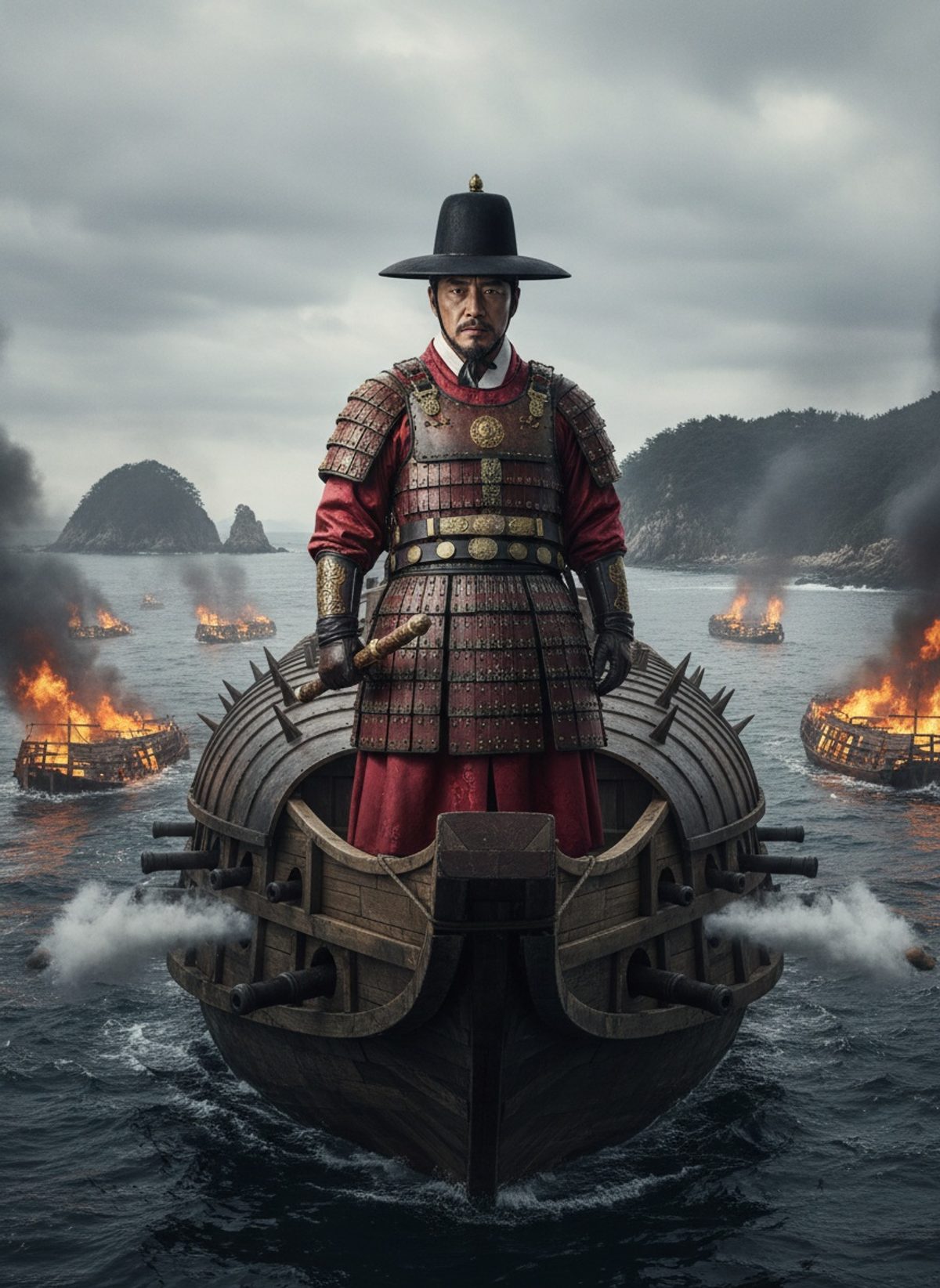
The Geobukseon, or "Turtle Ship," was a marvel of military engineering, an idea nurtured in the crucible of necessity. At the heart of its design lay a vision ahead of its time: to transform the very concept of naval warfare.
Read next: Scipio Africanus Turned Captured Numidian Riders Into Rome's Cavalry
The Turtle Ship was fortified with iron plating, making it one of the world's first armored vessels. Its name derived from its enormous iron spikes that decorated the top, resembling the shell of a turtle.
Yi Sun-sin's creation was no mere defensive measure; it was a weapon of psychological warfare designed to intimidate and confuse the Japanese invaders. As intended, the massive iron spikes dissuaded enemy sailors from boarding, while hidden artillery fired from the mouths of fantastically carved dragon heads at the ship's prow, spewing fire and terror.
Its very construction reflected the dire situation Korea faced. With diminished resources and overwhelming odds, Yi needed a breakthrough, a way to combat foes who seemingly controlled the waves.
His Turtle Ship was more than an innovative assault craft; it was a symbol of defiance and the embodiment of Yi's strategic brilliance. Yi understood that his endeavor was not just a naval battle, but a struggle for his nation’s survival. The stakes were nothing less than the future of Korea itself.
The Orchestration of Triumph
The waters off Hansando Island were serene, yet waiting in the wings was historical upheaval. It was here on July 8, 1592, that Admiral Yi Sun-sin commanded his flotilla, including the mighty Turtle Ship, against the Japanese armada. The Battle of Hansando was Yi's orchestra, his carefully plotted strategies now coming into play as the backdrops of distant mountains watched in solemn anticipation.
The Japanese, confident in their overwhelming numbers, underestimated the tactical genius before them. Yi's fleet, nimble and sharp, employed the "Crane Wing" formation. His ships moved like clockwork, spreading and encircling the enemy, a maneuver designed to baffle and divide. The ingenious use of the Turtle Ship not only provided a formidable offense but also psychically shattered the Japanese sailors, unprepared for the might they faced from beneath the unfamiliar iron scales.
In less than a day, the shimmering sea was transformed into a theater of chaos. Yi’s forces destroyed 59 Japanese ships, a staggering achievement for a fleet consistently outnumbered throughout the war.
Read next: Kennedy Warned the UN That the Next War Would End Humanity
His brilliance wasn’t merely in the technology he wielded but in the empathy and cunning with which he leveraged Korean knowledge of their waters. The ingenuity of Yi Sun-sin drew the Japanese further into the bay, where the tide shifted in his favor both literally and figuratively, panning as the ultimate defender of his homeland.
The Echo Across Ages
The aftermath of the Battle of Hansando was a turning point, a moment where the scales tipped back in favor of a beleaguered Korea. Fewer than 60 Korean ships had defeated an enemy threat that seemed endless. The news of Yi Sun-sin's triumph spread across the peninsula, injecting newfound hope into the Korean resistance. Admired not just for his martial exploits but for his unyielding patriotism, Yi subtly wove philosophy into his military strategy, building an irreplaceable legacy.
Yet, Yi's saga was more than a tale of battles and tactics. It served as an affirmation of the power of innovation and resilience in the face of overwhelming adversity. His name became synonymous with valor, and his taciturn demeanor belied a deep understanding of both warfare and human nature. His war journals, "Nanjung Ilgi," preserved under UNESCO's Memory of the World, offer a profound insight into the man behind the myths—the relentless dedication to a cause larger than oneself.
Yi Sun-sin's story stands as a monumental chapter in world history. It underscores the truth that human ingenuity, when driven by necessity and fired by courage, can defy even the harshest of odds. In Admiral Yi, we find a testament to the transformative power of strategic brilliance.
As we delve into the tales of long-ago battles, we are reminded that forgotten stories hold keys to understanding resilience. Yi Sun-sin, through his Turtle Ship, did not just defend Korea's shores; he fortified the human spirit against despair.