April 13, 1945. The damp chill lingered in the early spring air.
The Silent Train in Farsleben
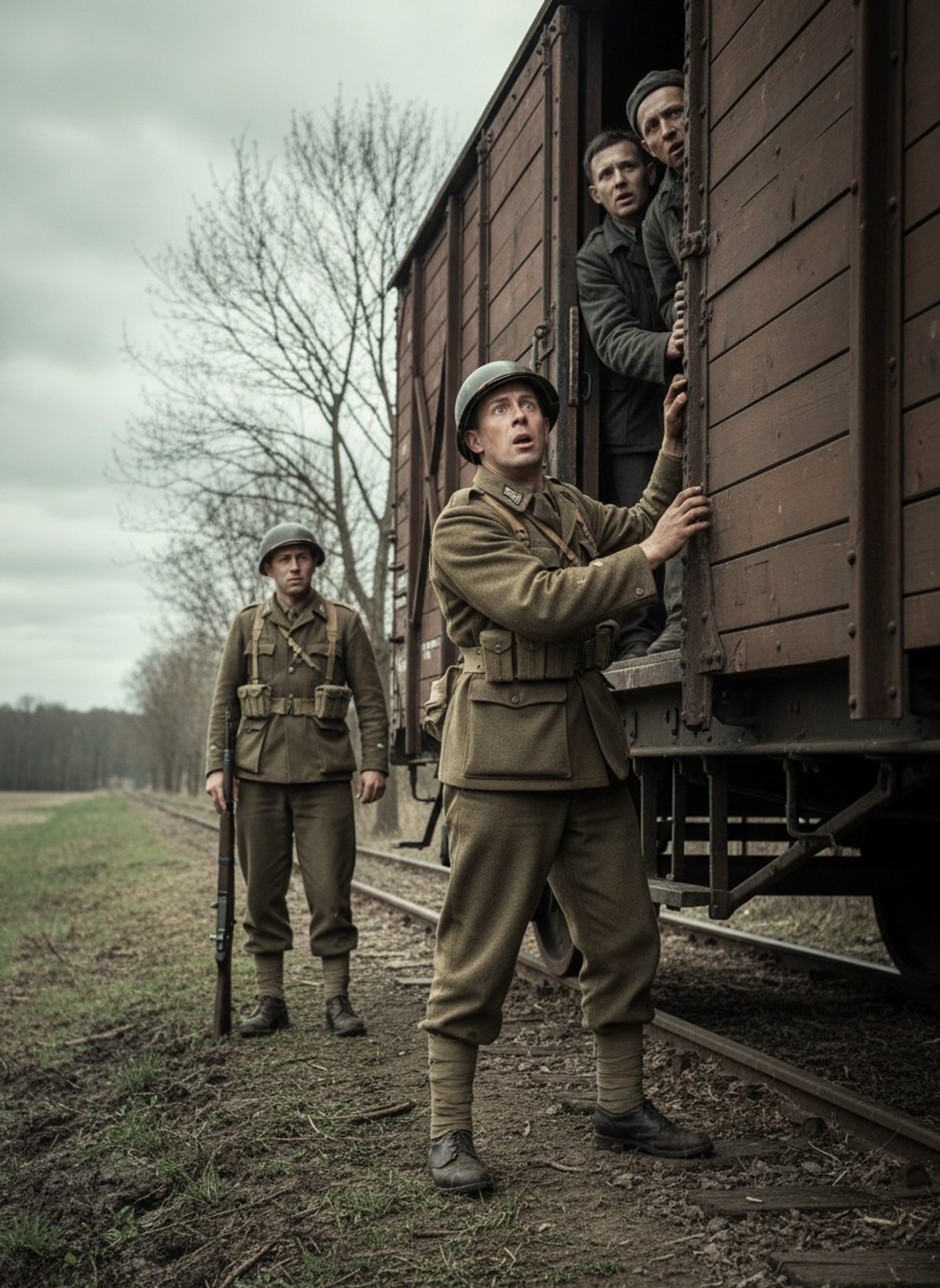
As the American soldiers of the 743rd Tank Battalion moved through the lush German countryside near the village of Farsleben, they stumbled upon a train that seemed to emerge from nowhere. Its locomotive sat idly, devoid of the bustling activity that typically surrounded wartime transportation. It was not on their radar; the battalion had not been ordered to assess trains. Yet, the sight of this stationary convoy, still and heavy, commanded their attention.
On closer inspection, this train—composed of over 30 cattle cars—was no ordinary freight. The reality of their discovery unfolded as they cautiously approached and opened the doors. What they found inside was a chilling tableau: approximately 2,500 Jewish prisoners, men, women, and children, evacuated from the horror of Bergen-Belsen, packed into the confines meant to transport livestock rather than human lives. The train had halted in its tracks, a portal of suffering caught in transit amidst the chaos of a collapsing Nazi Germany.
Faces of the Forgotten
The individuals aboard that train were a haunting reflection of cruelty untold. Emaciated and weakened, the people trapped within these cars had been on a journey to nowhere, victims of a sinister strategy to prevent Allied forces from freedom’s reach. The prisoners represented a cruel endeavor to scatter and hide the evidence of Nazi war crimes as the German stronghold crumbled under the advancing fronts.
Read next: Morgan Was Flogged 499 Times. He Counted Every One.
Among the masses were those who clung to life, peering through the barbed slats of their imprisonments with hollow eyes that had witnessed too much. Families had been torn apart; those who survived the brutal living conditions aboard had faced unimaginable horrors for years. For the American soldiers who first confronted this unfathomable scene, the realization of what lay inside was met with a righteous urgency—the need to intervene, regardless of orders.
A Strategy of Humanity
The soldiers, taken aback by what they found, undertook actions beyond their military directive. Their instinctual response was one driven by sheer humanity. Supplies were scarce for the soldiers, yet they shared with the captive passengers what little they had: rations, medical aid, and the simple gestures of water and warmth.
The presence of the train had disturbed a serene spring morning, bringing into the pastoral setting a glimpse of the grotesque blight of war. In those moments, the landscape was imbued with an impromptu mission of mercy, evolving into a field hospital. Witness accounts recall how medics and troops helped ferry the weakest from the cars, transforming the countryside into makeshift shelter with tarps and care.
It was not merely a matter of survival; the soldiers engaged in a profound act of compassion that transcended the brutality of war. Their actions spoke volumes, a silent vow to bring dignity and hope to those who had been denied it for far too long.
The Unscripted Intervention
The chance discovery of the train at Farsleben had no playbook, no guidelines in the soldier's manual. Yet, it signified the raw potential of unscripted intervention during inhumane times. This encounter was etched not only into the countryside but into the annals of lesser-known history, illuminating a narrative that highlighted both the depths and heights that human nature can achieve.
For historians and educators unraveling the intricacies of World War II, the liberation of the Farsleben train posits an essential question: what compels people to act in the absence of orders and despite overwhelming adversity? This story, caught in the intersection of human cruelty and altruism, is resonant well beyond its years. It reminds us that history is often shaped not solely by those sitting at the negotiation tables but significantly by those who, when faced with true frailty, decide to act with valor and grace.
The soldiers of the 743rd Tank Battalion showcased these qualities, altering lives with their presence and nurturing a luminous moment amidst one of history’s darkest weeks. Their spontaneous, virtuous intervention underscores the potential for hope even when surrounded by despair, where one decision to act could change the course of many futures. It is a story not just of human endurance but the capacity for unforeseen kindness that, when revealed, shakes us to the core.