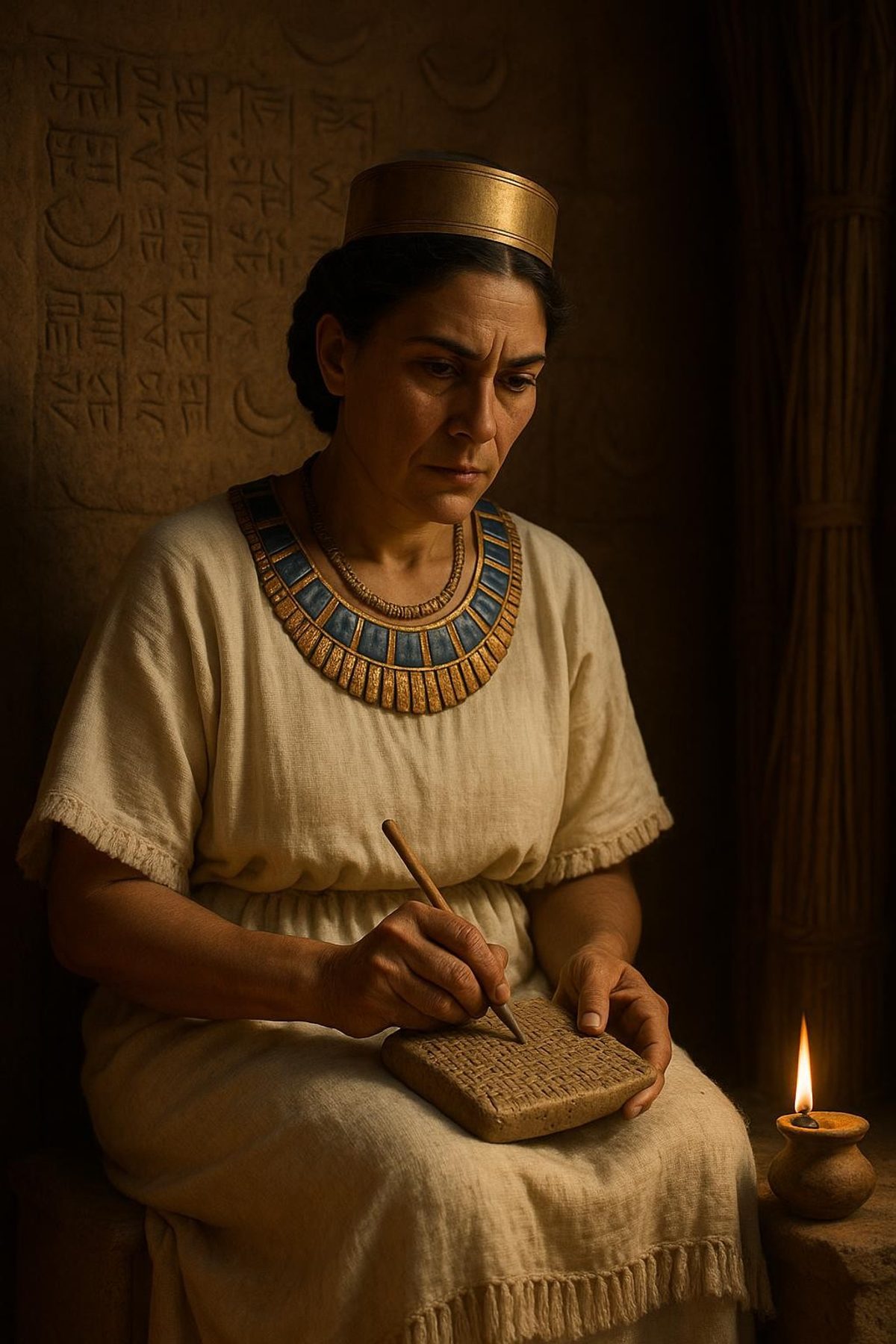
He was a humble singer from a town most likely overlooked. He forever changed the nature of storytelling by stepping out of anonymity.
The Moment That Changed Everything
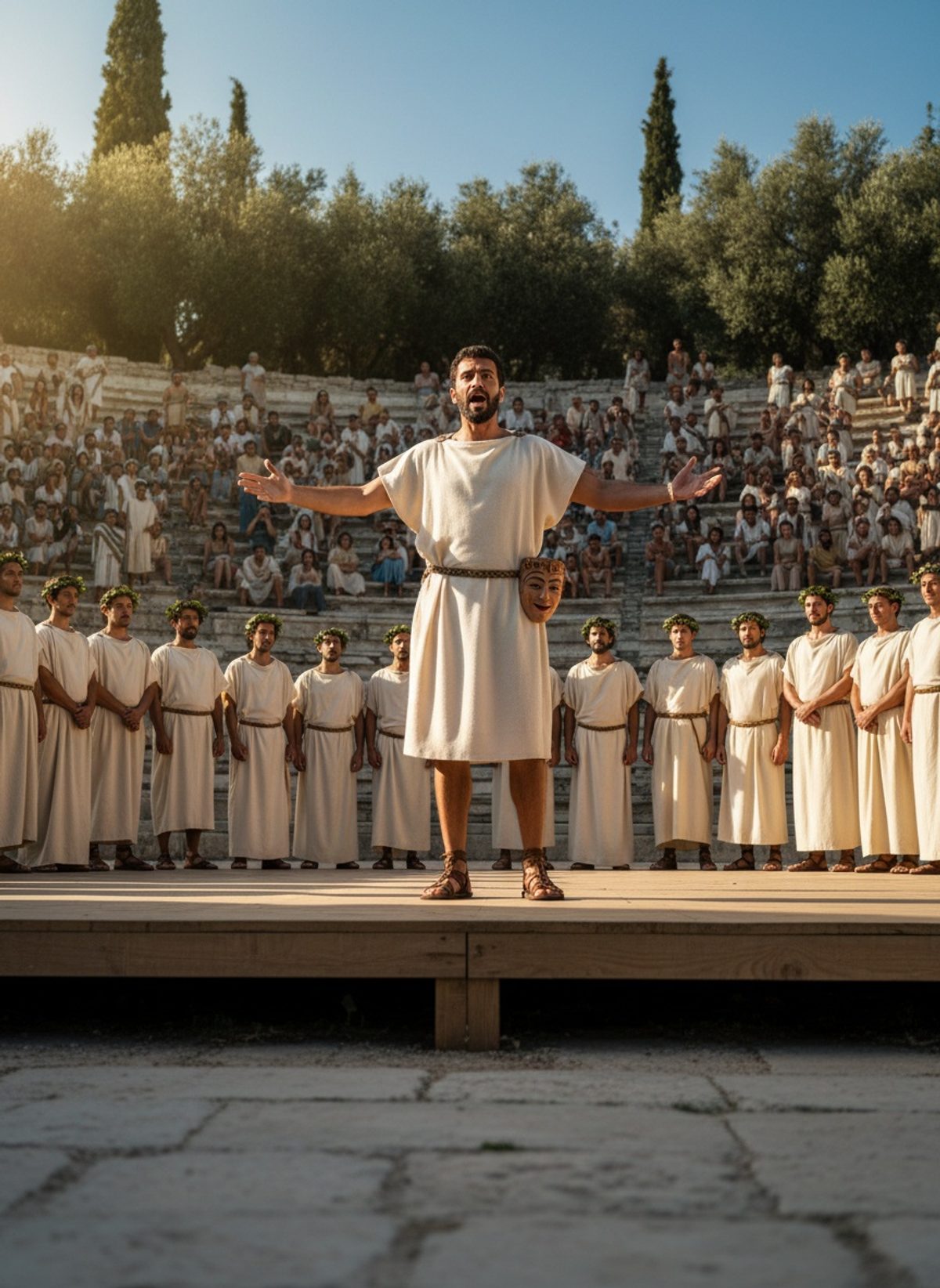
In 534 BCE, a modest yet revolutionary event took place at the City Dionysia in Athens, an annual festival meant to honor the god Dionysus. Here, thousands gathered to revel in the expressions of human creativity, mostly through choruses singing dithyrambs—songs recounting stories from mythology in a collective voice. Until that point, stories unfurled through the harmonious, unified performance of the chorus. But on that day, a singular figure broke away from tradition. Thespis, a seasoned performer of dithyrambs, stepped forward from the chorus, assuming the role of a character that wasn't himself. With his speech, isolation, and presence, he single-handedly created the concept of an actor, forever transforming the art of storytelling.
Imagine the crowd, initially covered in the warm glow of familiarity as the chorus entered the stage in usual fashion. The comfort of tradition suddenly jolted by this audacious act of going solo, in which Thespis, for the first time, brought individual characters to life. He stood apart from the others, an enigmatic silhouette against the sounds of the collective chorus, the audience witnessing the birthplace of theatre.
Revolutionizing the Art of Storytelling
Thespis's departure from the collective voice of the chorus was much more than a momentary gesture. By stepping forward, he introduced the revolutionary concept of a principal actor into the world of drama. This new style, referred to as 'tragedy,' allowed for individual characters to emerge, transforming mythical stories into personal narratives. Thespis employed different masks—an invention credited to him, mostly crafted from linen—to convey the various personalities within the stories. Each mask symbolized a different character, enabling a single person to become multiple personas over the course of a performance.
Read next: Katherine Johnson's Numbers Brought John Glenn Home
This groundbreaking approach was first displayed in the curious openness of the Athenian theater, set against the backdrop of the Acropolis. The City Dionysia, already a melting pot of artistic expression, embraced this innovative form, driven by the energy of a culture that worshipped the arts and the gods with the same fervor. Athenians were no strangers to excellence in art and thought, and Thespis was a natural product of this environment, bringing with him an art form that would withstand the erosion of millennia.
A Hero of Fame and the Origin of "Thespians"
With the overwhelming success at the City Dionysia, Thespis didn't just walk away with applause. He was awarded the festival's first documented competition for the best tragedy, cementing his place in the annals of history. Captivated by the allure of newfound success, Thespis became an early theatrical entrepreneur, creating an undeniable legacy in the revolutionary idea of theatrical touring. Armed with a horse-drawn wagon filled with costumes, masks, and stage props, Thespis traversed cities, spreading his pioneering form of drama far and wide, much like a wanderer imparting wisdom and carrying the seeds of innovation across the land.
In doing so, Thespis became synonymous with the very essence of acting. The word "thespian" is derived from his name, a testament to his foundational influence on the art of acting itself. Engrained within the very vocabulary of theater arts, Thespis's legacy echoes every time a 'thespian' takes to the stage to embody another's being. This transformation of person into character, initiated by Thespis, remains vital in storytelling nearly 2,600 years later, reaffirming his role as the progenitor of a dynamic cultural tradition.
A Legacy Etched in Eternity
While the authenticity of some plays attributed to Thespis may be dubious, his influence resonates through works that surpassed the realms of his time. The enigmatic figure of Thespis has inspired countless dramatists, like Aeschylus, Sophocles, and Euripides, who took his innovative leap further on the dramatic stage. Even cultural artifacts such as the 1871 comic opera 'Thespis' by Gilbert and Sullivan, or the touring branch of the National Theatre of Greece, aptly named 'The Wagon of Thespis,' continue to honor his contributions.
As we consider the impact of that singular step forward, it becomes clear that Thespis did more than innovate; he compelled humanity to view storytelling as a profound exploration of human experience. By branching beyond community and chorus, Thespis empowered storytelling to be both an individual act and a collective engagement, shaping narratives in ways that revealed the depths of personal and societal identity. As actors around the world continue to embody new identities on stages small and large, they subtly affirm his enduring influence, testifying that the art of becoming someone else is, indeed, a timeless human endeavor.