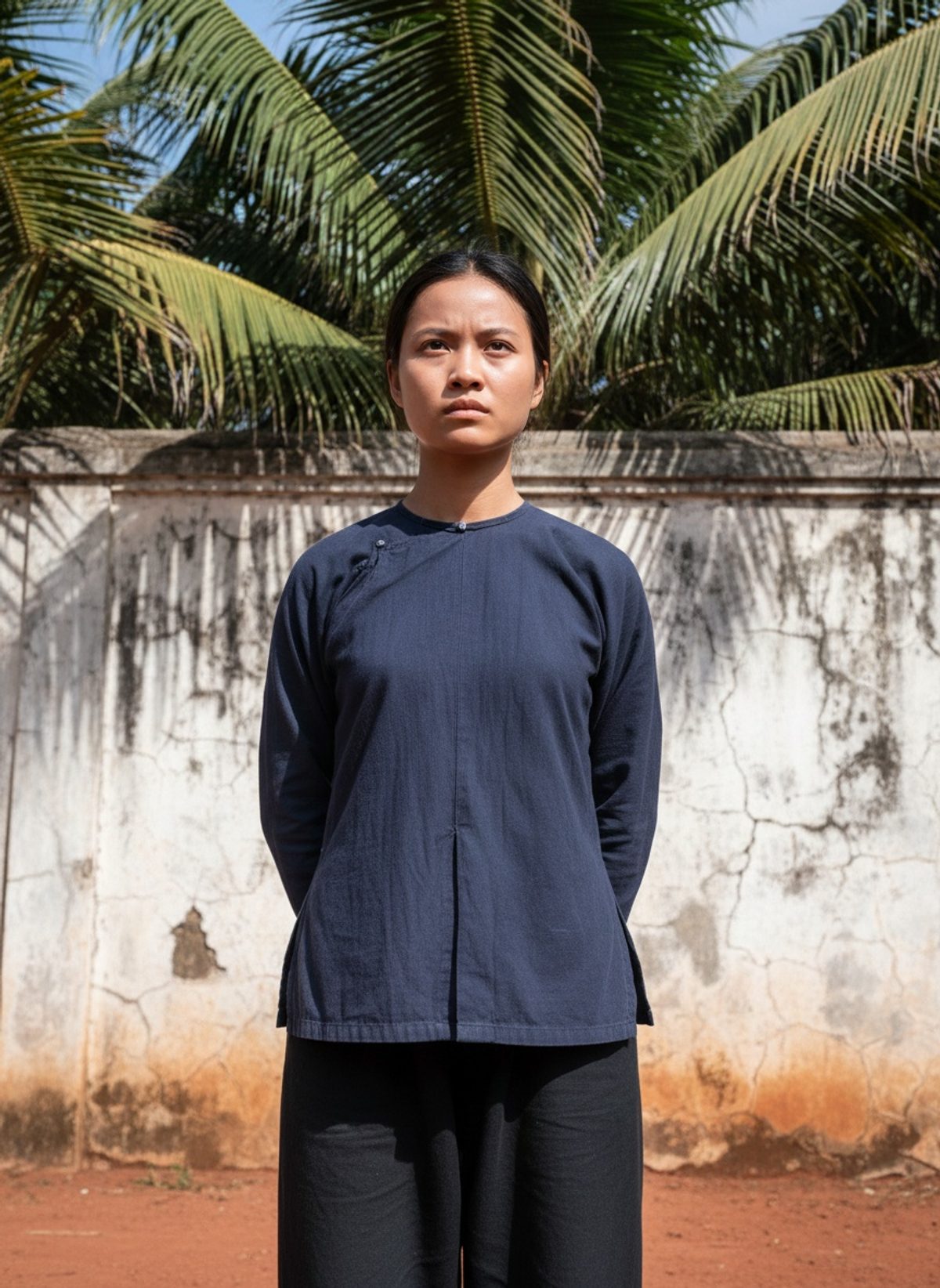
January 1952. A dense mist hung over Con Dao Island, shrouding the small cell where a nineteen-year-old Vietnamese girl awaited her fate.
A Windswept Island of Prison and Pain
Con Dao Island, a remote outpost off the coast of southern Vietnam, had long been a place of exile and incarceration under French colonial authority. Known for its stark beauty and notorious prisons, the island served as a destination for those deemed too dangerous to keep on the mainland. Here, silence was punctuated by the rhythmic crash of waves and the echo of bars clanging shut. It was against this backdrop of isolation and resilience that a young woman named Vo Thi Sau stood at the brink of history.
Vo Thi Sau was not the first nor the last prisoner to be brought to Con Dao, but her determination and fearlessness marked her presence as something unique. The prison complex, surrounded by thick forests and rocky shores, was designed to break spirits through hard labor and the persistent presence of walls and watchtowers. Yet, Sau, a daughter of Vietnam, refused to succumb to the despair that claimed so many others before her.
From Village Girl to Resistance Fighter
Vo Thi Sau hailed from a small village in southern Vietnam, where the lush rice fields offered both sustenance and concealment for guerilla fighters like her. Born into a turbulent era where colonial power clashed violently with the aspirations of those yearning for independence, Sau grew up witnessing the harsh realities of occupation. Known for her vivacity and strong sense of justice, she could not stand idle while her homeland suffered under foreign rule.
Read next: The Highlanders Charged in Kilts. Germany Never Forgot It.
Her young life, filled with the fragrances of frangipani and whispers of revolution, took a decisive turn as she joined the resistance movement against French colonial forces. At an age when others might have been contemplating their future, she was already engaging in high-risk sabotage missions, driven by a fierce devotion to her country's freedom. Her bravery and audacity in these efforts soon caught the attention of both her comrades and enemies.
The Capture and Trial
In the midst of the First Indochina War, Vo Thi Sau was captured by French authorities. Her arrest was a strategic setback for the Vietnamese resistance, which relied heavily on young operatives like her, adept in disappearing and striking unexpectedly. The trial that followed was swift and merciless, emblematic of colonial justice eager to quash any hint of rebellion. Sau stood accused of participating in acts of armed resistance, charges that carried the ultimate penalty.
Despite the severity of the charges, Sau maintained an unyielding defiance. Her demeanor, characterized by poise and a formidable presence, drew both admiration and fear. Those who attended the trial spoke of her unwavering gaze, as if she was already confronting the very notion of mortality and had made her peace with it. It was this remarkable poise that would define her final moments, etching her image into the annals of history as an icon of resistance.
The Last Walk: Defiance in the Face of Death
The morning of her execution was heavy with anticipation. On Con Dao Island, the call of seabirds was drowned out by the footfalls of soldiers marching toward the execution grounds. Vo Thi Sau, slight of build but immense in spirit, took her place before the firing squad without hesitation. In what was a stunning act of courage, she refused the blindfold offered to shield her eyes from the last awful gaze of life and death.
This refusal was more than a simple act of bravery—it was a powerful statement of control over her own destiny, even as it lay in the hands of others. Denying the comforts of a blindfold and the solace of a priest's blessing, Sau rejected any notion of submission. Instead, she chose to face her executioners with unflinching eyes, willing them to confront the humanity in their task. The soldiers reportedly faltered under her steady gaze, as if a fragment of her courage had transferred silently to them in those final, poignant moments.
A Legacy of Inspiration
Though Vo Thi Sau's life was cut tragically short, her legacy extends far beyond the shadowed cliffs of Con Dao Island. Her courage and defiance have become powerful symbols of the Vietnamese struggle for independence, celebrated by generations who see in her the embodiment of unwavering resolve. Her story, largely untaught in formal histories outside her homeland, speaks volumes about the spirit of resistance and the cost of freedom.
In the end, the firing squad achieved the opposite of its intent. Instead of silencing a voice for independence, it amplified a legend that would inspire countless others in their fight for justice and dignity. Vo Thi Sau's eyes, refusing to close even in the face of death, remind us of the enduring power of conviction. Her final act of defiance on that remote island serves as a timeless reminder: that courage in its purest form can be as simple and profound as facing the inevitable with eyes wide open.