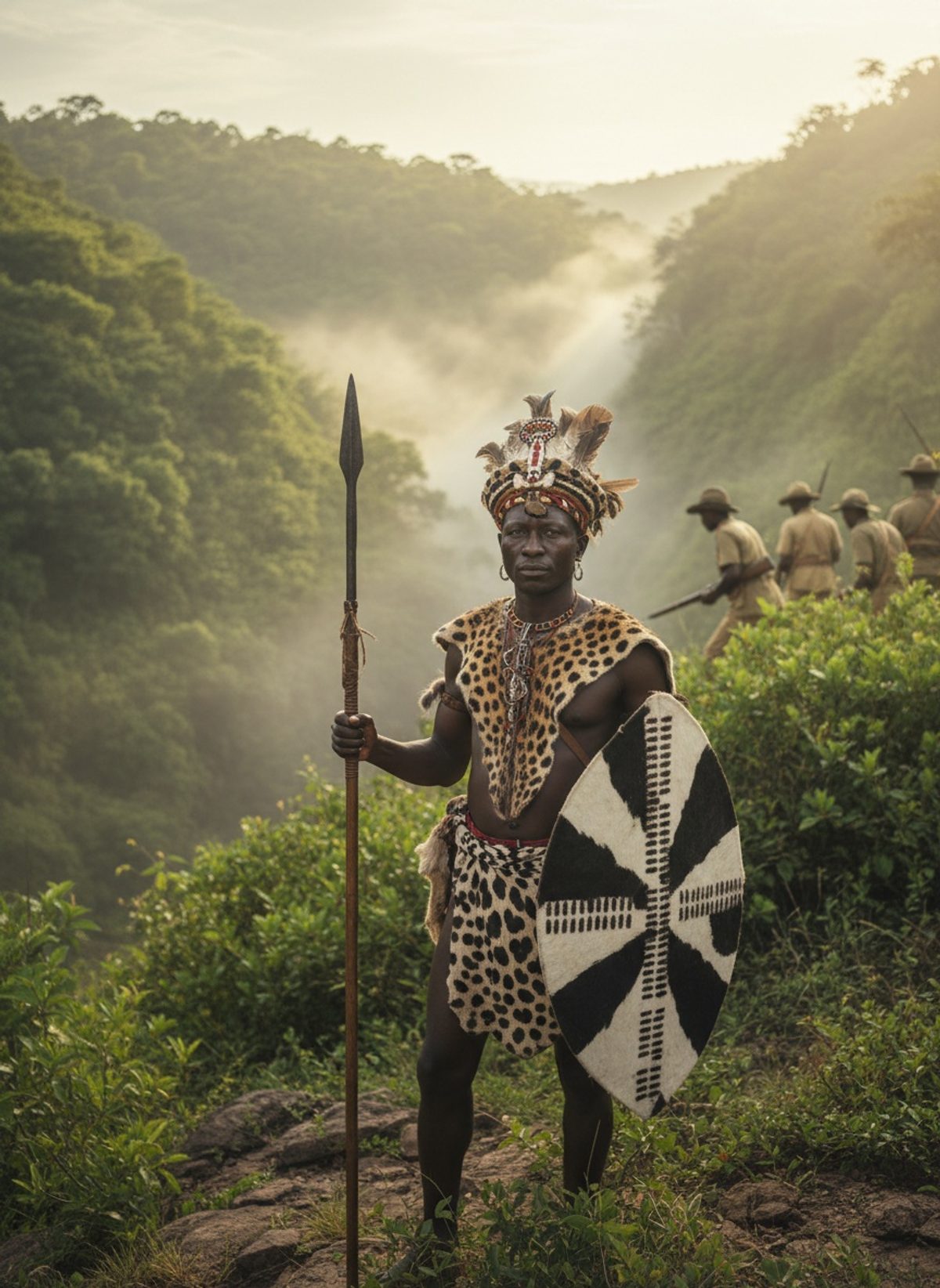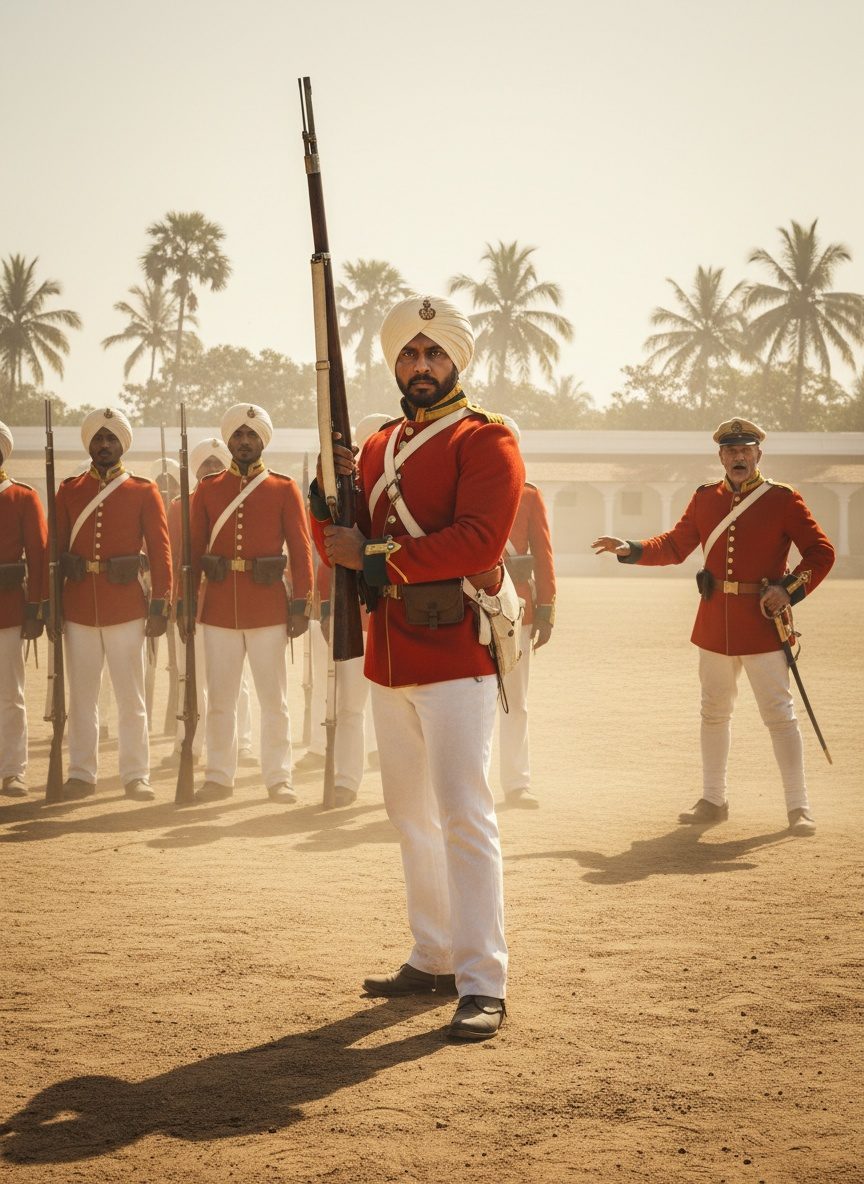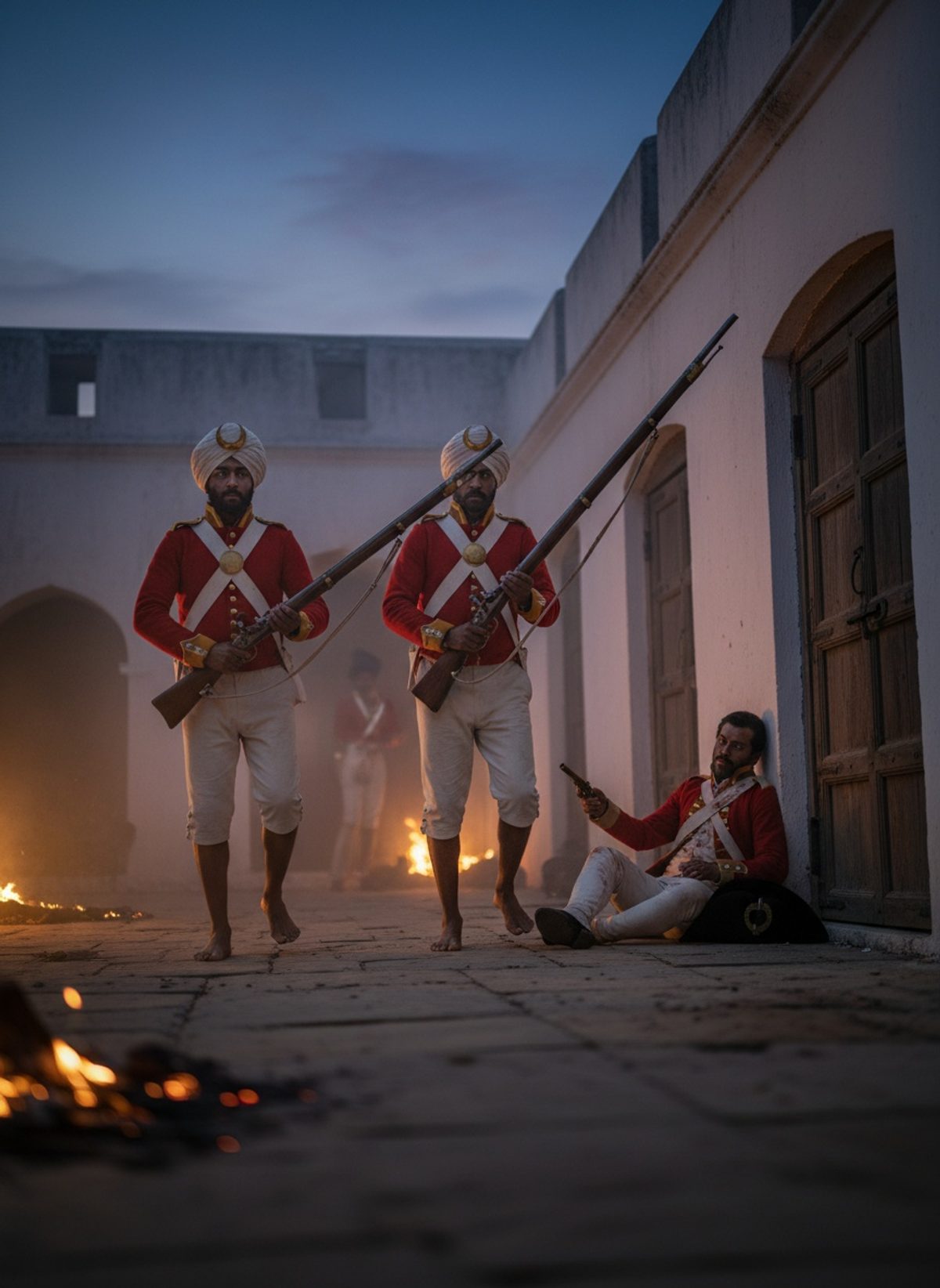
The pre-dawn air of July 10, 1806, was thick with anticipation at Vellore Fort, nestled in the expansive landscapes of southern India. The starlit sky presided over an uneasy silence, the type that hangs over a battlefield before the first arrow flies. The air was humid, pressing down upon the shadows of cooling stone and sand. By the time the sun rose, almost 200 British soldiers lay lifeless in military barracks that only hours before had been a bastion of imperial power. The sepoys, once loyal soldiers of the East India Company, morphed overnight into insurgents—an improbable and striking uprising fifty years before the legendary rebellion of 1857.
Turbans, Traditions, and Turmoil
The soldiers igniting this historic upheaval weren't mercenaries nor ideologues; they were sepoys—local infantrymen serving under the East India Company. This mighty commercial entity, initially formed in 1600 for spice trade, had long since expanded its purview to include not just trade but also military and administrative control over vast sections of the Indian subcontinent. By the turn of the 19th century, the Company had amassed an armed force that eclipsed even the regular British Army in size.
The spark for this rebellion was ostensibly simple: dress codes. In 1806, the sepoys in Vellore were ordered to don European military attire as part of their uniform. What choice of fabric could be so inflammatory? An order to adopt a more Western style of headwear by replacing their traditional turbans with felt hats proved to be an existential affront. For many sepoys, the turban was more than just a piece of clothing; it was a vibrant symbol of their religion and identity.
Complicating matters further was the growing distrust bred by new rumors—rumors that the East India Company had veiled intentions to convert them to Christianity. These augmented fears of cultural erosion and religious conversion coalesced into a simmering discontent, one that would boil over with lethal surprise on that ill-fated night. To the Company, it was merely a matter of discipline; to the sepoys, it was an attack on the bedrock of who they were. Humiliation turned to wrath, a powerful catalyst for what was about to unfold at Vellore Fort.
Read next: When Veera Pazhassi Raja Vanished Into the Jungle, 1797
Under the Flag of Rebellion
As quiet hours stretched into early morning on that July day, some 400 insurgent sepoys, moved by indignation and perhaps desperation, seized the moment. The dormancy of the barracks was shattered with gunfire and chaos. Under the command of Poondi Appaji and Dipol Ghouse Khan, the sepoys exhibited an unexpected tenacity. They secured the gates and tore down the Union Jack, replacing it with the Royal Flag of Mysore, a bold declaration against imperial rule.
The element of surprise was on their side. Creeping through the labyrinthine halls, they caught the British soldiers in their sleep, an almost symbolic act against the slumbering behemoth of the Empire. Major commanding officer Sir Rollo Gillespie, stationed in nearby Arcot, received a harried message and was quick to respond. British reinforcements hounded the gates just in the nick of time, quelling the insurrection by dawn with a degree of brutality that emphasized both control and chaos.
Though the sepoys managed to send tremors through the Empire's outpost, their efforts were quashed by the overwhelming firepower and organization of British reinforcements. In a matter of mere hours, what began with fervor and conviction concluded in failure, but not before altering the fabric of colonial India.
Unveiling an Unforgotten Legacy
Those implicated in the uprising faced swift and severe retribution. Trials by quick military tribunals led to executions, imprisonments, and a public flogging that reverberated throughout the subcontinent. Yet, in the ashes of the Vellore Mutiny, smoldered embers that would later fan into the flame of the 1857 Revolt, the Sepoy Mutiny, that eventually crumbled the East India Company's rule.
The Vellore Mutiny was a precursor, an amplified whisper of the storm that would grasp the entire subcontinent decades later. Perhaps, it served as a crucial awakening for the British command—an undeniable harbinger of the growing unrest they could not fully comprehend nor entirely suppress. Just as compelling, it showcased the complex interplay between colonial power structures and indigenous cultures — a dichotomy marked by mismatched traditions and simmering resentment.
Vellore reminds us that history is never solely about grand figures with royal bloodlines or parliamentary exploits. It finds its true depth in the quieter yet profound narratives of ordinary men and their circles of allegiances and beliefs. In the quiet enclaves of sepoy barracks-turned-battlefields, history divulges not only power but also passion—a passion that would quietly chart the course of an empire's Eastward ambitions and its substantial undoing. The legacy of such moments, lurid yet lucid, lives on, whispering stories untold in textbooks but never forgotten in the hearts of those who bore witness.