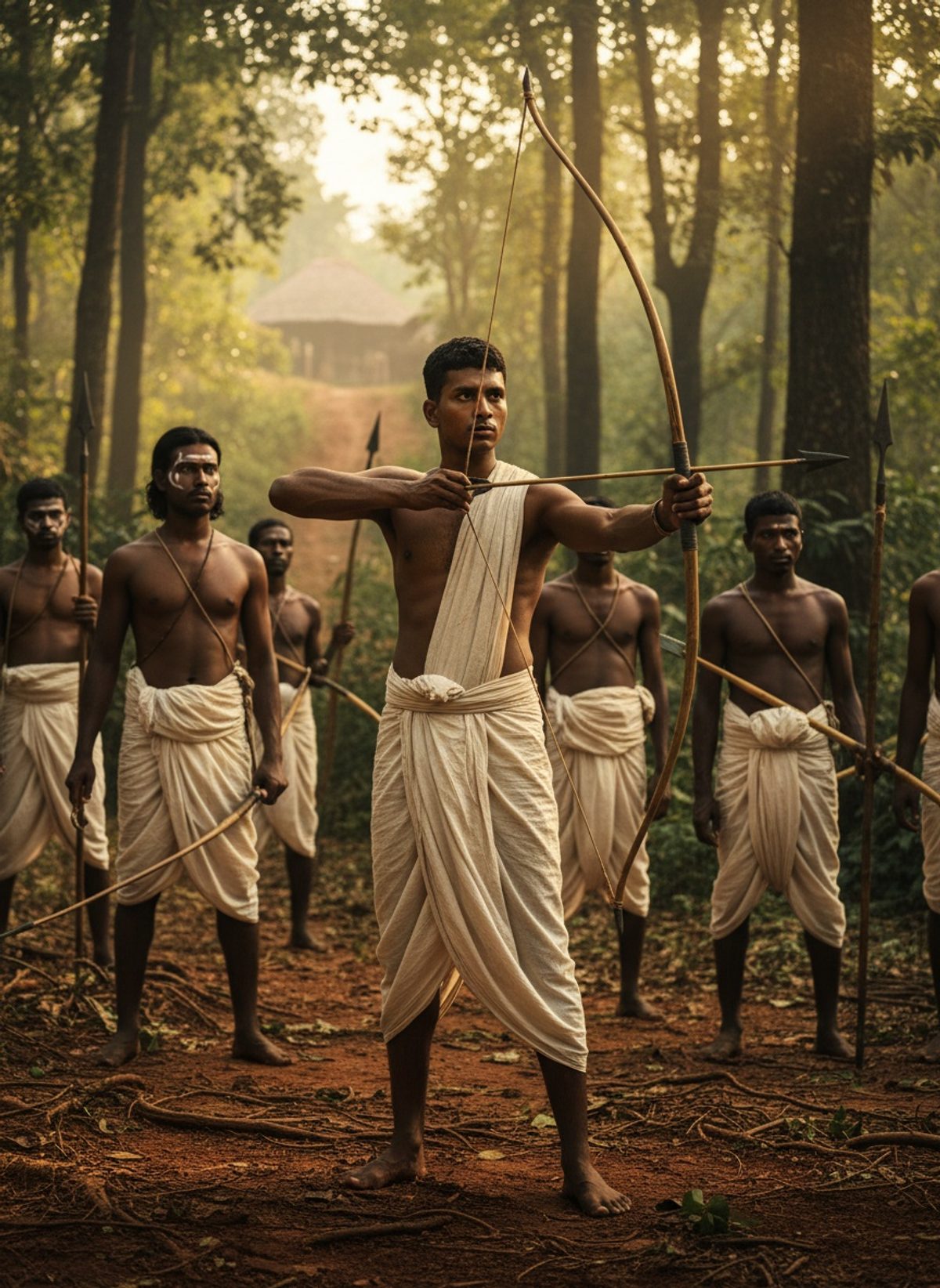
January 3, 1900. A dense, damp fog clung heavily to the Jharkhand jungle.
The Jungle Awakens
In the remote emerald heart of India’s Jharkhand region, the British Raj was learning a painful lesson about underestimating the spirit of a people. On that foggy January morning, Birsa Munda, a mere twenty-five years old, challenged one of the world’s most formidable empires with little more than resolve, a bow, and a love for the land his ancestors had known for generations.
For centuries, the Munda tribe had thrived, intertwined with the forests and hills that surrounded them. But the encroaching British machinery disrupted this harmony, imposing foreign laws and seizing lands without comprehension of the cultural tapestry it uprooted. The British system aimed to "civilize" what they saw as tribal, altering the land tenure and imposing severe taxes. Native livelihoods were disregarded under the weight of colonial wallets. But beneath the quiet exteriors, something was stirring—a force the British had neither understood nor foreseen.
The Revered Leader
Birsa Munda was no ordinary figurehead. He was a visionary, respected as both a spiritual leader and a freedom fighter. Born into the chaos of British India, Birsa saw firsthand the disdain and neglect of his people at the hands of colonial rulers. As a young man, he traveled and learned from other oppressed communities, returning with a strengthened resolve to rid his homeland of the imperial yoke.
Read next: When Sepoy Mangal Pandey Fired the Shot That Lit India
Birsa advocated fiercely for the return of Munda lands, which had been methodically taken by landlords and British policies. He galvanized support by repurposing traditional customs; his was a rallying cry for unity and identity, imbued with religious fervor. His oratory sparked a movement, awakening even the most hesitant among his brethren to join this fight for freedom.
Those who followed him called him the "Dharti Abba"—the Father of Earth. Under his leadership, they believed they were protected by divine power, resistant against the bullets of their oppressors. His charisma and conviction turned their discontent into action, and in a short time, Birsa Munda became a symbol of resistance not just to his people, but an icon across India.
The Arrows of 1900
In the closing days of 1899, spurred by the vision of their leader, the Munda flocked to Birsa's call. Armed simply with bows and arrows, infused with an almost mythical belief in their power—a belief driven by Birsa's prophecies of invulnerability—the Munda warriors struck at the heart of colonial India.
The British were unprepared for the ferocity and organization of the Munda rebellion. Their establishments—representations of their domination—were not just attacked; some were decimated overnight. Government offices and police stations became bonfire beacons, signaling the remorseless resolve of the Munda revolutionaries. Though inaccurately collective when facing rifles and cannons, the arrows of Munda warriors were like rain on stone: persistent, unyielding, leaving undeniable marks of resistance.
Read next: When Dingane's Spies Watched Retief Sign His Own Death
The British administration was initially paralyzed by the speed and intensity of these orchestrated attacks. Reports from the interior of Jharkhand sent panic ricocheting through the colonial corridors. Confronted with challenges not accounted for in their military strategies, the British compounded their military engagements with misunderstandings, underestimating both the Munda fighters’ conviction and their knowledge of the land.
A Legacy Tangled in the Jungle
Tragically, the revolt led by Birsa Munda was short-lived. The colonial machine regrouped and descended with its full might upon the jungle. Birsa was captured in early 1900, and the British attempts to contain and erase his influence declared victory. That oppression continued—with many of the Munda losing their homes and families broken under colonial reprisals.
Yet Birsa Munda’s legacy defies the simplicity of defeat. Though his physical campaign ended abruptly, the sparks he lit lingered. This tale of defiance written in the dense forests of Jharkhand was a riddle wrapped within a young man’s vision—a vision that reached beyond its time, echoing into the corridors of India's freedom movement.
The story of Birsa Munda and his resistance challenges us to reconsider the narratives handed through history. While powers may crush uprisings with their overwhelming might, they cannot so easily erase the reverberations of hope and the indelible love of one’s land. Birsa's arrows might not have felled an empire’s might, but they pierced its arrogance, reminding us all that freedom is not a gift to be bestowed but a right to be claimed.