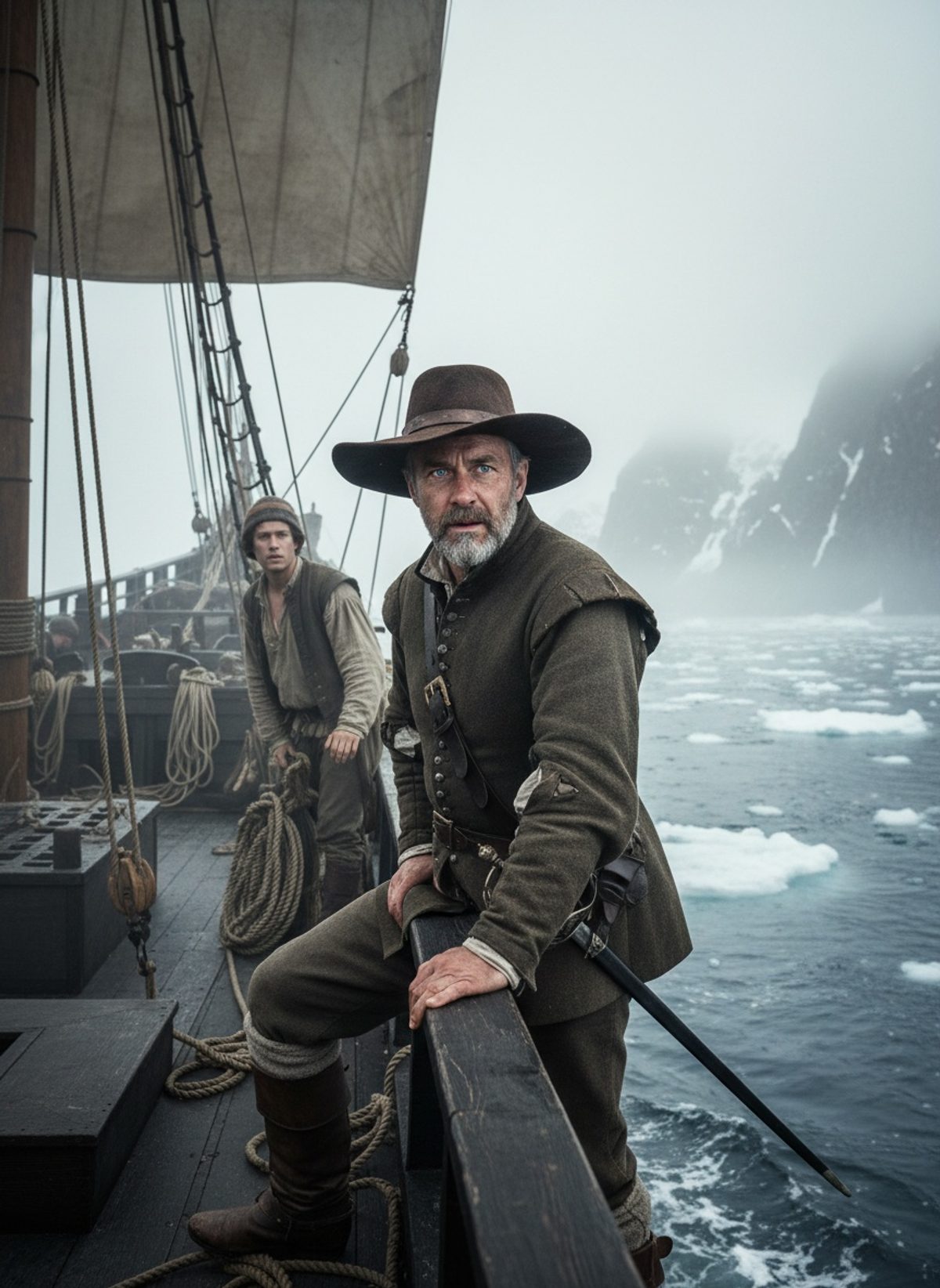
The low, grey skies of the northern reaches stretched endlessly, a frigid canvas pierced occasionally by the sun's fleeting warmth. The Arctic waters churned beneath the keel of a modest English vessel, its wood creaking ominously under the strain of navigating an ice-strewn labyrinth. This was the summer of 1610, and Henry Hudson stood at the helm, scanning the icy expanse with weary eyes that had seen too many fruitless explorations. Yet within this frozen seascape lay the promise of a discovery so profound it could alter the fate of empires.
As the ship groaned against the encroaching ice, Hudson's gaze remained resolute. The infamous Northwest Passage, that elusive shortcut to the riches of Asia, lay just beyond the bounds of known geography—or so he believed. For years, sailors had chased the mirage of this seaway, but the stark reality of Hudson's situation was laid bare against the biting Arctic winds and the restless murmurs of his discontented crew.
His vessel, the *Discovery*, was a scant 55 feet of salted timber battered by storms and dissent alike. The men on board, bound to Hudson's daring dream yet teetering on the brink of mutiny, grumbled beneath their breath. The chill of the north seemed to seep into their bones, threatening to undo the fragile cohesion necessary for survival. Hudson, unbowed by whispers of rebellion or the formidable cold, pressed forward with a focus as unyielding as the Arctic ice itself.
The bay that would later bear his name opened up like an unexpected ocean, a vast inland sea unknown to European charts or conscience. Its discovery was an unexpected gift from the depths of nature's cruelty—a geographical revelation nestled within the harsh imprisonment of whistling winds and freezing water. Here lay claims that could redefine an empire's reach, yet at that moment, concern was simply survival in that daunting wilderness.
Read next: When Martin Frobisher Brought Arctic Ice to England's Queen
Exploring this newly unveiled waterway might have swelled the hearts of those aboard with visions of glory or ensured their names were inscribed into the annals of history. However, the grim specter of a crew on the verge of insurrection lurked heavily. Tensions simmered, fueled by scant rations and the intolerable, unyielding ice. Dissonance arose; it splintered camaraderie as surely as the frozen seas they had traversed.
Yet Hudson was not wholly oblivious to the tremors of mutiny beneath deck. Dismissal of such unrest for too long might have toppled his authority. The struggle was not solely against nature, but against the ideals of leadership during a bleak and uncertain passage. In the months to come, history would recount the fateful decision wherein loyalty and leadership met their grim reckoning—a tale lost and found time and again amidst the northern mists.
The sound of fracturing ice was a constant companion. With each crack, each splitting thunderous echo, the stark reality of Hudson's advance into these uncharted waters pressed down upon those daring this voyage. They had delved into a world untouched before by European eyes; yet this was more land of ghosts than of passage to riches as imagined in dreams spun back in English halls.
The stakes for Hudson were immense. The findings in these uncharted waters promised not solely personal accolade, but a potential shift in power for those parsing the fraught politics between England and its continental rivals. His passage through this mysterious bay could represent more than just geographical exploration—it carried with it aspirations that might ignite dominance over trade routes that remained locked in the frigid embrace of the north.
As the icy waters ebbed against the hull, there was an ephemeral kind of peace that settled in the few hours of twilight, colored less by starlight than by the reflection of those glittering interview ice patches. Hudson dreamt of grandeur and possibility drifting among the infinite horizon that eluded all but the visionaries. Such water passages could alter civilizations—the inevitability resting with those determined enough to endure.
But darkness gathers over all human assertions, and in time, Hudson's quest would face the inevitable ebbs that befall all ventures leaving fate to its course. The *Discovery* wove uncertainly through those frigid realms, its crew inching ever closer to irreparable fracture. History notes that the biting cold unified them in common pallor but divided their resolve, ultimately leading the expedition toward a tragic destiny fraught with human fallibility on an edge of existence.
By the end of his journey, Hudson would leave behind not treasure or transit, but a legacy renamed and reshaped eternally by harsh forces unknown. His exploits proclaimed tales of ambition meeting suffering head-on in a world where nomenclature lasted longer than the ice-swept scars endured by man.
Yet, therein lies the essence of his endeavor—for it tells of humanity's relentless pursuit of the unseen, the undiscovered, and the potential to carve new dimensions unto the world not as it was set, but as it could become. What remains of Hudson's journey past the edge of the known world is not solely the Bay that bears his name, but the indelible mark of human endeavor crafted in the frosty altar of exploration—proof that even into uncertainty, destiny is forged by those daring enough to look beyond the horizon.