April 1581. The chill of the Thames River hung in the morning air as mist enveloped the riverbanks.
In the Presence of a Queen
The Golden Hind rested at Deptford, its wooden hull battered and barnacled from a three-year odyssey around the globe. It was both a testament to human perseverance and a symbol of England’s burgeoning ambition. On this mist-laden morning, the ship’s deck was more than a stage for salty mariners; it was the floor of a royal anointment. Among the crew stood Francis Drake, a man of humble Devonshire origins, whose life of maritime daring had brought him to this extraordinary moment.
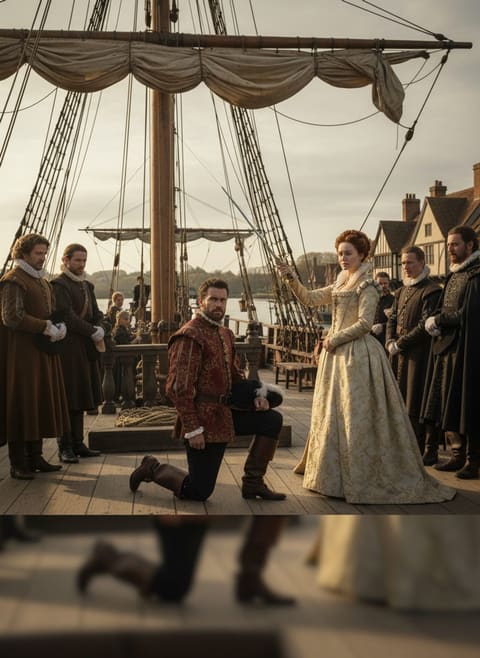
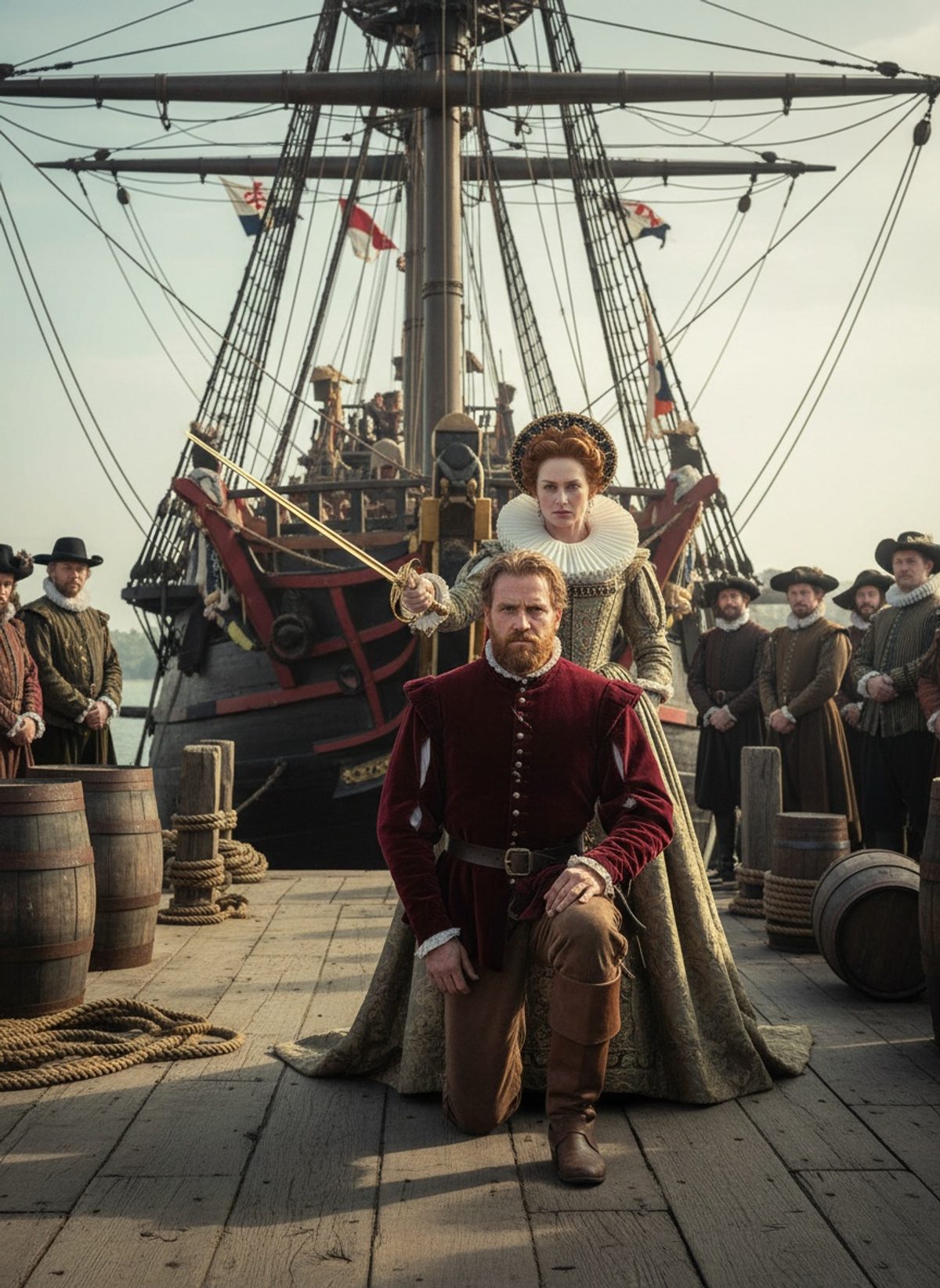
As Queen Elizabeth I stepped forward to the rail, her presence was regal, commanding, a silhouette against the dim light. The very act of her coming aboard the Golden Hind signified something unprecedented—a statement of England's intent to stake its claim as a global power. This was not just any ship, but one that had circumnavigated the globe, flaunting English might and seafaring prowess where Spanish fleets once sailed unchallenged. Elizabeth’s visit was a message: approval and acknowledgment wrapped in royal ceremony.
Drake knelt on the planks, the sea breeze whispering tales of distant lands. He was more than a sea captain; he was a living legend, the man who returned with the creaking, treasure-laden vessel. And while wealth in gold and spices was tangible and tempting, the real prize was sovereignty over the seas. By knighting Drake, Elizabeth wasn’t simply rewarding a loyal subject; she was legitimizing piracy against England’s enemies, igniting further adventures for glory and fortune. The queen drew her sword, tapping it lightly on Drake’s shoulder. With this act, Sir Francis Drake was born, knighted in sight of the ship that had conquered the oceans.
Read next: When Richard Hawkins Sailed Into a Spanish Trap, 1594
The Golden Path to Empire
The significance of that moment reverberated across Europe’s courts, where the stakes were oceans and the prize was global hegemony. England, a relative underdog in the European power structure, had maneuvered itself into a formidable maritime position. Drake's circumnavigation was not merely a voyage; it was an audacious strike against Spanish dominance. The booty he captured filled England’s coffers, but the greater value lay in the ripple effects of his adventure. Drake’s journey illustrated the potential for English ventures across the newly mapped globe, circumventing Spanish and Portuguese sea routes and opening doors to the riches of the East and West.
Francis Drake's endeavors shifted perceptions both at home and abroad. While some saw him as little more than a sea pirate, the Spanish labeled him "El Draque”—the Dragon. In his native land, however, he was hailed as the archetype of the English mariner: bold, cunning, relentlessly defiant of the established order. His knighthood was a royal endorsement meant to galvanize others toward such exploits and embolden England’s policy of maritime expansion.
And as England looked outward, the societal landscape transformed. The prosperity and vision ignited by Drake’s voyages fueled narratives that inspired future generations. Seafaring gallants would follow, captains who might have remained nameless if not for the legend paved by Drake. Harbors buzzed with the clamor of preparation, navies expanded, and the ambition which had been but a whisper became a clarion call. The legacy of visionaries like Drake was now woven into the fabric of English identity—an emergent power that would eventually give birth to an empire upon which the sun never set.
Read next: When Francis Drake Sailed Into the Pacific and Changed Everything
The Echo of Sir Francis
Subsequent to being knighted by Elizabeth, Drake entered the annals of history as more than a mariner. He epitomized a seismic transformation in the tide of English policy, a shift from insular island nation to an empire with global aspirations. His knighthood on the deck of the Golden Hind was both a beginning and an end: the end of inward-looking strategy and the dawn of maritime imperialism.
Against a backdrop of rivalry and rebellion, Elizabeth’s bold gambit in honoring Drake was not without risk. Yet the rewards of staking England’s claim to the seas were tangible and enduring. The Spanish Armada loomed on the horizon, and when it came, the navy forged in this era of expansion would meet it in battle. Underpinning these conflicts was the assertion that no ocean was too vast, no enemy too fierce, for the determined seafarers of England.
Drake’s story echoes as a narrative of innate human daring—a Devon boy whose name was etched in history alongside monarchs and great men. His life intertwined with the fate of nations and reshaped the course of history. This is why the ceremony at Deptford matters even today. It was a defining episode that speaks to the ceaseless urge to explore and expand. In every towering ship and unyielding explorer lies a fragment of Drake’s unending journey, the same winds that filled his sails still inspire ambition in individuals who dare to dream beyond the horizon.