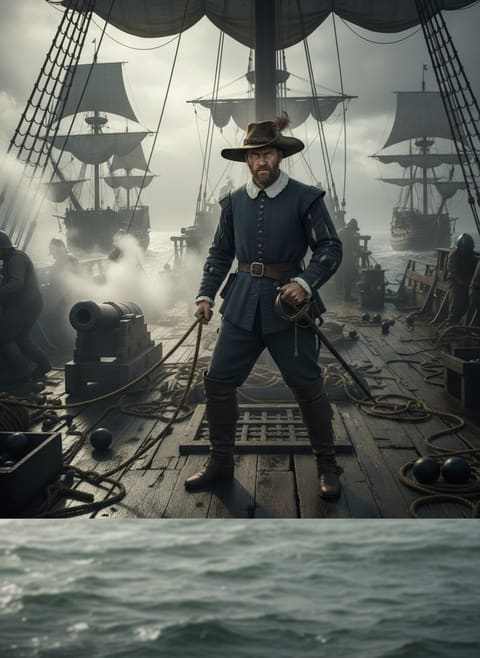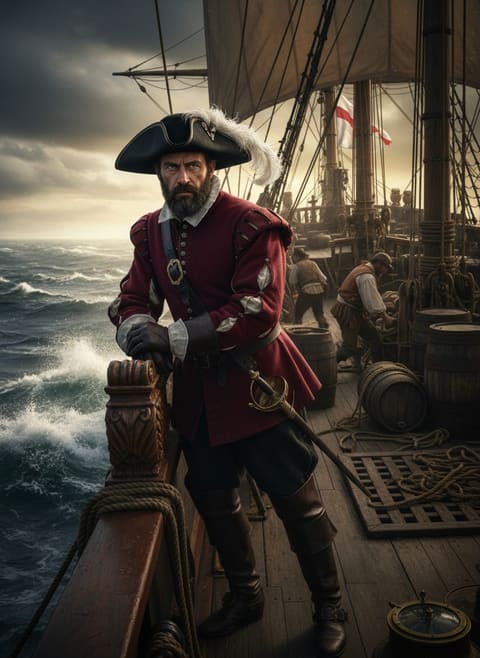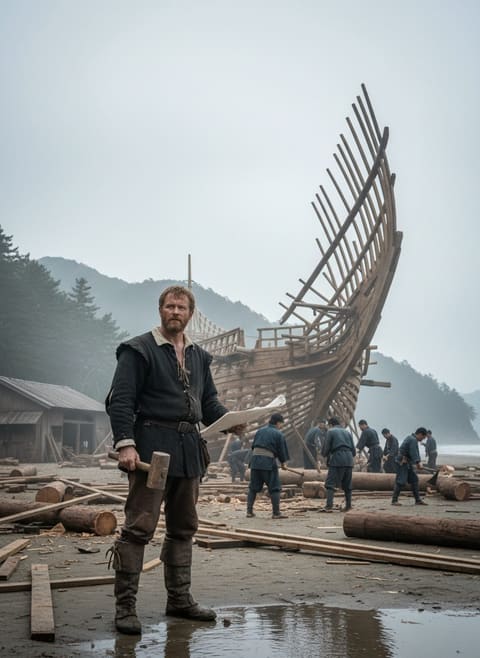
He couldn't read Greek or Latin. Yet John Davis, son of an Elizabethan farmer, charted courses through treacherous waters that left scholars and aristocrats baffled.
Charting the Unknown
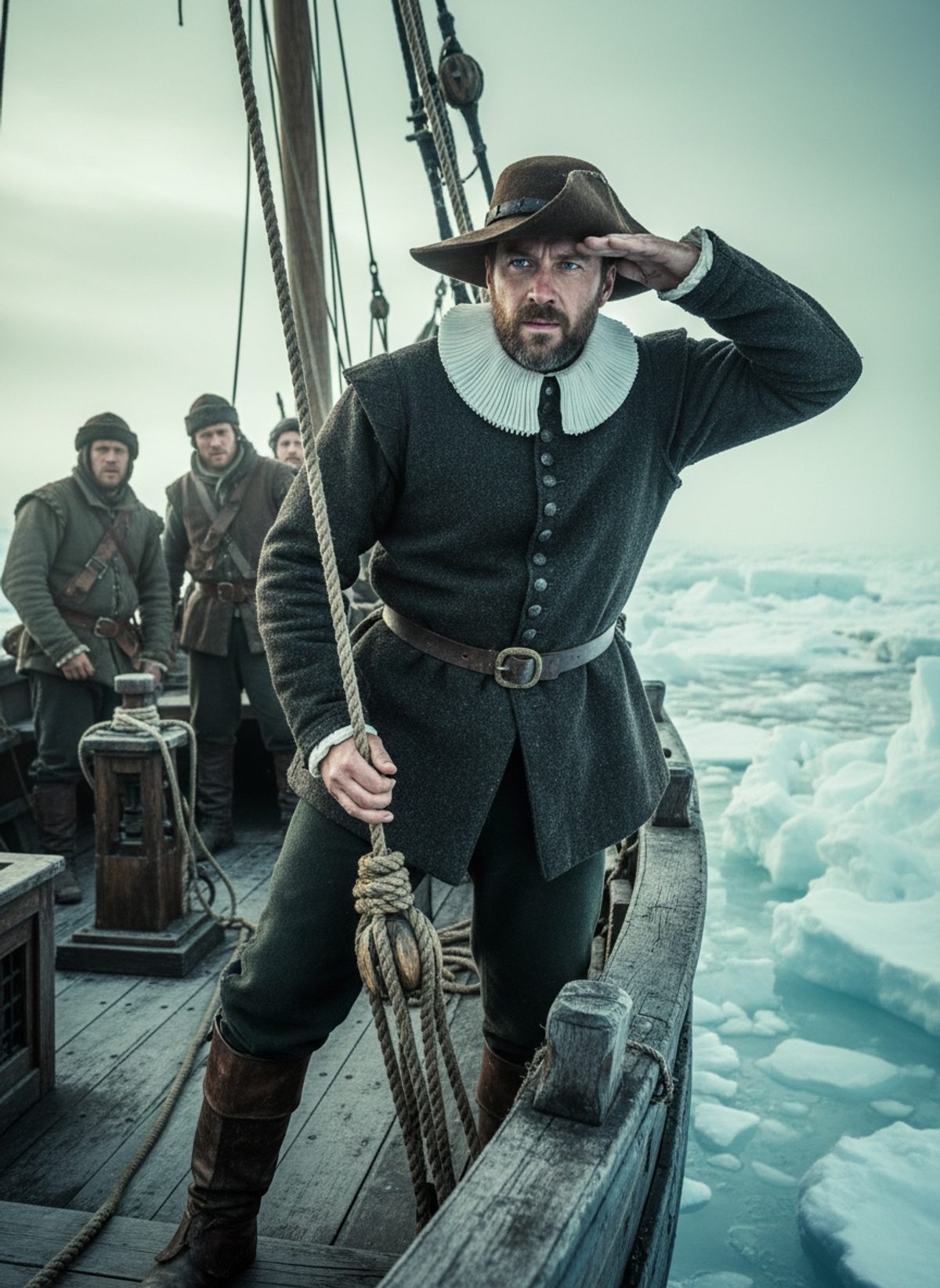
The summer of 1587, with its long days and brief nights, found John Davis commanding a crew gripped with fear. Their wooden vessel was but a fragile speck against the seemingly endless expanse of the Arctic, its hull groaning under the chilling embrace of ice-clogged waters. While others would turn back into the relative safety of the familiar, Davis pressed on. His was not a voyage for the faint-hearted; it was one against nature’s own frost-tinged fury and the failings of men who had tried and failed before.
For many on board, the Arctic exploration was a dance with death, a frosty phantom that had claimed many a sailor in the queen's quest for a Northwest Passage—a mythical route to the riches of the Orient. Yet, Davis was not daunted. He saw opportunity in the shifting ice floes and unraveling winds, on voyages that fused hope, adventure, and an unyielding thirst for discovery. The Arctic held its secrets close, but Davis was determined to pry them loose. His charts, unveiled over the months that followed, revealed a strait no European had yet laid claim to—a passage north, whispering tales of promise.
A Captain Unmoved by Fear
Davis’s insistence on forging ahead was tempered not with arrogance but with a cold, calculated resolve. He knew that the North, with its icebergs like monasterial giants breaching the horizon, had no mercy for the careless. Yet, familiarity breeds more than contempt; it builds courage. Twice his expeditions were stifled by the stern will of mother nature, but each return equipped Davis with invaluable knowledge. The crew's pleas for safety were met with assurances that their names would be chiseled forever into the annals of history, that their perseverance would light the way for others.
Read next: When William Baffin Sailed to the Edge of the World, 1616
Unlike other expeditions which returned, defeated and broken, Davis’s returned as learning experiences. Arctic exploration was no longer an opaque enigma but a navigable challenge. He understood better than most that maps were as malleable as the tides. What seemed impassable on one voyage could be, with an opportunistic wind and a few degrees' change, a corridor open wide. Each attempt afforded him the chance to refine and define the contours of lands previously unseen by English eyes.
The Strait That Bore His Name
With his third voyage in 1587, Davis honed his course with precision. At a time when European exploration was still cradling its ambitions amidst lengthy winter nights, Davis’s stubborn pursuit carried him deeper than his predecessors dared dream. It was there, beyond the reach of conventional wisdom and past fraught familiarity, that he charted what would come to be known as the Davis Strait. This body of water, stretching between Greenland and Canada’s Baffin Island, became a pivotal gateway for future exploration, holding the tantalizing vision of a Northwest Passage just beyond.
Read next: When Henry Hudson Sailed Past the Edge of the Known World
To trudge through this icy wilderness was to step into a world painted in shades of alien whiteness, to hear the silent symphony composed by distant icebergs. His charts ensured that those who followed would not venture blind, but with a glimpse—however small—of where their bearings lay. To his crew, these clarifications were lifelines; to the realm of Elizabethan England, they were proof that the empire's reach could stretch as far as one dared to dream.
A Legacy Encased in Ice
As the winds of history unravel the stories of empire and ambition, the voyages of John Davis stand as a testament to the spirit of exploration carved into the fabric of Elizabethan England. While he never quite unveiled the Northwest Passage he so feverishly sought, he sculpted pathways through peril and ice that lit the way for future generations of explorers. The Davis Strait stands today not only as a geographical landmark but as a monument to human determination and the ceaseless quest for understanding.
This story of resolve may very well exceed the boundaries of what Davis himself envisioned as he traversed those icy waters. It serves as a reminder that the path to discovery is blocked not by the obstacles we face but by our willingness to press onward in the face of them. And so, in the summer of 1587, as Davis’s ship cut its way through the Arctic’s chilling embrace, he charted more than just a tangible strait; he charted the possibility of what lay beyond the horizon, with an indomitable spirit that refused to bow to the fear of the unknown.