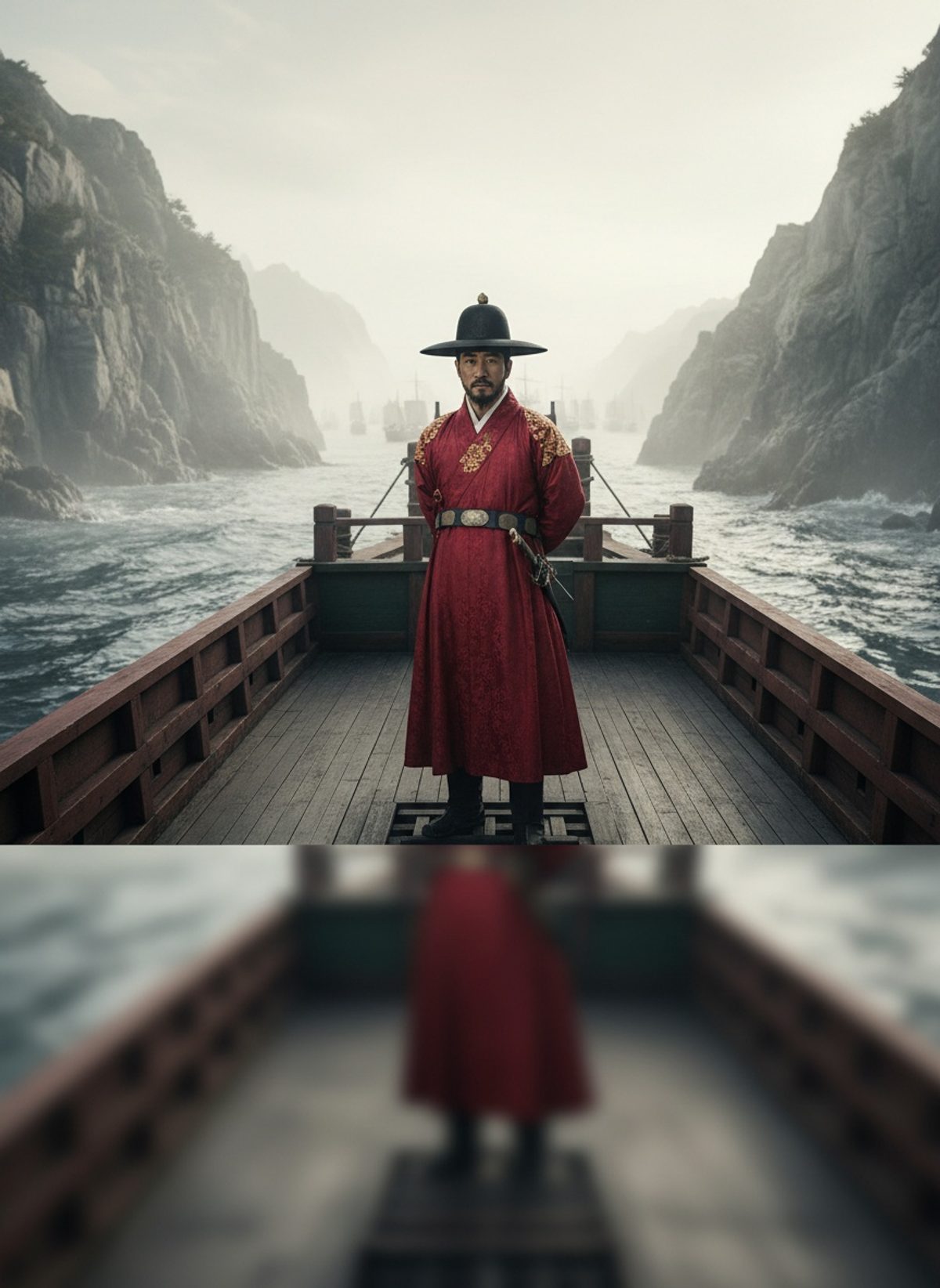
He had been dismissed, tortured, and left for dead. Six months later, Yi Sun-sin led Korea to an impossible victory.
The Fall and Rise of an Admiral
The year 1597 was a tumultuous one for Korea. With the Imjin War sweeping across the country, the Japanese forces were a formidable foe, pushing the Joseon Dynasty to its limits. Admiral Yi Sun-sin had once been a celebrated military leader, a beacon of hope with a proven track record in naval warfare. Yet, under a cloud of political machinations and betrayal, Yi was stripped of his rank and tortured, left to languish in near obscurity. But fate had other plans. With Korea's navy obliterated and only thirteen ships remaining, Yi was recalled to lead once more. It was a testament to his indomitable spirit that he accepted the formidable challenge without hesitation.
The Straits of Myeongnyang: David vs. Goliath
On October 26, 1597, the stage was set for one of history's most astonishing naval battles. The Battle of Myeongnyang took place in the treacherous waters of the Myeongnyang Strait, a narrow passage known for its unpredictable currents. With a Korean fleet reduced to a mere thirteen ships, Yi faced a Japanese armada of at least 133 vessels. Some accounts even place the Japanese fleet at a staggering 300 ships. Outnumbered and outgunned, conventional military wisdom dictated retreat. But Yi was anything but conventional.
He meticulously studied the tides and geography of the strait. Knowing the strategic importance of the strong currents, he placed his ships in a line at the narrowest part of the channel. It was a masterstroke of naval strategy. When the Japanese fleet charged, the swift current confined their movements, transforming their numerical advantage into a logistical nightmare. Like a well-conducted symphony, Yi coordinated his fleet to lash out at the disarrayed Japanese, focusing their fire powerfully while minimizing exposure.
Read next: She Was Assaulted at 81. A Stranger Paid Her Rent in Secret.
The Relentless Spirit of Yi Sun-sin
Admiral Yi’s leadership was characterized by an unyielding resolve and a commitment to his men that endeared him to his officers and sailors alike. Despite facing such overwhelming odds, he instilled a fierce determination to protect their homeland. As the battle raged on, Yi stood atop his flagship, issuing commands and inspiring confidence through his presence. According to his wartime journals, the Nanjung Ilgi, his clear-headed strategies and personal courage served as a lifeline in the chaos, steering his fleet to success time and again.
Yi's innovations in naval tactics and ship design also played a crucial role. Notably absent from this battle was his famed "turtle ship" or geobukseon, a type of ironclad warship he had deployed with devastating effect in earlier engagements. Yet, even without this technological advantage, his strategic genius shone through. His decision to fight in the strait turned the tide—both figuratively and literally—against Korea’s foes.
The Tide Turns in Korea’s Favor
The results of the Battle of Myeongnyang were nothing short of miraculous. Against all odds, the Korean navy emerged victorious, having sunk or disabled at least 31 Japanese ships, while Yi Sun-sin’s fleet remained largely intact. The Japanese forces, confused and demoralized, were forced into a hasty retreat. This victory proved pivotal, buying Korea much-needed time to regroup and rethink its strategy in the ongoing war.
Stories of the miraculous battle rippled through the annals of naval history, with Admiral Yi hailed as one of the greatest naval tacticians of all time. His ability to outmaneuver and outthink a much larger opponent brought respect and admiration far beyond Korea’s borders. The Battle of Myeongnyang became a beacon of strategic genius, studied by military scholars the world over.
The Lasting Legacy of Yi Sun-sin
In the broader tapestry of Korean history, the story of Yi Sun-sin is more than a tale of military acumen; it is a narrative of resilience and indomitable will. Yi's leadership during Korea's darkest hour underscores the profound difference one determined individual can make when strategic brilliance is coupled with unyielding grit. His contributions not only ensured the survival of the Korean state in a time of dire existential threat but also left an enduring imprint on military history.
As we reflect on how Yi Sun-sin defied the odds, his actions remind us that even in the face of overwhelming adversity, the human spirit can rise to meet any challenge. His story is more than a historical account; it is an inspiring reminder of the potential within all of us to change our circumstances, to stand resolute when the tide seems insurmountably against us. Yi Sun-sin’s legacy endures as a beacon of hope and a powerful testament to the extraordinary power of determination in shaping history.