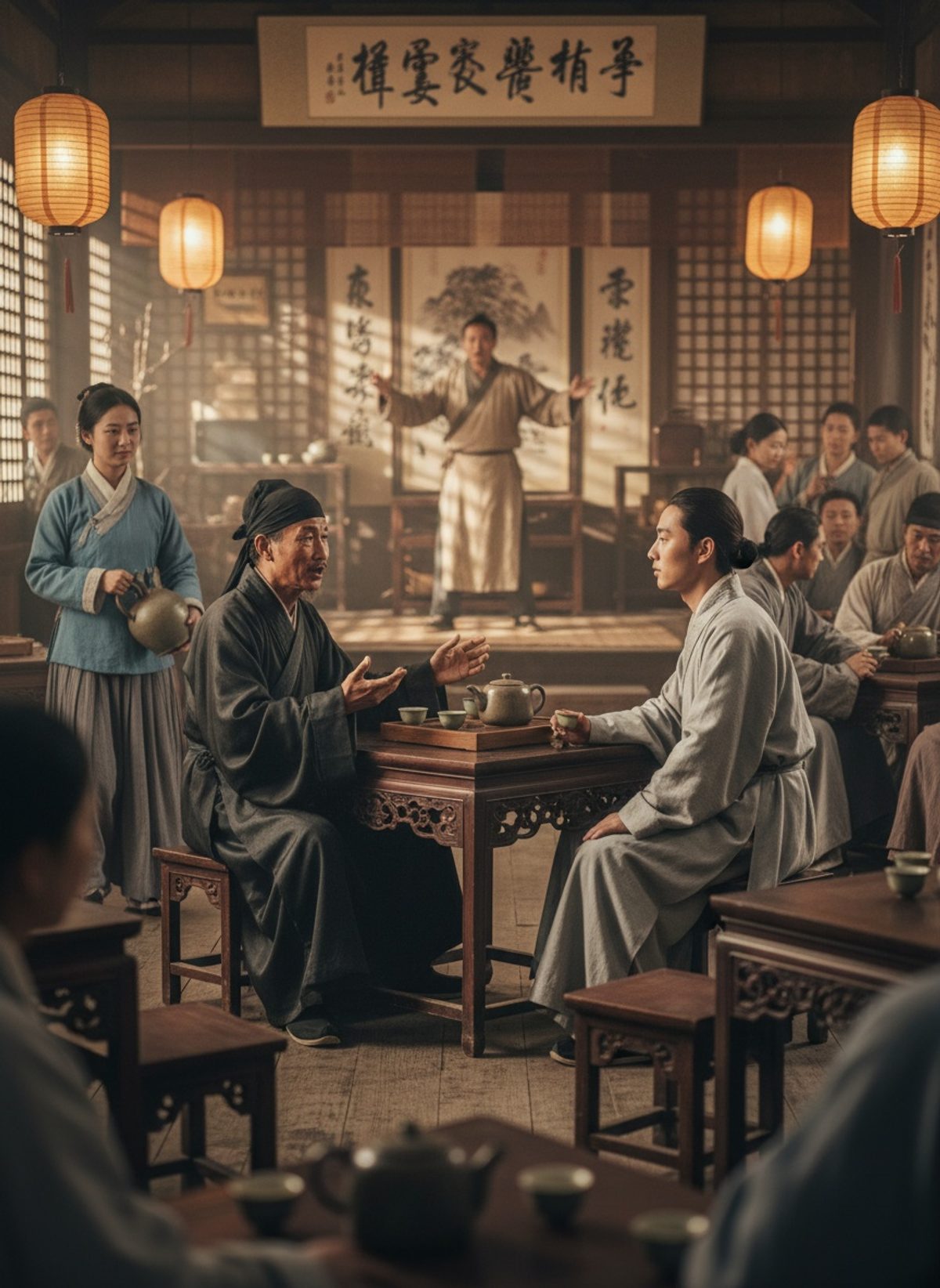
The air in Hangzhou's bustling street thickened with the fragrance of brewed dragon-well tea as merchants clapped hands over freshly made agreements. Inside the teahouse, the murmur of conversation blended with the steady flurry of servers weaving through closely packed tables.
Here, no soul was a stranger: a candlemaker from the next alley, a scholar from the Song court, a poet weaving verses for a meal—each had a place, the clinking of porcelain cups their soundtrack. It was here in 1150 AD, against the backdrop of the Southern Song dynasty's capital, that social strata blurred beneath roofs of woven bamboo and thatch.
Inside the Teahouse: Commerce and Camaraderie
Seated amidst the noise were merchants, clasping hands over deals inked without contracts—trust sealed with a nod and a cup of infused green tea. The Song dynasty was a time when Hangzhou's teahouses served as more than mere rest stops; they were the pulsating hearts of commerce.
This was the era when tea was more than a drink; it was a currency of conversation, essential to smoothing negotiations and binding new ties. With China's GDP soaring to levels unmatched even by Europe, the teahouses epitomized the economic prowess of the Southern Song.
Read next: Tang Dynasty Ice Merchants Cut Frozen Rivers to Cool the Emperor's Table
Teahouses, devoid of the rigid hierarchy of court or military order, allowed the commingling of ideas and innovation. Merchants unleashed stories of faraway lands and exotic goods, spurring curiosity among their patrons. In this dynamic environment, ideas thrived just as much as trade, expanding the horizons of a society already adept at technological marvels such as compasses and paper money.
The Poets' Sanctuary: Verse as Exploration
Not only did merchants find their raison d'être here, but so did the articulate poets who etched the human experience into lyrical forms. A poet’s recitation could effortlessly bring silence to a bustling room, and his skill in the craft was rewarded with audible appreciation and the clink of coins tossed across tables. Scholars and townsfolk alike revelled in this auditory indulgence, hoisting cups in honor of expressions that tore the veils from their everyday lives.
The teahouse represented more than the performance: it was a sanctuary for artists whose dreams rippled across Hangzhou. Far from the sanctity of temples and rigidity of courts, poets and artists etched their influence by evoking emotions as untraceable yet profound as the taste of tea itself.
Storytellers and Serendipity: Interwoven Fates
As the poets spun their lyrical magic, storytellers drew lines of spectators outside their doors, their narratives rich tapestries woven with the threads of told-and-retold tales. These raconteurs were custodians of culture, keeping oral traditions alive as they cast spells of fables and histories, each chapter unfurling like the steam from a fresh cup.
These assemblies of listeners outside the teahouse often mingled into spontaneous festivities. Spectacles ranged from breathing fire to playing gripping games of strategy, embedding the spontaneity of carnival into everyday life. Such gatherings bridged gaps between classes and castes, allowing shared wonder over tales that both informed and delighted.
Read next: Tang Dynasty Papermakers: How China Wrapped the World in Sheets
Teahouses as Microcosms of Society
In the teahouses of Hangzhou, distinctions of rank dissolved amid the aroma of steaming brews. From high-ranking officials and scholars to humble soldiers and widows seeking solace in numbers, they all gathered as equal recipients of hospitality. Rich tapestries and burned incense lent these abodes a serene ambiance, detaching patrons from the pressures beyond the teahouse walls.
This was the democratic spirit within these hallowed halls: access was universal, conversation was open-ended, and every narrative had its place. In sharp contrast to medieval Europe where the establishment of class was strictly adhered to, Song China basked in these teahouses' egalitarian ethos that provided opportunities not only for transactions to flourish but ideas to transform in tandem.
The Teahouse Legacy: Fraternité in a Cup
These vibrant gathering spaces broadcast a humble yet potent truth: that community thrives not solely in grandeur but in shared moments over simple, crafted cups of tea. Through them, everyone who sipped from those shallow bowls nourished more than their bodies—they nurtured a cultural renaissance that treasured literature, commerce, philosophy, and camaraderie in delicate harmony.
In these timeless haunts, the whispers of ancient patrons echo still, testifying to the tapestry of human connection woven long ago—where teahouses, rather than being sidelined by history, served as cauldrons of a national spirit as brewed and warming as dragon-well tea itself.