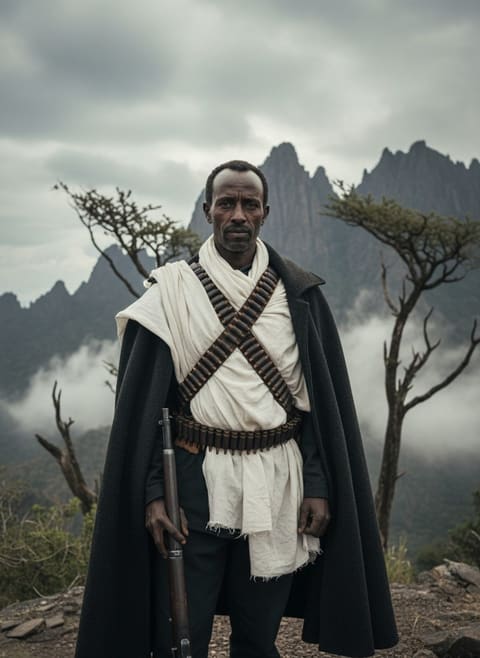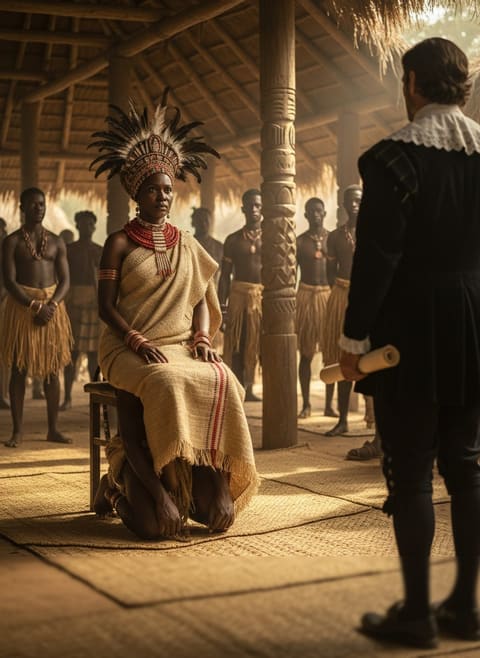
1324. The golden sands of Cairo shimmered under the relentless sun.
A Meeting of Worlds
In the bustling heart of medieval Cairo, a city flourishing with the treasures of the Islamic Golden Age, the arrival of Mansa Musa's emissary was an event shadowed in prestige and tension. The Mali Empire, a kingdom renowned for its boundless riches, had sent its representative to the court of Al-Nasir Muhammad, Sultan of Egypt, a man whose influence stretched across the Islamic world.
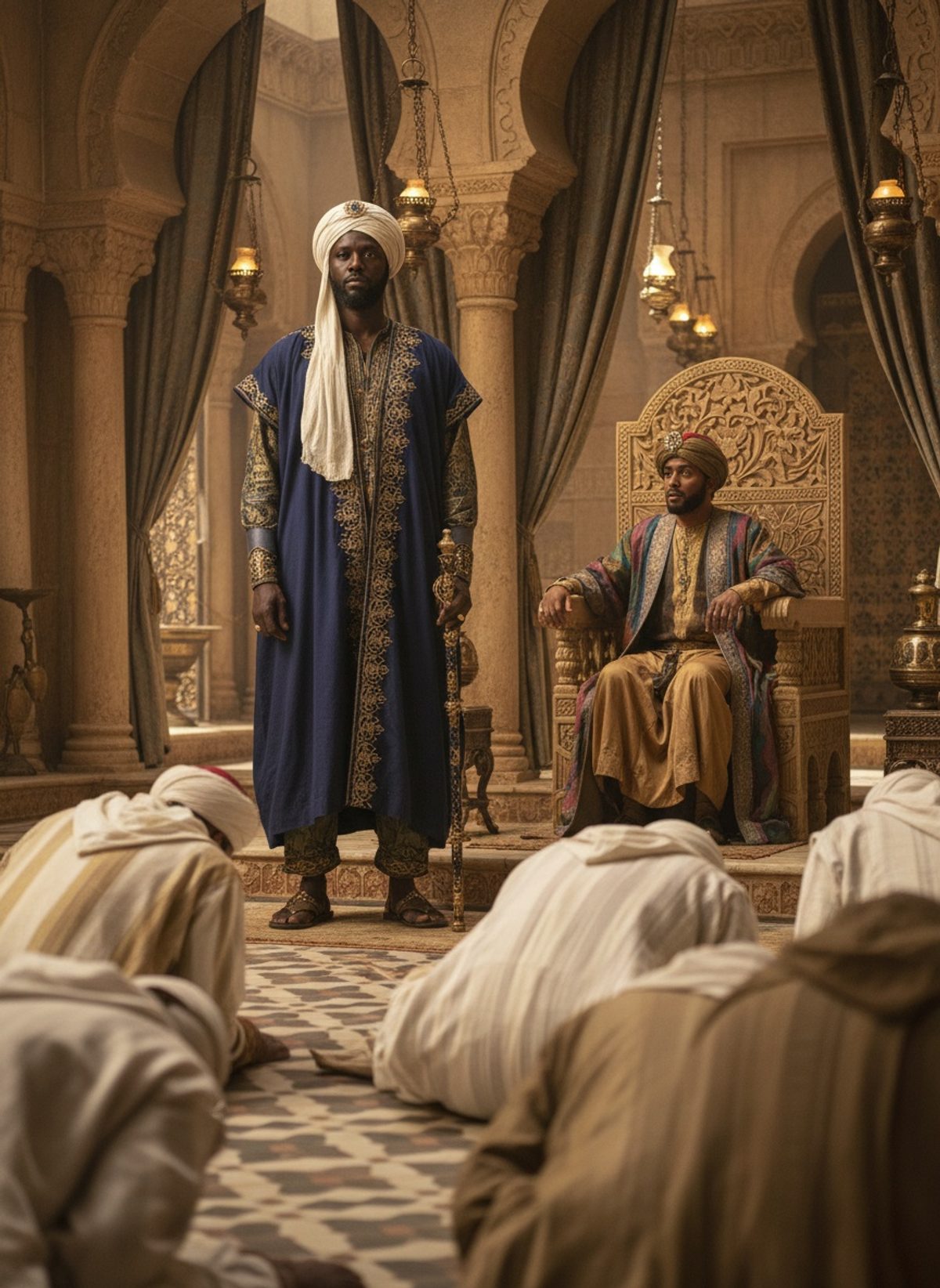
In a grand hall filled with the intricate scents of perfumed oils and the murmur of silk-clad courtesans, the ambassador of Mali stood with an air of quiet dignity. Before him sat the Sultan, perched regally upon an opulent throne, his eyes keen and expectant. The protocol dictated that all who entered must prostrate themselves in respect of the powerful ruler. It was an age-old tradition, an act of homage that reaffirmed the Sultan’s supremacy. But today, the rules were about to change.
The Defiant Ambassador
A hush fell over the assembly as the ambassador faced the throne. Unlike all others in the room, he stood tall, his back straight as a spear, and refused to genuflect. This act, seemingly small, was monumental in its audacity. A collective gasp echoed through the chamber, eyes widening in disbelief. The Sultan's advisors and noblemen shifted uneasily, for to defy such a ritual was not only unheard of but dangerous.
Read next: Khama III Crossed the Ocean. He Saved His People.
Yet, the ambassador’s defiance was not born of arrogance but conviction. He was a man who carried the respect of one of the richest and most powerful empires of the time. The Mali Empire, under the rule of Mansa Musa, had amassed immense wealth, with gold flowing like water. To kneel would imply subservience, a notion inconceivable to a realm of such prestige. He had come not as a supplicant but as an equal.
A Dialogue Reshaped
The Sultan, a ruler not unused to challenges, was at first taken aback. Yet, he was a shrewd leader, and his sharp mind quickly weighed the potential of this meeting. Here was an opportunity to forge an alliance with an empire that lay as a shimmering jewel in Africa's crown. Instead of expressing indignation, the Sultan chose diplomacy.
As their eyes locked, a silent understanding passed between them. The ambassador spoke not with words filled with fear but with a voice steady and low. He narrated tales of a vast empire, its breadth, and wealth. He spoke of a leader so magnanimous that during his pilgrimage, the very economy of cities was reshaped by his generosity. Mansa Musa's hajj had left a lasting imprint, one that had ripples across the entire Islamic world. The Sultan listened intently, his interest piqued.
Negotiations were reopened, but they were now on different terms; they were a dialogue between equals. The ambassador's refusal to kneel was a message that resonated with strength and mutual respect. It set a precedent for how African kingdoms could engage with other powers on their terms.
Read next: He Walked Into the Fire Alone. Kano Listened.
Redrawing the Map of Power
This singular encounter marked a shift in perception from a world accustomed to hierarchies defined by subjugation. It echoed across the sands of time, reshaping how Africa's potential was perceived. The flow of gold from the Mali Empire was not merely wealth but a testament to the continent’s forgotten prowess.
The ambassador’s role was more than that of an emissary; he was a mirror reflecting an opaque truth to the world that lay beyond. His defiance was a narration of pride in Africa’s history, its peoples, and its leaders. It was a reminder that the history taught in schoolbooks often spans a narrow spectrum, leaving vast tapestries of human endeavor unrevealed.
In the annals of history, his simple act of standing while others knelt was a profound declaration of dignity and respect that rippled through centuries. The Mali Empire's stature in history was thus immortalized not just through wealth, but through the unyielding belief in its own sovereignty. This story, one where boundaries of power were redrawn with silent wisdom, encourages us to seek narratives where the quiet defiance of a single act speaks louder than a thousand voices.