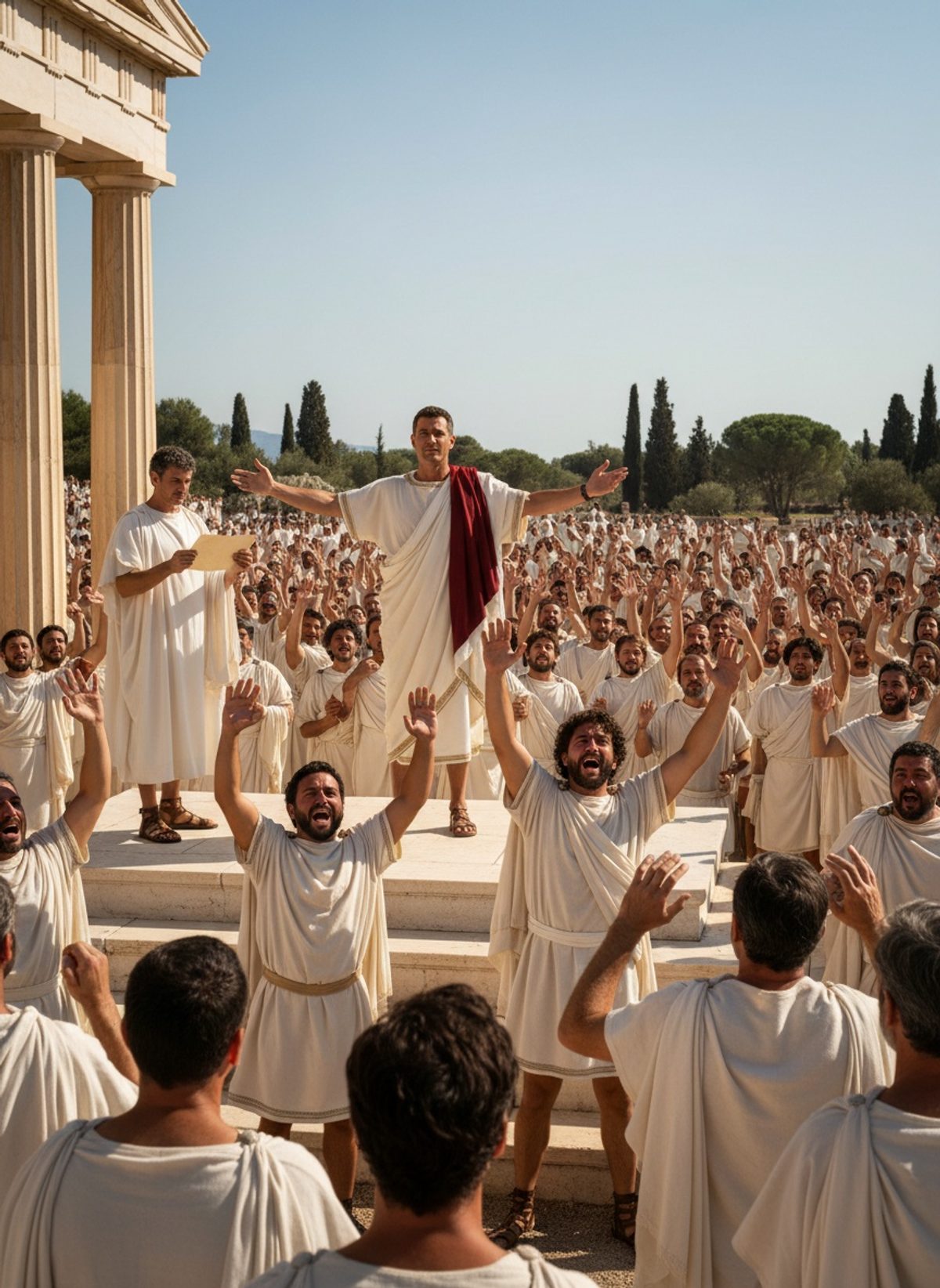
The sun poured over the grand stadium, a vast amphitheater carved amid the rolling hills of the Isthmus of Corinth. Its brilliant rays kissed the eager faces of tens of thousands gathered for the renowned Isthmian Games of 196 BC. The crisp air carried the scent of olives and excitement, a sea of murmured anticipation rippling through the throng. They filled the stone seats, their eyes fixed on a solitary Roman figure, poised to speak words that would echo across history.
A Momentous Arrival
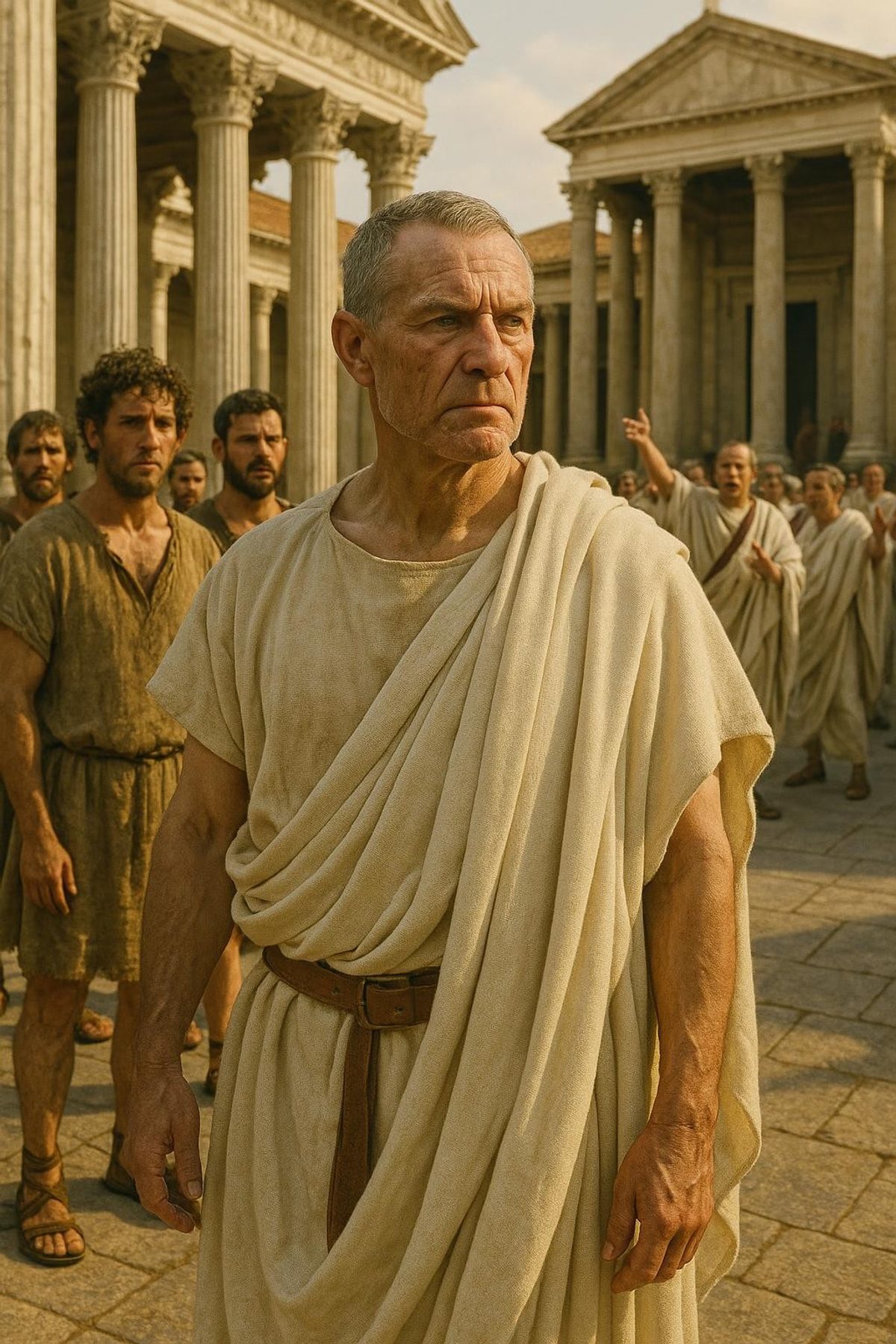
The Romans had arrived in Greece, a fact that had unsettled many. The fear of yet another foreign power staking a claim to their storied lands loomed heavily. As the Greek world lay divided and weakened by relentless wars and external pressures, the presence of a Roman army could spell the end of their independence. But Titus Quinctius Flamininus, the Roman on whom all eyes now rested, was here with a mission that diverged from the exploitative conquests of many before him.
Flamininus was no ordinary general; he bore a vision trained not on domination, but on a novel blend of diplomacy and power. As the appointed commander of the Roman forces in Greece, he had already dealt a decisive blow to the Macedonian king Philip V, a feat that sent ripples throughout the Mediterranean. His victory had opened a path not just to sway, but to a choice — the choice of whether Rome would become a mere conqueror or something more.
The Proclamation of Freedom
The air was filled with anticipation as Flamininus stepped forward. Beneath the vibrant Mediterranean sky, the amphitheater hushed to a silence so profound it could almost be touched. His voice, carried by the wind and reinforced by Roman heralds, was both the bearer of news and the arbiter of a new era. He announced a proclamation that no ears present had dared to expect: By decree of the Roman Senate, all Greek states were free and independent, their freedom to be respected by all and defended by Rome itself.
Read next: Boudica Burned Londinium. Rome Never Forgot Her Name.
The initial reaction was silence, a collective intake of breath as the magnitude of the words settled over them. Then, as if the weight of centuries had been lifted in a single moment, the silence gave way to a thunderous eruption. Men wept openly, tears flowing from eyes that had long seen the endless cycle of war and subjugation. Greece, mother of philosophy and cradle of democracy, was to be free of foreign shackles.
The Awakening of Hellenic Pride
For Greece, a rich tapestry of city-states with a shared yet fragmented culture, this moment evoked a powerful resurgence of age-old pride. The Greeks had always been fiercely independent, prizing their autonomy as ardently as their gods. This proclamation was not just relief; it was a return to an idealized past where the polis — the city-state — could exist in harmony, unfettered by the ambitions of Macedonia or the threats from the east.
But beneath the celebrations lay a question — why, in this age of empires and conquest, would a power like Rome choose such a path? The answer was as calculated as it was idealistic. Rome understood that a liberated Greece, grateful and indebted to Rome, could serve as a stabilizing influence in the region, a bulwark against future Macedonian aggression, and a cultural ally that would enrich the Roman world.
Rome's Unprecedented Strategy
This choice reflected a brilliant stroke of statecraft, one that showcased Roman adaptability and the power of soft influence. While conquerors typically exacted tribute and control, Rome's gesture of goodwill was a strategic investment in a vital region that connected them to the cultural and intellectual legacy of Greece. The Romans, inheritors of Hellenic culture, saw themselves not as destroyers but as its continuators, borrowers of wisdom and patrons of its arts.
Flamininus himself was crucial in shaping this narrative. Known for his deep respect for Greek culture and philosophy, he used this affinity to cement Rome's role not only as liberators but as protectors and partners. This deft touch in foreign policy set a precedent that distinguished Roman imperialism, blending military might with diplomatic acumen.
The Silent Echos of History
To the Greeks, this proclamation was a lifeline, a rare promise from a foreign power offering them the means to reclaim dignity and direction. As they returned home from the games, they carried with them not just memories of athletic contests, but the legacy of freedom that lingered on lips and in hearts alike. Yet, history would remind them that freedom is fickle, a prize not easily retained, even when granted most honorably.
While the chains of previous oppressors were struck loose, Greece would find that the future held new challenges, and Roman friendship came with complexities of its own. In time, the very liberators would themselves be seen as overlords as circumstances changed and political winds shifted.
But for that singular moment in 196 BC, amid the cries of joy and tears of liberation, the idea of Greek freedom wove itself into the very fabric of resistance and identity. Looking back, one sees this act as an exceptional moment of generosity and a calculated bid for influence, teaching us that sometimes the most powerful empires are those that offer a hand rather than an iron fist.