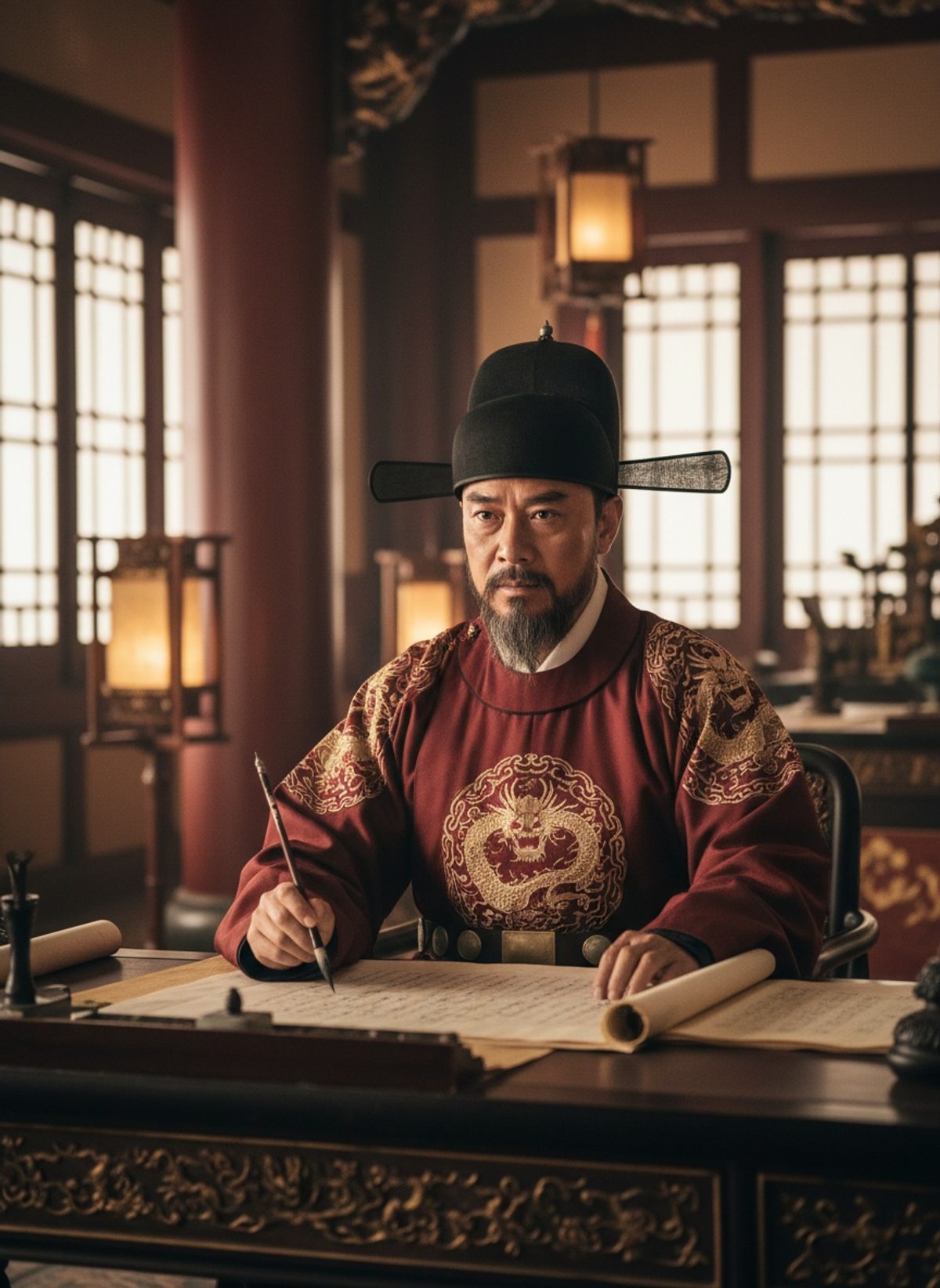
Most people see laws as instruments of power. For Shen Shixing, they were weapons of defiance.
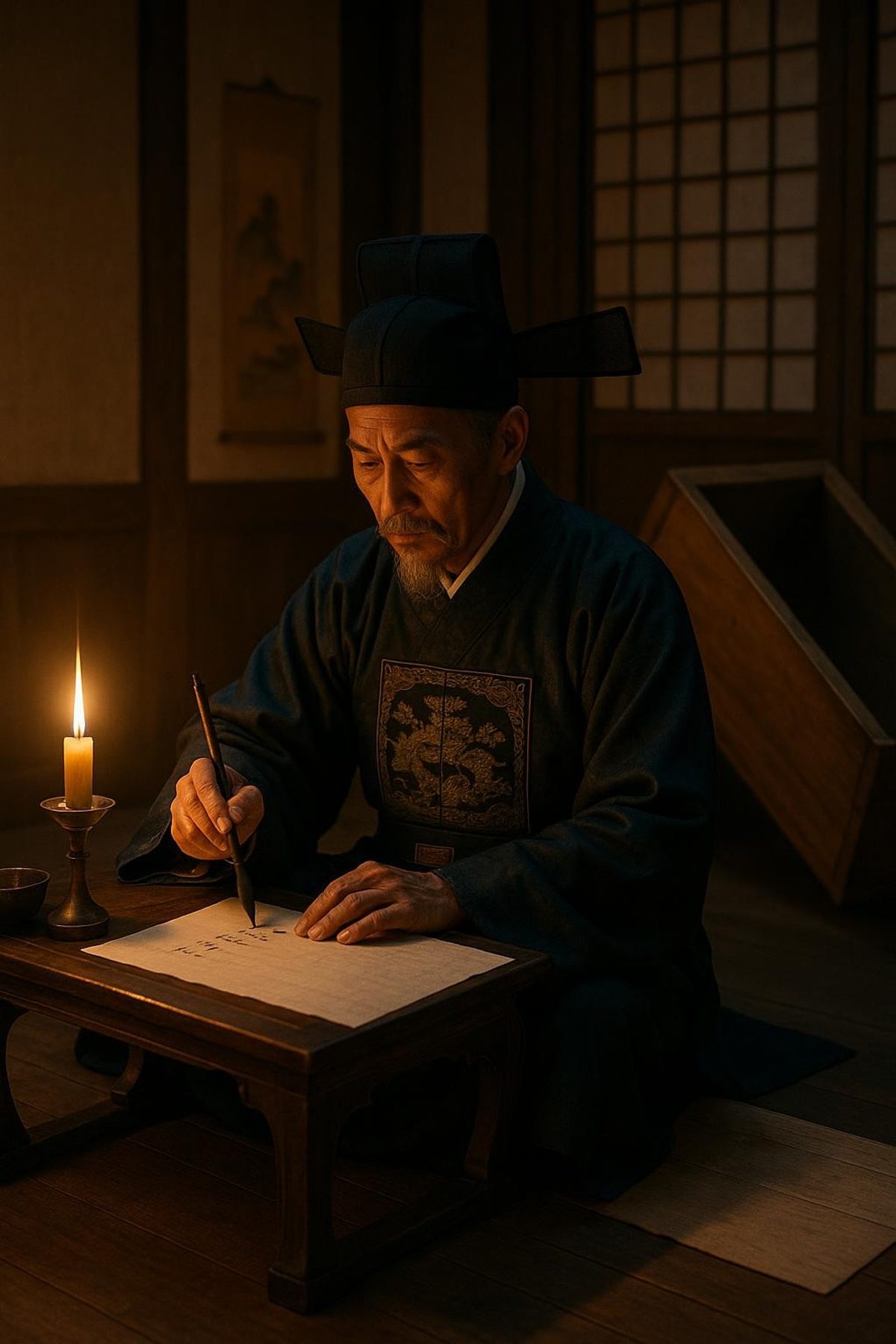
In the long and storied annals of the Ming Dynasty, few figures dared to defy the seemingly unassailable might of the emperor. During a time when the mere whisper of dissent could prove fatal, such an act was more than mere audacity—it was practically a death wish. Yet in 1565, a steadfast official named Hai Rui did exactly that. With quill in hand and unflinching resolve, Hai Rui penned a letter that openly criticized the reigning Emperor Jiajing, calling him vain, selfish, and unworthy of the celestial mandate that placed him on the throne.
Hai Rui's name might not resonate in the vast panorama of Chinese history, yet his legacy reverberated long after his lifetime, inspiring others like Shen Shixing to question the status quo. What, after all, possessed a civil servant to castigate an emperor to his face? Such was the firm conviction that echoed in Hai Rui's scathing words, searing with an honesty that was both evident and dangerous. The years of Jiajing's reign were marked by corruption and neglect, as court officials indulged in bribery and the emperor himself sought seclusion, more engaged in Daoist rituals than governing.
Rumors of Jiajing's indifference and the fawning sycophants that surrounded him were not mere whispers in the halls of the Forbidden City; they were the unwritten lines between Hai Rui's penned words. On the written page, Hai Rui illuminated the systemic rot gnawing away at the empire's foundations. His letter, a document borne of righteous anger, spoke of an emperor distracted from the wellbeing of his subjects. Brave as he was, Hai Rui was no fool—he knew the cost of his boldness, purchasing his own coffin in anticipation of the inevitable.
Read next: She Knelt Before the Emperor. He Owed Her Everything.
Despite the gravity of his accusations—and the ultimate consequence of imprisonment—Hai Rui's letter did what years of silent frustration could not: it pierced the veil of imperial invulnerability. Strangely, he was spared execution, perhaps a testament to the truth in his words, though he still faced the austere wrath of imprisonment. Nevertheless, his act of boldness ignited a spark in the minds of men like Shen Shixing, a scholar-official who admired Hai Rui's courage.
Shen Shixing, serving more amicably under later emperors, remembered Hai Rui's defiance. His journey in the bureaucratic labyrinth of the Ming administration was steeped in the law's intricacies, mastering the legal frameworks like a warrior with his arsenal. In the tumultuous corridors of power, laws were wielded at the discretion of those in control. Yet for Shen, they became tools of justice, subtly ensuring that integrity reigned where tyranny might have taken hold.
Unlike Hai Rui, Shen Shixing chose a path of quiet reformation. A conscientious inspector, he scrutinized provincial administrations with a meticulous eye for detail, earning the trust and respect of peers and superiors alike. Where Hai Rui's approach was overt, Shen's was about weaving reform within the empire's very fabric, offering a subtler resistance against malfunction. He knew that to shore up the dam against potential floodwaters, one did not always need to destroy the levee; sometimes, one needed only to reinforce it.
Yet the question remains: why did Hai Rui take such an enormous risk to become a fulcrum of change? The answer lies in the timeless struggle between moral conviction and authoritarian rule. To men like Hai Rui and Shen Shixing, the value of truth transcended personal safety, a devotion to duty that aligned with the Confucian values underpinning the Chinese bureaucratic ethos. The narrative of Hai Rui's defiance reverberated because it was more than rebuke—his was a testament to accountability.
Shen Shixing would later rise to the esteemed position of Chief Grand Secretary, where he continued to mold policy with principled restraint. The differences between his methodical reform and Hai Rui's fiery resolve highlighted the multifaceted approaches necessary to steer an empire through tumultuous times. Shen's legacy, no less impactful, was in nurturing a governance style that valued contemplation over confrontation, yet it never forgave apathy.
The lesson from Hai Rui's audacious gambit and Shen Shixing's subtle resistance lies in their unwavering dedication to their convictions. Even in eras where voices of dissent seem doomed to oblivion, the echoes of Hai Rui and Shen remind us that often, it is the courage to speak out—or uphold integrity—that begins to move mountains. Their combined stories resonated with a profound message: in the face of authoritarian might, even the muted or disguised assertion of truth and righteousness can bring about change, albeit slowly and silently.
During the waning years of the Ming, those seeds of defiance and integrity that these officials nurtured continued to bear fruit, standing as reminders to future generations. For every autocrat who intimidated and silenced, there were these measured voices that refused surrender to cynicism, calling out for account and principle. Hai Rui bought his coffin knowing he would likely lay in it for his temerity, but he and Shen showed that legacies built on conscience rather than power can outlast empires.