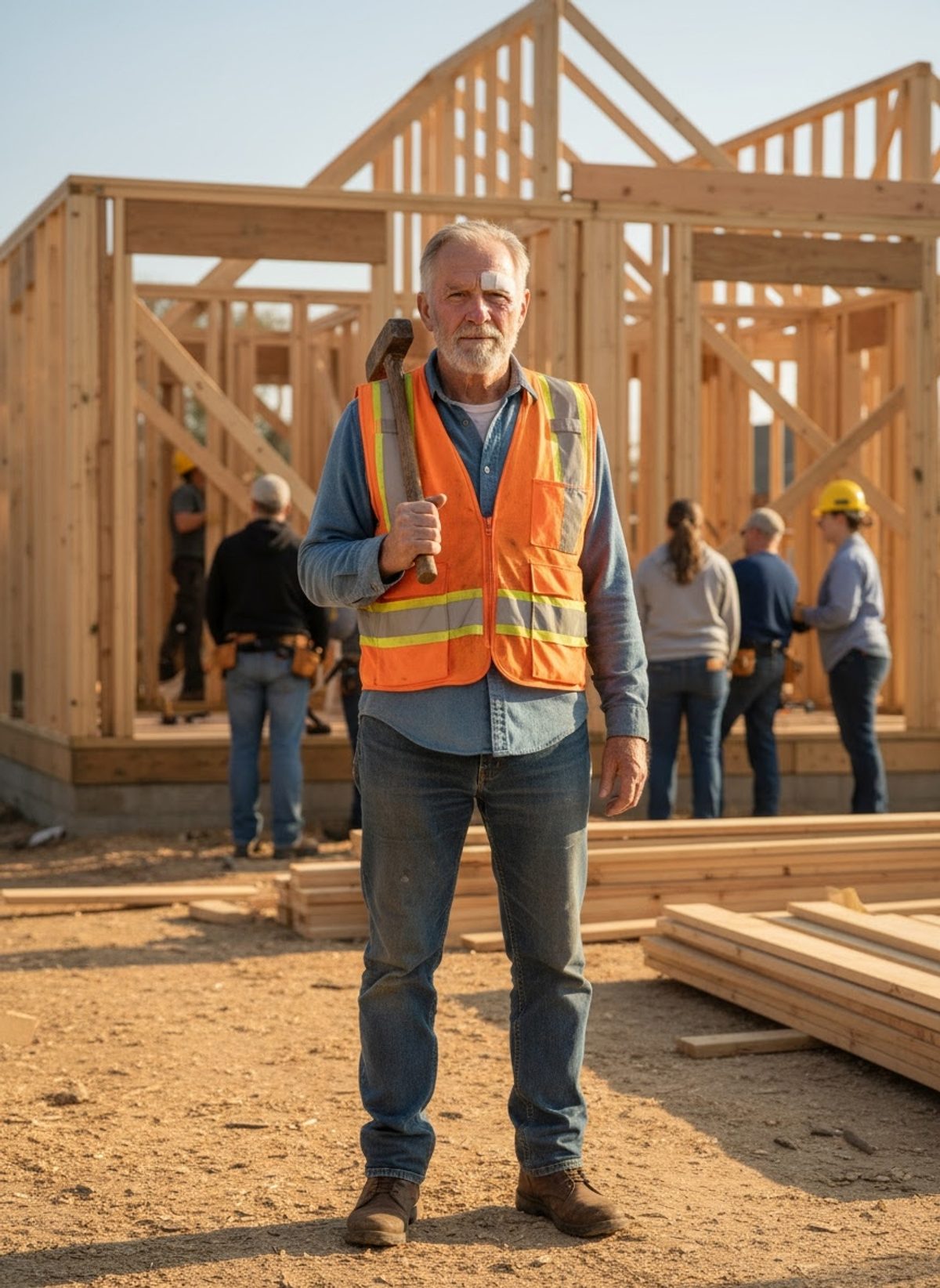
He was 95 years old. Fourteen stitches marked the side of his face. Sporting a black eye and a bandage from a recent fall, Jimmy Carter stood on a construction site, hammer in hand. Despite his bruised appearance, the former president's spirit was unscathed as he tackled his 36th consecutive year with Habitat for Humanity, a testament to his lifelong commitment to helping people.
A Humble Beginning
James Earl Carter Jr. entered the world on October 1, 1924, in the humble town of Plains, Georgia, becoming the first U.S. president to be born in a hospital. Raised amid the dirt roads and humble surroundings of Archery, Georgia, Carter’s early years were marked by an upbringing among Black families, where he learned the tenets of humility, hard work, and dignity from his parents.
His father, a successful businessman and peanut farmer, instilled in him a sense of duty and justice, while his mother’s role as a nurse at Wise Sanitarium—his birthplace—imbued in Carter a lifelong compassion for others.
Entering the political sphere, Carter would go on to serve as the 39th president of the United States from 1977 to 1981. Yet, it was after his presidency that Carter truly found his stride. His humanitarian efforts, particularly with organizations like Habitat for Humanity, cemented his legacy far above his presidential tenure. A lesser-known fact about Carter, however, is that these efforts weren’t just symbolic; they were marked by physical participation, even as his age advanced.
Read next: Flavius Aetius Stopped Attila at the Catalaunian Plains in 451
The Fall and The Rise
On the morning of October 6, 2019, a fall at home left Jimmy Carter with a grim reminder of his mortality: fourteen stitches above his eye. At an age when most are firmly retired from physical activity, Carter decided this incident wouldn’t deter him from his mission.
Such resolve was not unfamiliar to Carter, who had already endured a broken hip earlier that same year. Undeterred by the bruises that darkened his eye and a significant injury, Carter made his way to a Habitat for Humanity site in Nashville, Tennessee, alongside hundreds of volunteers.
In an age dominated by talking points and political posturing, Carter lived by example. That day in Nashville, his presence was more than an embodiment of grit; it was a testament to his enduring spirit. His hammering, labor alongside fellow volunteers, spoke volumes about the kind of leader and human being he wished to be remembered as. His was leadership not constrained to the White House but extended to the very foundations of society’s needs.
A Legacy of Service
Jimmy Carter’s history with Habitat for Humanity began long before that October morning. A core volunteer, not just upon retiring from public office, but relentlessly through years, Carter participated in numerous building projects across the globe.
Beginning in the mid-1980s, Carter’s partnership with Habitat marked a commitment to improve housing and empower people—a mission just as urgent today as it was decades ago. He worked hand in hand, not merely as a figurehead but as a craftsman willing to understand the needs of those he served.
Habitat for Humanity, founded in 1976, aligned with Carter's values of community upliftment and effort. By participating yearly, he underscored the importance of physical resilience and moral duty. For many who volunteered alongside him, Carter was more than a former president; he was a peer offering warmth and humility. His participation wasn’t for spectacle but for service, quietly exemplifying the difference one individual can make.
Beyond the Presidency
Carter’s journey after his presidency, which ended in 1981, is one few could have foreseen. Despite exiting office amid mixed reviews, his post-presidential years actively reshaped how people viewed him. Establishing the Carter Center in 1982, he launched efforts in promoting human rights and combating diseases like dracunculiasis, a lesser-known but debilitating tropical malady. These actions, alongside his role in numerous international diplomatic negotiations, painted a picture of a life devoted to service over self.
Read next: The British Soldier Who Guarded Tutankhamun's Tomb First
With the Nobel Peace Prize awarded to him in 2002, the world acknowledged his unwavering dedication to peace and humanitarianism. Carter’s outreach efforts served not only the needy but inspired future generations to think beyond conventional laurels of political achievement, emphasizing global citizenship and collective responsibility.
An Enduring Lesson
As the sun broke through Nashville on that October day in 2019, the scene encapsulated a profound truth: resilience doesn’t fade with age. Jimmy Carter, at 95, picking up tools with a stitched-up face to build homes for strangers, speaks to the power of dedication against all odds. His story is a remarkable account of how one man's journey from rural Georgia cornfields to global advocacy has continuously inspired others to build, heal, and lead with empathy over decades.
Though the years may have added lines to his face and weariness to his bones, Carter's presence in Nashville offered more than just physical labor—it served as a reminder that the courage to lead is bounded neither by title nor convention.
It’s found in the unwavering choice to do good, regardless of personal cost. As we reflect on Carter’s unyielding commitment, the hammer in his hand becomes more than a tool; it becomes an emblem of perseverance and hope in a world much in need of both.