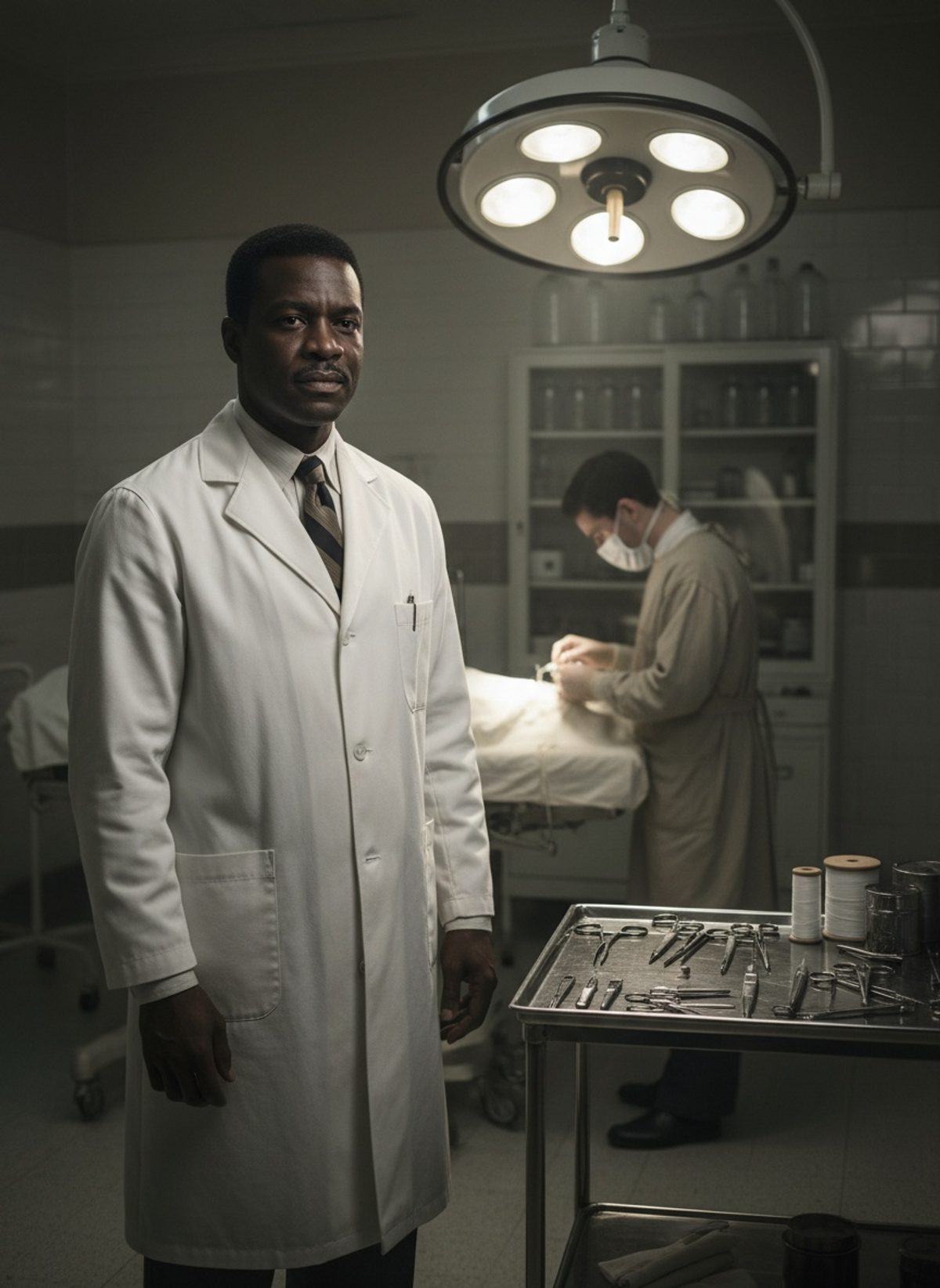
Most people don't recognize the name Vivien Thomas. They should—his work brought dying infants back to life.
Pushed Aside by Segregation
Born on August 29, 1910, Vivien Thomas entered the world in Lake Providence, Louisiana, a site marked by the insidiousness of Jim Crow laws. His family soon moved to Nashville, Tennessee, seeking better prospects. Thomas graduated from Pearl High School in 1929, armed with aspirations of becoming a doctor. Yet, the Great Depression quickly derailed those dreams, swiftly dismantling financial plans like so many other aspirations of the era.
Thomas's hands, trained by his father in carpentry, found work repairing facilities at Fisk University. This was not the medical career he envisioned. Still, it honed his precision and determination, qualities that would soon be vital. In 1930, propelled by necessity and encouragement from a childhood friend, Thomas secured a job as a surgical research assistant to Dr. Alfred Blalock at Vanderbilt University. What started as a stopgap became the foundation of an unorthodox yet groundbreaking journey.
The Unseen Pioneer
At Vanderbilt, Thomas's instincts were quickly evident. On entering the lab, he assisted Blalock with a surgical experiment on a dog. With no formal training, Thomas absorbed knowledge like a sponge, transforming from novice to indispensable aide in record time. Within weeks, he not only prepared the animals for surgery but started performing surgeries himself under Blalock's supervision.
Read next: Sylvan Goldman Bent a Chair in 1937 and Built a $150 Billion Industry
Although Thomas and Blalock formed a renowned duo, their contributions were not acknowledged equally. Thomas, a Black man, remained in the shadows, his work seen but seldom recognized. The constraints of his race and lack of medical degree confined him to the background. Yet, the drive behind his contributions lit the dark halls of segregation with quiet brilliance.
Johns Hopkins and the Blue Baby Miracle
When Blalock was appointed at Johns Hopkins University in 1941, he insisted on bringing Thomas along despite opposition. Moving to Baltimore, Thomas continued his work in obscurity. It was in this setting that they encountered 'blue baby syndrome.' Cyanotic children were often near death, their bodies deprived of oxygen due to heart defects. The situation delivered a fresh challenge to Thomas and Blalock's partnership.
Dr. Helen B. Taussig, a pioneering cardiologist, believed surgery was the key—but it required a technique that didn't yet exist. It was Thomas, working late nights and early mornings, who designed the pioneering procedure to address this defect. Known later as the Blalock-Thomas-Taussig shunt, it shunted blood directly to the lungs, normalizing oxygen levels.
Thomas meticulously translated his work from animal models to the human heart, guiding Blalock through the first successful operation in 1944. The day the first child survived was a medical milestone hailed in gold letters, yet Thomas received mere whispers of credit.
Read next: Theodore Roosevelt Argued for Women's Equal Rights at Age 21
The Legacy Louder than Silence
Despite the institutional and social barriers of his time, Thomas continued to break ground. Trusted with supervising the surgical laboratories at Johns Hopkins for 35 years, he taught surgical techniques to countless renowned surgeons. His contributions transcended formal degrees, as he carved a niche through talent, perseverance, and silent defiance of systemic racism.
It took decades for Thomas's achievements to be properly acknowledged. In 1976, Johns Hopkins belatedly awarded him an honorary doctorate and made him an Instructor of Surgery. His revolutionary work finally began to receive the recognition it deserved.
An Unyielding Impact
Vivien Thomas's story is one of contrasting silence and resonance. It underscores how brilliance and determination can transcend systemic injustice and institutional barriers. His contributions saved countless lives and reshaped cardiac surgery. The procedure Thomas developed at Johns Hopkins set a new blueprint for addressing complex medical challenges.
Vivien Thomas is an emblem of unacknowledged innovation and perseverance. His story enriches the tapestry of medical history with unspoken truths of dedication eclipsed by prejudice. Even today, his legacy invites us to question the disparities still prevalent in medicine and beyond. Thomas's life is an indomitable testament to the power of resilience in the face of exclusion—a reminder that while history often overlooks the unsung hero, their influence echoes resoundingly through time.