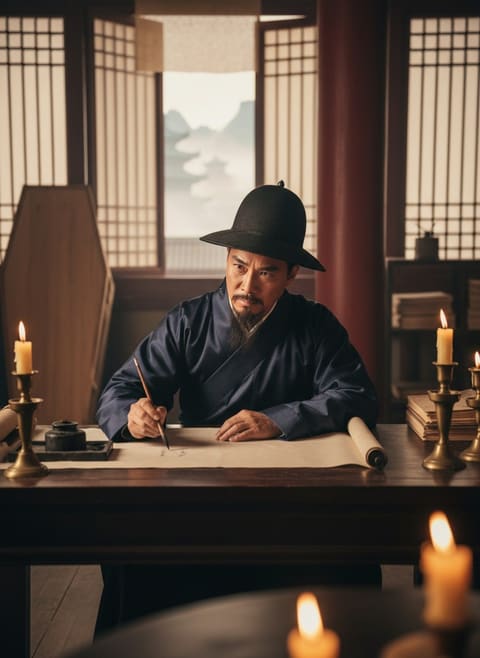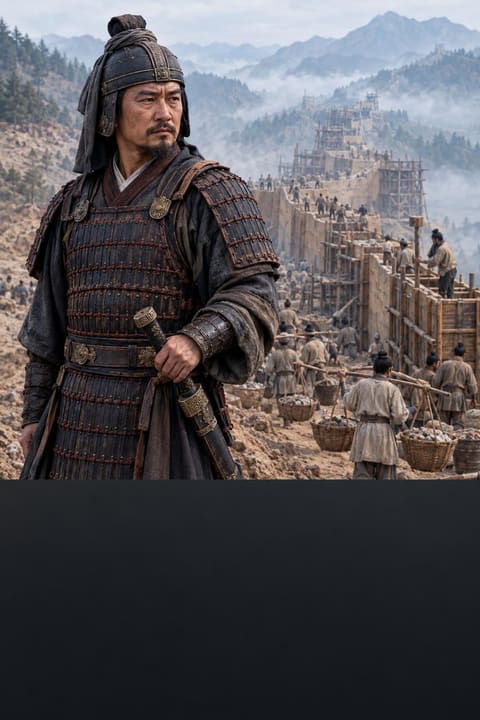
In the shadow of the departing sun, the exodus from Chang'an began. Dust suffused the air like fog, swirling around a ragtag procession that snaked uncertainly away from the imperial city. Amidst the clatter of hooves and the muttered despair of the displaced nobility, there strode a figure whose loyalty defied the panic of the moment.
It was the year 755 AD, and the An Lushan Rebellion was ripping the seams of the Tang Dynasty. Emperor Xuanzong, once unassailable, now found himself fleeing for his very life. Beside him was Gao Lishi, a eunuch whose devotion shone in stark contrast to a world unmoored. His was not a passive loyalty, but one tempered by the trials of ambition, power, and the unyielding fidelity to his emperor.
The Rise of Gao Lishi
Born Feng Yuanyi in 684, Gao Lishi would become a figure whose influence rivaled that of the most powerful women and men in the Tang court. His path was laid when a local official handed him over to the formidable Empress Wu Zetian, then the first and only reigning Empress of China.
Her court was a crucible, where the ambitious thrived and the weak were crushed. Young Lishi demonstrated an intelligence and poise that captivated Wu Zetian, yet he also bore the brunt of her wrath and was expelled for a minor infraction. Resilient, he found new patronage under Gao Yanfu, aligning himself with another branch of power within the Wu clan's sprawling network.
Read next: Pang Juan Led 100,000 Men Into a Valley. Sun Bin Had Written on the Trees.
His fortune rose steeply when a serendipitous turn of events and a knack for self-preservation secured him a place at the side of Li Longji, then the Prince of Linzi. When Li Longji ascended the throne as Emperor Xuanzong in 712, he brought with him Gao Lishi, whose finely honed skills in court politics would make him indispensable.
The eunuch Gao became more than just a servant; he was a steadfast ally and brother-in-arms during Emperor Xuanzong’s reign. It was a time remembered for prosperity, yet tumult lurked beneath the surface—a fire that would soon erupt violently.
In the Ashes of Rebellion
The An Lushan Rebellion erupted in 755, a seismic upheaval that sent shockwaves throughout the empire. Chang’an, the heart of the Tang Dynasty, teetered on the brink as An Lushan's forces bore down upon it. Panic and betrayal became currency, and many of Xuanzong’s confidants abandoned him.
Not Gao Lishi. As Xuanzong took flight towards Sichuan, his epitaph seemingly written in the dust of his footprints, Gao remained by his side. He walked soul-weary miles, through rain that beat down like a dirge, refusing myriad offers of wealth and power from those who sought to sway him.
Under other circumstances, Gao Lishi could have been a notably wealthy man content with the finer things his position afforded. He wielded power in court, and the riches gathered through years of influence were beyond the grasp of many noble houses.
Yet when tested, material allurements lacked the ability to pull him away from the one duty he valued above all else. Perhaps it was gratitude for the life Xuanzong had made possible for him, or perhaps it was a distilled essence of loyalty, a rarefied fidelity that grasped the hand of a fallen emperor amidst the chaos.
The Final Journey
As the throne slipped from Xuanzong’s grasp, he went into uneasy retirement as the Taishang Huang—that is, the Retired Emperor—while his son Emperor Suzong sought to reclaim the empire from the insurgents. Gao Lishi's loyalty placed a target upon his back, drawing envy and suspicion from others, particularly the eunuch Li Fuguo.
Read next: Wen Tianxiang Refused Kublai Khan's Pardon and Chose Death
Tensions culminated in the form of exile, intended to cut Gao Lishi’s influence at its knees. Yet even cast out, his heart remained tethered to the Emperor who had brought him to high station.
A pardon came in 762, allowing Gao Lishi to return home after years of wear. His journey back from exile had him yearning for familiar landscapes and familiar faces, but news of both Xuanzong’s and Suzong’s deaths reached him mid-journey. Beneath the sky that had once sheltered mighty emperors, Gao Lishi's grief was profound—a tether snapping irrevocably. His health crumbled, and soon after, death found him too, completing the lonely epic of his unwavering loyalty as he passed into history.
The story of Gao Lishi stands as a beacon of fidelity amidst a backdrop of upheaval and ambition. This tale of steadfast loyalty resonates through the ages, a rarity in any era but especially poignant within the court intrigues of the Tang Dynasty.
Gao Lishi’s journey serves as a profound reminder of the values that surpass ephemeral power. Even as empires rise and fall, the steadfast resolve of an individual can illuminate paths in history that once seemed shrouded in darkness.