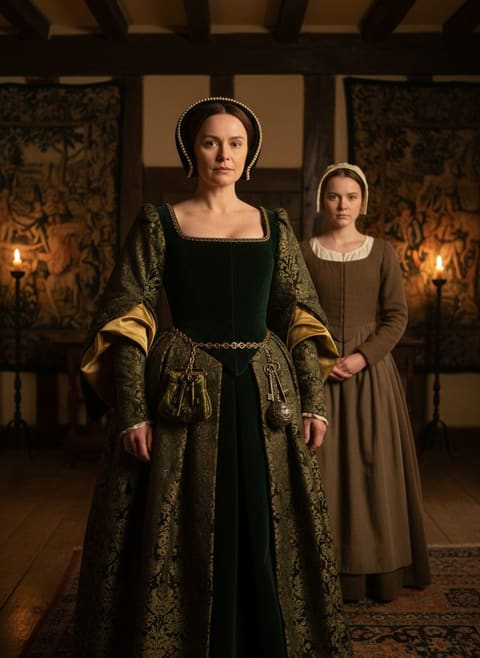
Lady Jane Grey was eager to embrace her new life. She had no idea it would include a crown.
A Noble Pawn
In July 1553, Lady Jane Grey found herself caught in the ruthless chess game of Tudor England’s power politics—a game she never wanted to play but could not escape. At just sixteen, Jane was regarded as little more than a piece to be moved in the ambitions of powerful men. Her life was not her own; it was a tapestry woven by others, and on this day, they had decided she would wear a crown.
The premature death of Edward VI, son of Henry VIII, left a worrisome vacancy on the English throne. Refusing to acknowledge the legitimate claim of Mary Tudor, a Catholic whose ascent threatened the Protestant establishment, those skilled in political maneuvering saw their chance. John Dudley, Duke of Northumberland and father-in-law to Jane, was among the most ardent schemers. With Edward's faltering health, Northumberland recognized the opportunity to fortify his standing by advancing Jane, a Protestant, as Queen.
Jane, who had been receiving an exemplary Renaissance education, was unprepared for the crown thrust upon her. Her devotion to her faith and intellect could not have readied her for the heavy burden of sovereignty. Despite that, the plans of the powerful continued unabated. Those in the shadows proclaimed her a suitable puppet, while Jane herself remained an anxious witness — aware, yet unable to halt the turning tides.
Read next: The Man Whose Letter Saved the King — and Hanged Him
The Reluctant Queen
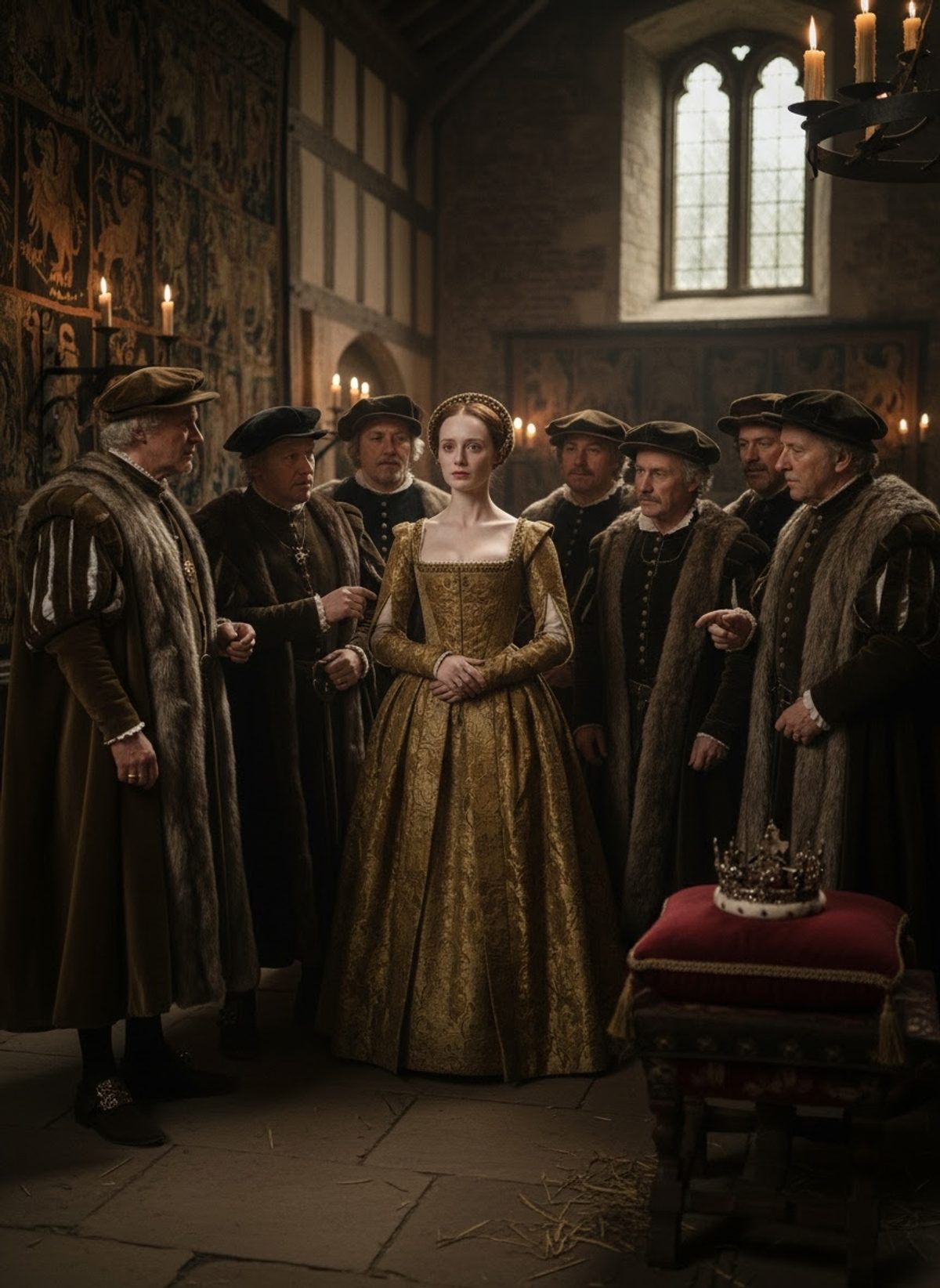
Jane's ascension was orchestrated with strategic vigilance. The momentous day brought waves of emotion for this unseasoned teen: joyless celebration mixed with bewilderment and dread. Accounts speak of how Jane openly resisted, pleading and protesting in earnest to cast away the burden. She openly wept, acknowledging the enormity of the role, dazzling in its pomp yet perilous in consequence.
The scheme’s architects ignored her cries. Her objections fell like a whisper amidst a storm; a tragic dissent drowned by insatiable ambition. Despite the gilded trappings of power surrounding her, Jane could see the threat lurking within every corner—recognizing the prize she was offered was not one of glory but a poisoned chalice.
Yet for all her pleas, she masked any outward signs of disarray, stepping reluctantly toward an unwelcoming destiny. On that day, the weight of power was symbolized by a simple golden circlet—light in form but suffocating on her brow. Standing firm, even in disbelief, Lady Jane embodied a regal serenity that only slightly wavered as destiny sealed her fate.
The Fleeting Reign
Jane's reign may have officially lasted only nine days, but its brevity rendered her even more memorable in the annals of history. The title of queen was not simple to transmit nor was it unanimously accepted. Meanwhile, the rightful heir, Mary Tudor, amassed support as she moved towards London, a shadow in pursuit of claims otherwise shunned.
Amid the mounting unrest, Jane continued to clasp tightly to her Protestant identity—a facet of her life she believed was in alignment with divine will. Her faithful subjects were few, their fervor overwhelmed by the swelling loyalty to Mary. In contrast to Jane, Mary’s resolute strategy captured the hearts and swords of those willing to defend religious continuity.
Read next: The Man Who Should Have Been King — But Never Was
As Mary’s forces edged closer, the veneer of Jane’s sovereignty crumbled swiftly. By late July, Jane was arrested, proffered to the growing pyre of a maze spun from allegiance, faith, and familial feuds. Her crown dissolved with a finality that lay bare the stark reality of her mere utility in the grander scheme.
A Shadow Cast
In the end, the outcome did not just show the transient nature of Jane’s rule but cast a shadow that loomed over Tudor England. Jane’s fate would provide the inexorable lesson—from pawn to queen to prisoner. Though her scorned chapter was brief, it shaped the paths of those who followed and pivoted an era rife with dissonance.
As Lady Jane Grey stood between these conflicting tides, her innocence wilted at the touch of political turmoil. In a bitter twist, her demise served as nothing more than collateral damage in the maneuvers of a game unfounded on fortune. The story of Lady Jane Grey isn't just a footnote in Tudor history; it’s a poignant reflection upon the churning waves of ambition and the tragic cost of human lives reshuffled in service of uncontested power.
Her story still lingers as a quiet testament to the complexities and oftentimes unforgiving realm of politics whose echoes prove that the ultimate casualty, more often than not, is innocence lost in the echoes of history.