The cold, damp air of the Tower of London clung stubbornly to everything, wrapping itself like a shroud around the stones and their centuries of secrets. The confined walls, silent witnesses to whispered intrigues and anguished cries, glimmered dully under the weak light filtering through the small barred windows.
It was within this foreboding fortress that Philip Howard, the 13th Earl of Arundel, carved his name into history — literally — with a few painstaking strokes that outlasted the tumultuous era. Caught in the web of Elizabethan religious politics, Howard’s quiet act of defiance spoke louder than any rebellion.
The Prisoner of Conscience
Born into the opulent life of English nobility, Philip Howard occupied a precarious position at the heart of a fiercely Protestant court. As Elizabeth I ascended the throne, the tide turned against the Catholic faith he embraced. The queen, determined to cement her realm as a Protestant bastion, viewed any whiff of Catholicism with heightened suspicion. Yet Howard, despite his rank and the privileges that came with it, found himself ensnared by his own convictions.
He was a man of contradictions: fiercely loyal to the Crown but unwavering in his faith. The cost of such integrity was steep. Accused of praying for the success of the Spanish Armada, Howard was arrested in 1585.
Read next: The Day a Tudor Queen Forgave the Man Who Betrayed Her
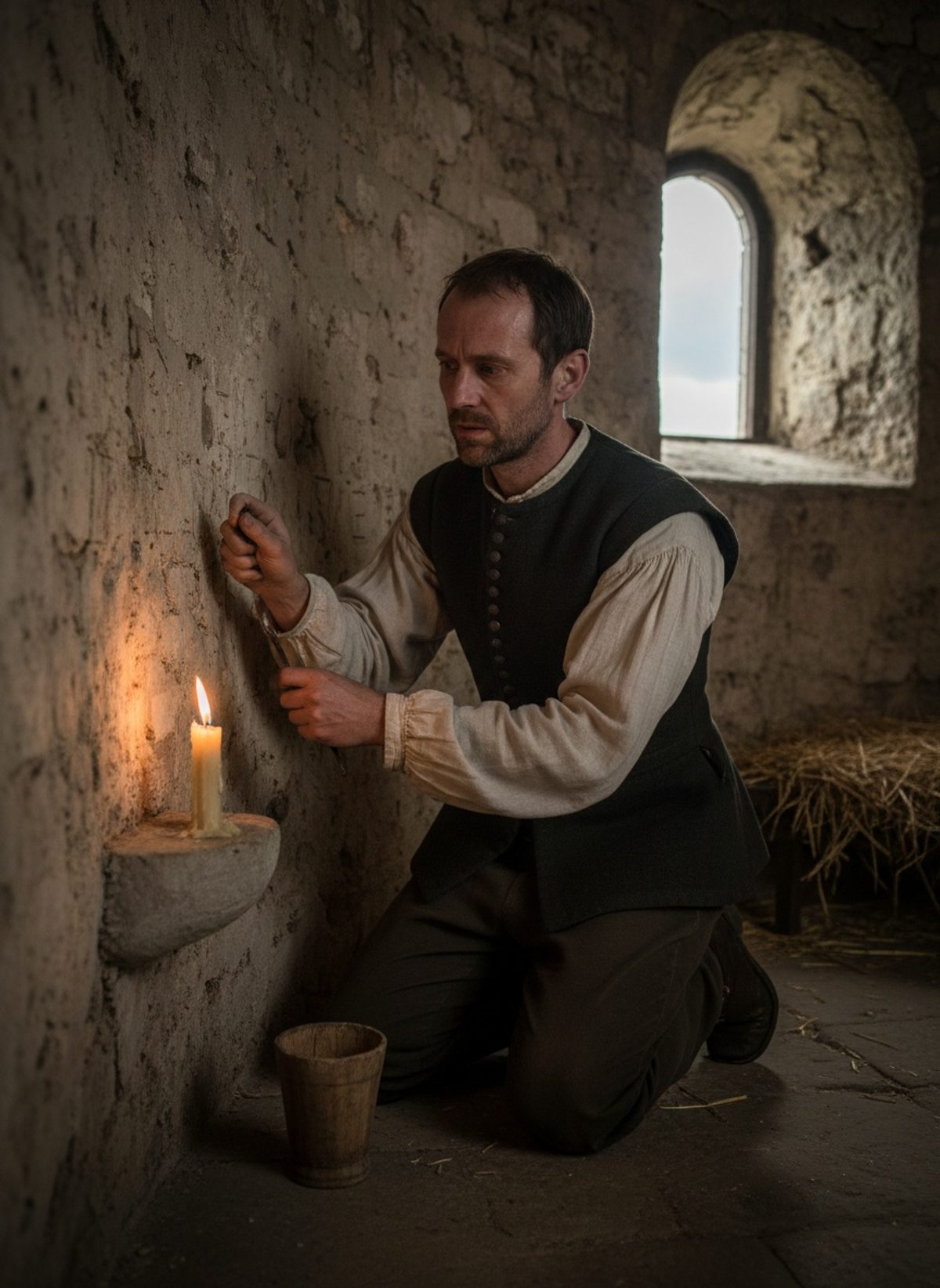
The Tower became both his sanctuary and his prison, a place where his refusal to recant earned him an indefinite sentence without the judgement of a trial. In claustrophobic quarters, Howard carved his name into the cold stone — a small, but resolute, assertion of his enduring faith.
The Silent Resilience
Cut off from his family, Howard’s life inside the Tower was one of austere hardship. He never held his newborn son, never felt the warmth of a loved one’s embrace. Instead, he drew strength from quiet piety and contemplations on the eternal.
Through the carved words — nothing more than his name yet imbued with defiance — he reached beyond the damp stones that confined him. The act was a whisper through time, a simple plea for remembrance that transcended its immediate gloom.
Ten years of imprisonment took their toll on Howard’s health. Yet, even as his body weakened, his spirit remained resolute. His unwavering faith became a beacon, radiating through the walls that sought to obscure it. The Earl’s solitude demands our empathy, but his endurance invites awe. His silent protest carved into the prison stones endures not only as a testament of faith but as an emblem of resilience against tyranny and suppression.
Read next: The Day a Tudor Printer Defied a King and Paid With His Hand
The Stone That Spoke Across Time
Howard’s death in 1595 was a release from both suffering and confinement. His crimes, founded upon the unwavering foundation of personal belief, were never formally adjudicated. Instead, he left behind a legacy forever etched in stone. Decades later, after the tensions of Elizabethan religious conflict ebbed, the carved name stood in silent witness to its era's trials and tribulations.
Neither storm, nor time, nor the relentless sweep of history could erode the letters which made a case stronger than any public trial. The stones of the Tower thus became a sacred testament to those unbowed by the perils of conscience and belief. They embody a story seldom noted in conventional histories: the quiet yet unyielding struggle for spiritual integrity.
Philip Howard's narrative never found its way into the grand tapestries of major historical textbooks. Yet, in 1970, the Catholic Church canonized him, acknowledging the sacrifice he endured and the faith to which he clung till his last breath. Here, in the depths of the Tower where shadows once fell dark and foreboding, a singular tale of quiet rebellion stands enduring and undiminished.
In a world often too quick to forget those who resist the tides of conformity, Howard’s story reminds us of the stone that spoke through centuries. The endurance of his simple carved name tells of a valor not measured by conflict but by steadfast belief. In Howard’s monument to perseverance, the human spirit remains as unyielding as stone, beckoning us to bear witness to truths not found in textbooks.