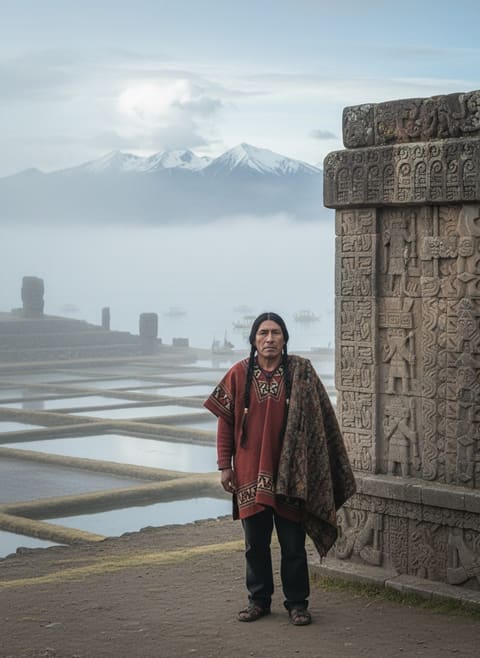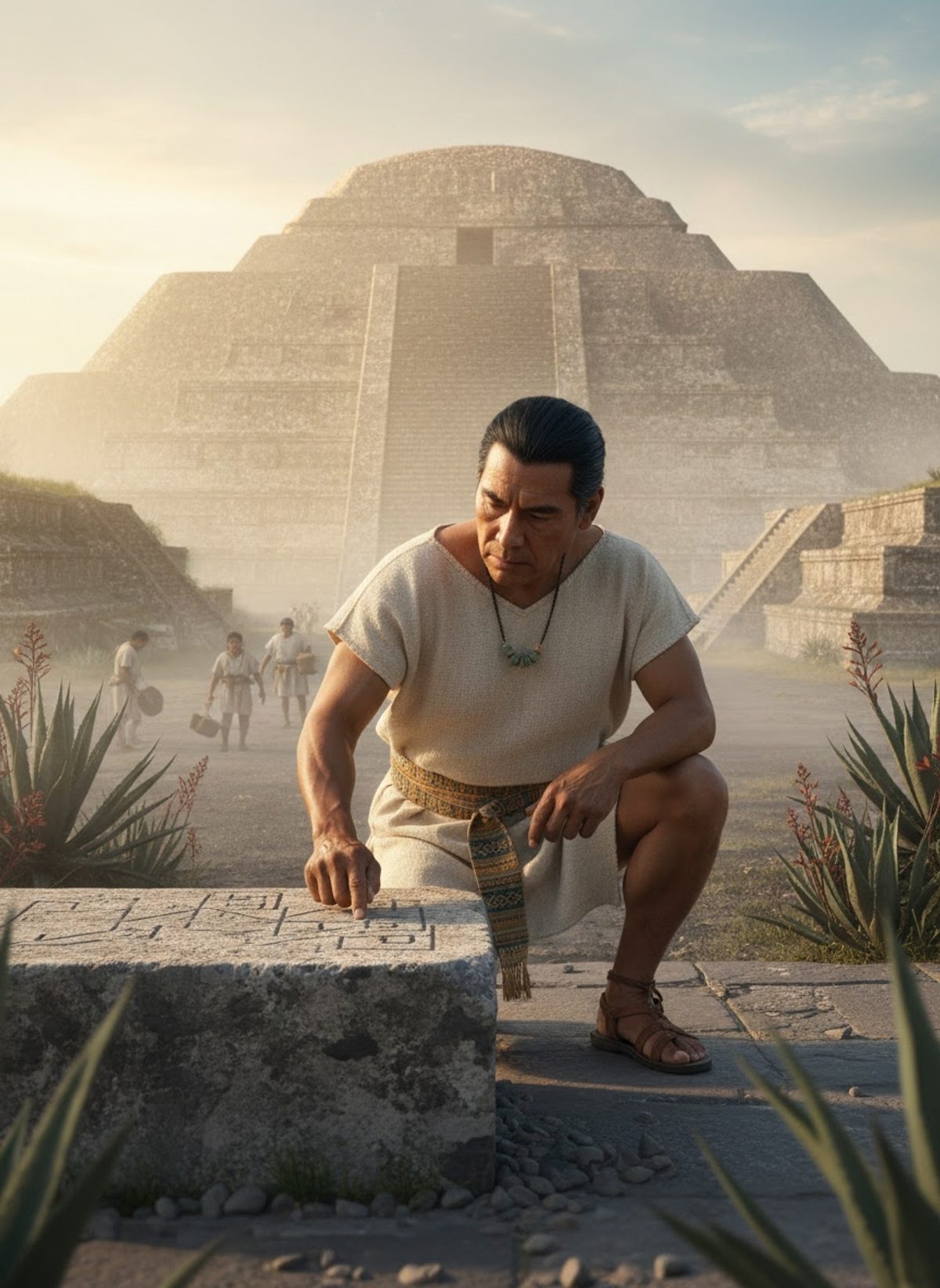
The largest city in the Americas during its prime had no kingly epitaph. Its streets teemed with innovations from mathematics to urban planning, yet no monarch's touch claimed its grandeur. Teotihuacan was mystifyingly exceptional.
The Monumental Marvel of Teotihuacan
Nestled in a sub-valley of central Mexico, 40 kilometers northeast of what is now Mexico City, Teotihuacan is renowned for its colossal pyramids and meticulously planned streets. At its zenith during the first half of the first millennium, it is thought to have been the sixth-largest city globally, bustling with a population surmised to be around 100,000 to 125,000 people.
Stroll through its ancient avenues, and the grandeur becomes unmistakable—its scale so vast, its craft so precise. Yet the unyielding silence of stone plaques never whispers of a king's reign.
The city's most striking remnants are the Pyramid of the Sun and the Pyramid of the Moon, monolithic giants that dwarf contemporary European structures. Their construction harnessed mathematical precision, aligning to celestial phenomena, which perhaps hinted at a cosmic purpose or divine inspiration, rather than a single ruler’s decree. These awe-inspiring edifices echo the innovative spirit of a civilization that saw to it that all was communal, not a singular triumph.
Read next: Ashoka's Pillars: One Emperor Carved His Laws Into Stone
An Enigma Wrapped in Architecture
Teotihuacan lays claim to being an architectural paradigm, crafted without the dominion of a king. Its streets were laid out with mathematical precision, illustrating a meticulously arranged city unlike any seen before it. The central artery, known as the Avenue of the Dead, stretches over two kilometers and is flanked by impressive constructions, including the iconic pyramids.
This cityscape bore witness to an advanced understanding of sustainability and community living. Its urban design included multifaceted apartment compounds. These multi-family residences housed thousands, providing insights into a possible egalitarian societal structure. Intricately decorated walls reveal glimpses of daily life, vibrant with murals depicting gods, rituals, and vibrant wildlife. Such artistry hints at a culture rich in narrative and belief—an invisible weave tying disparate groups into a tapestry of common destiny without the visible rule of a king.
A City Built on Commerce and Culture
Teotihuacan wasn’t merely an architectural marvel; it was a thriving hub of commerce and culture. The city was renowned for its fine obsidian tools, which were exported far and wide across Mesoamerica. Obsidian trade was a critical part of the Teotihuacan economy, with this precious volcanic glass found in abundance due to the region’s geological blessings. The city's influence extended from Veracruz to the Maya regions, testament to its vast trade networks and strategic economic prowess.
This trade network fostered a melting pot of cultures, attracting communities from Oaxaca, the Gulf Coast, and beyond. These diverse influxes of people posed the tantalizing question of ethnicity. Was the city a blend of Nahuas, Otomi, or Totonac people? Most fascinatingly, the city could have been a multi-ethnic haven, a true cosmopolis in ancient times.
Read next: Kerma: Africa's First Urban Kingdom Rose on the Nile Before Egypt's New Empire
A City Abandoned but Not Forgotten
The great metropolis of Teotihuacan, however, was not to last an eternity. Around 550 CE, the city met a mysterious decline, its towering monuments sacked and consumed by flames. Historians speculate that climatic turbulence during 535–536 CE may have instigated the collapse, ushering an era of social upheaval and fragmentation. What followed was a void filled by regional powers like Xochicalco and Tula.
Yet Teotihuacan's mystique endured beyond its physical decay, piquing the fascination of the later Aztec Empire. The Aztecs encountered these ruins and, drawn by the allure of Teotihuacan's bygone magnificence, claimed a shared heritage with its builders. They wove the Teotihuacano legacy into their culture, ensuring that the city's enigmatic echoes persisted into the pages of history.
A Legacy Not Written in Stone
Teotihuacan’s story is an extraordinary testament to human potential untethered by the shackles of singular rule. It crafts a narrative of architectural and societal achievement realized through collective might and ingenuity. How could such an advanced civilization rise and sustain without an explicit patriarch, a king to etch his name into eternity?
This enigma speaks to the complexities of leadership models and societal structures, urging us to consider diverse pathways to greatness. Teotihuacan challenges conventional paradigms of history, forcing us to question the commonly held belief that only centralized power can lead to such monumental accomplishments. In the whispers of its stone, we hear the call to reimagine possibilities, knowing that governance can manifest in myriad forms, often leaving the greatest stories untold.