The man who left Kumasi smoldering in January 1874 was neither a ruthless conqueror nor a heartless imperialist. He was a brilliant and strategic thinker who possessed an unyielding sense of duty. General Garnet Wolseley was a mere 40 years old when he carved his name into the annals of colonial history.
The Asante Enigma
Deep within the heart of West Africa, the Gold Coast was a land embroiled in conflict, its dense jungles a formidable barrier to invaders. For centuries, the Asante Empire had stood as a bastion of power and culture, defying both its regional adversaries and European ambitions. Yet by 1874, the British Empire viewed the Asante as both a threat and an opportunity. With tensions mounting and trade interests at stake, the British government needed a bold plan.
Enter General Garnet Wolseley. While his peers may have faltered at the prospect of trekking through malaria-infested jungles, Wolseley accepted the challenge with notable resolve. The Asante, led by King Kofi Karikari, had presented a fierce resistance to colonial encroachment. British expeditions had previously failed to subdue or even reach the heart of the Asante realm, with disease and ambushes decimating forces before they ever saw Kumasi.
Wolseley's mission was simple and audacious: march to Kumasi, the Asante capital, demonstrate British might, and withdraw before the dreaded 'white man's grave'—tropical diseases—could take its toll. Such a feat required not just brave soldiers but a strategic genius with a precise understanding of logistics and time management.
Read next: When Frederick Courteney Selous Walked Into Matabeleland, 1893
A March Through Fever Country
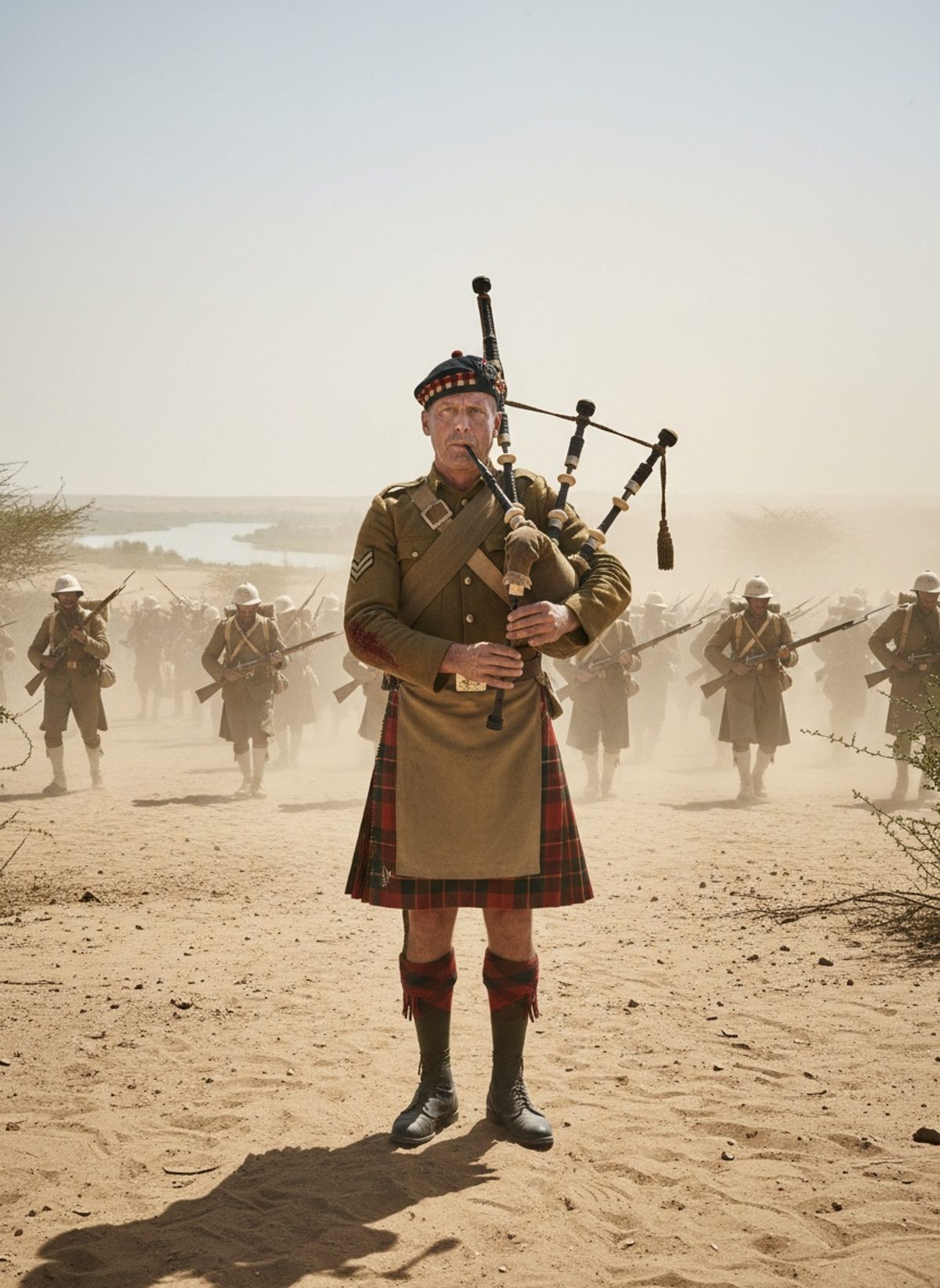
On a fateful day in January 1874, Wolseley's expedition set forth, a carefully assembled force trickling into the jungle landscape like a tide pressing through narrow valleys. Marching 150 miles into enemy territory was perilous for the 2,500 British and allied troops under his command. Fever country indeed, where bodies could weaken under the oppressive heat and dense humidity, and tropical diseases awaited soldiers in every pore of the dense forest floor.
Yet Wolseley had prepared for this journey with meticulous care. His logistical acumen ensured that men were supplied with quinine, the precious 'fever trees' bark extract, and carried compressed air mattresses to avoid sleeping on malaria-infested grounds. His foresight extended to an efficient supply chain and carefully chosen local guides who knew every hidden path and water source.
The jungle itself became a formidable foe. Humidity hung heavy in the air, sapping the strength from muscles and turning each mile into an agonizing crawl. Wolseley pushed his men forwards in short, intense bursts, allowing for recovery in disciplined camps. It was a grueling, relentless advance, but every step forward bolstered the belief they might yet cheat death and disease.
The Burning of Kumasi
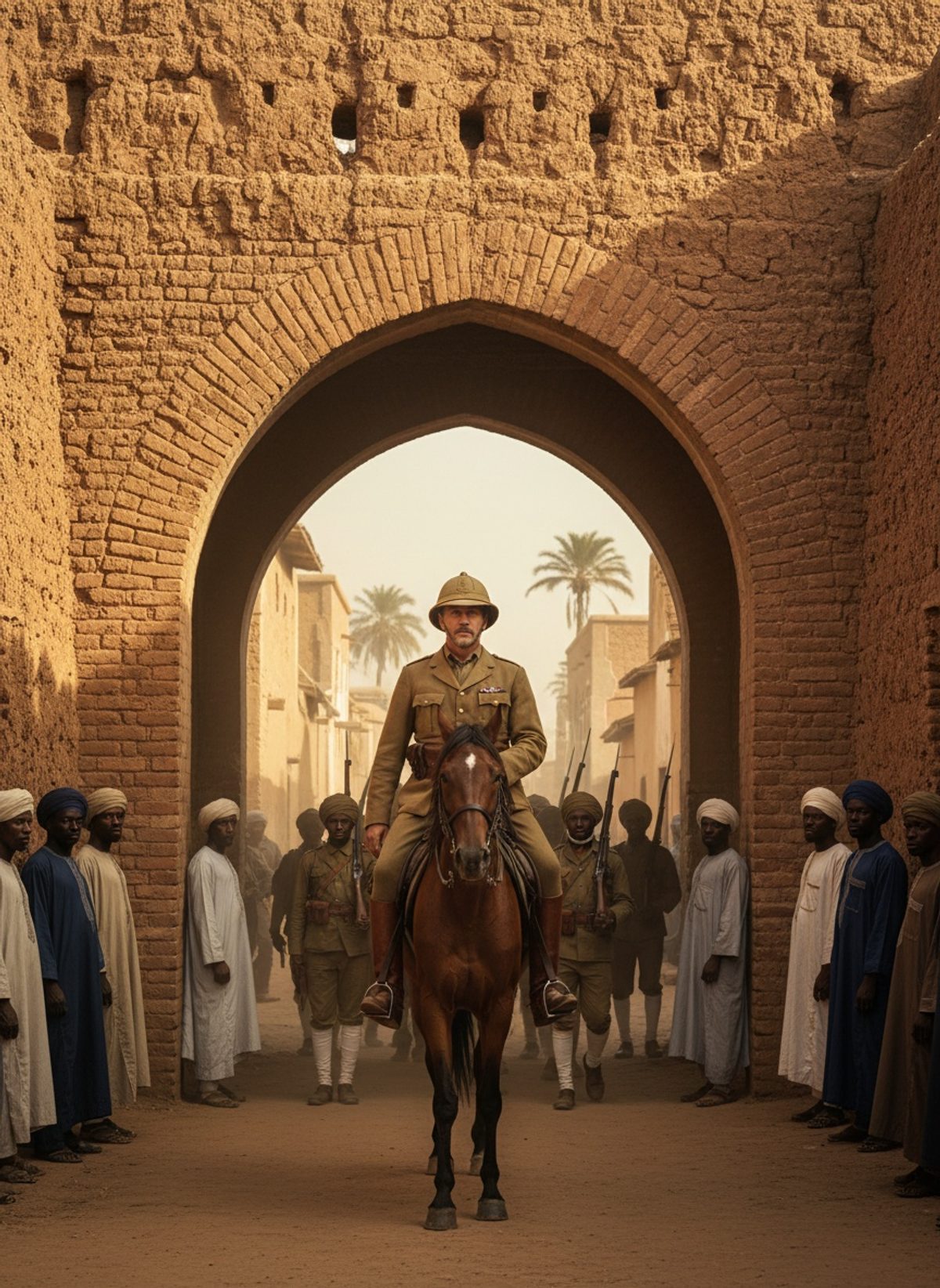
The Asante capital of Kumasi was not just a city; it was a statement of Asante sovereignty and African grandeur. Its streets, bustling with trade and vibrant with local culture, stood as a testament to a centuries-old empire. But for Wolseley, entering Kumasi was a military necessity, a psychological blow to Asante resistance.
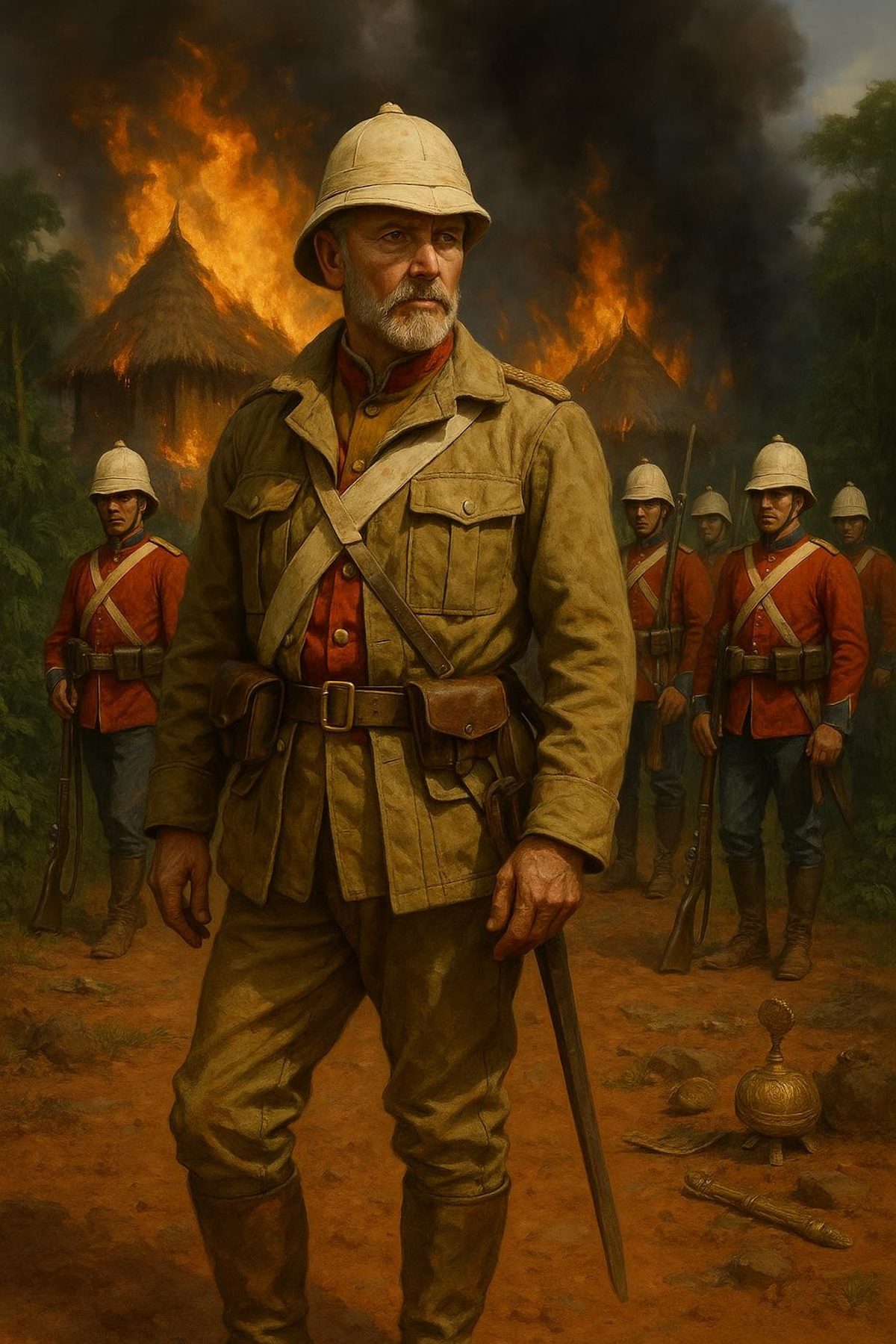
On the day the British forces finally descended upon Kumasi, the city became a canvas of chaos and fire. Wolseley's arrival was swift, calculated, and magnificent in its audacity. As the shadows of night began to cloak the jungle canopy, the glow of flames illuminated the scene. Wolseley ordered Kumasi to be set ablaze—a symbolic act that struck at the heart of Asante pride. The fires consumed the grander structures, their reflections dancing on the lenses of British binoculars as soldiers watched in silence.
For the people of Kumasi and the Asante, the destruction was devastating, a barbaric intrusion that displaced communities and altered the course of their heritage. But for Wolseley, it was a deliberate message: British authority was not to be trifled with. Deeming his objective fulfilled, Wolseley gave one last look at the burning horizon and issued the command to withdraw.
The Thoughtful Retreat
With Kumasi behind them and the smoke still curling towards the sky, the real test of Wolseley's campaign lay ahead. He now faced the daunting task of leading his men back to coastal safety through the same unforgiving jungle. It was a gamble against time and disease, but Wolseley knew the jungle as both ally and adversary.
He drove his troops with the same decisive precision that had brought them there, their steps forging a path to survival rather than conquest. Shadows stretched long as the sun sailed west, his men moving like clockwork cogs wound by an unseen hand. Few dared falter, for each step towards the coast was a step towards home.
General Wolseley and his men emerged from the jungle on the 47th day, having walked into the annals of British military history void of glory chants but rich with tactical triumph. The reality of fever country was a foe left unconquered but effectively sidestepped. Their retreat was as disciplined as the advance, each soldier a testament to Wolseley's brilliance in the crucible of colonial warfare.
In the broader canvas of history, Wolseley’s campaign remains a depiction of imperial resolve and human ingenuity under duress. Yet, it speaks of the harsh truths of empire, the trauma etched upon conquered lands and the legacies forged in conflict and fire. As the flames of Kumasi smoldered into history, they left behind the challenging question of whether the ends justified the means—a question for every empire, left untold beside the legends of power.