The Battle of Omdurman is often seen as a decisive moment in British military history. But in reality, it was the actions of an unsung Scottish hero that turned the tides on that fateful day.
Born on the Black Isle of the Scottish Highlands, not into privilege but into poverty, Hector Macdonald was a crofter's son with little prospect of glory. The rugged landscape of his childhood mirrored the rugged path that lay ahead, a path marked by discipline, courage, and tenacity. In an era when social mobility was but a distant dream for many, Macdonald's rise through the military ranks was nothing short of miraculous. He enlisted as a private, a beginning as humble as his upbringing, yet he would become a general, known across the empire as "Fighting Mac."
To understand the significance of Hector Macdonald at Omdurman, we must first delve into the broader context of the Scramble for Africa, a time when European powers vied for control over the continent. The Sudan Campaign was part of this imperial expansion, with Horatio Herbert Kitchener leading the charge for Britain. As September 1898 unfolded, British forces prepared to engage the Dervish army, a formidable opponent defending their homeland with fervor and belief.
On the morning of the battle, the desert air hung heavy with anticipation. The sound of marching boots and whinnying horses filled the space, creating a chorus of impending conflict. Then came the unexpected: fifty thousand Dervishes, steeled by conviction and sheer numbers, pivoted swiftly at Omdurman, outflanking the British line. Panic threatened to ripple through the ranks, a deadly virus that could undo months of preparation in mere moments.
Read next: When Samuel Crowther Walked Into the Niger Delta Alone, 1857
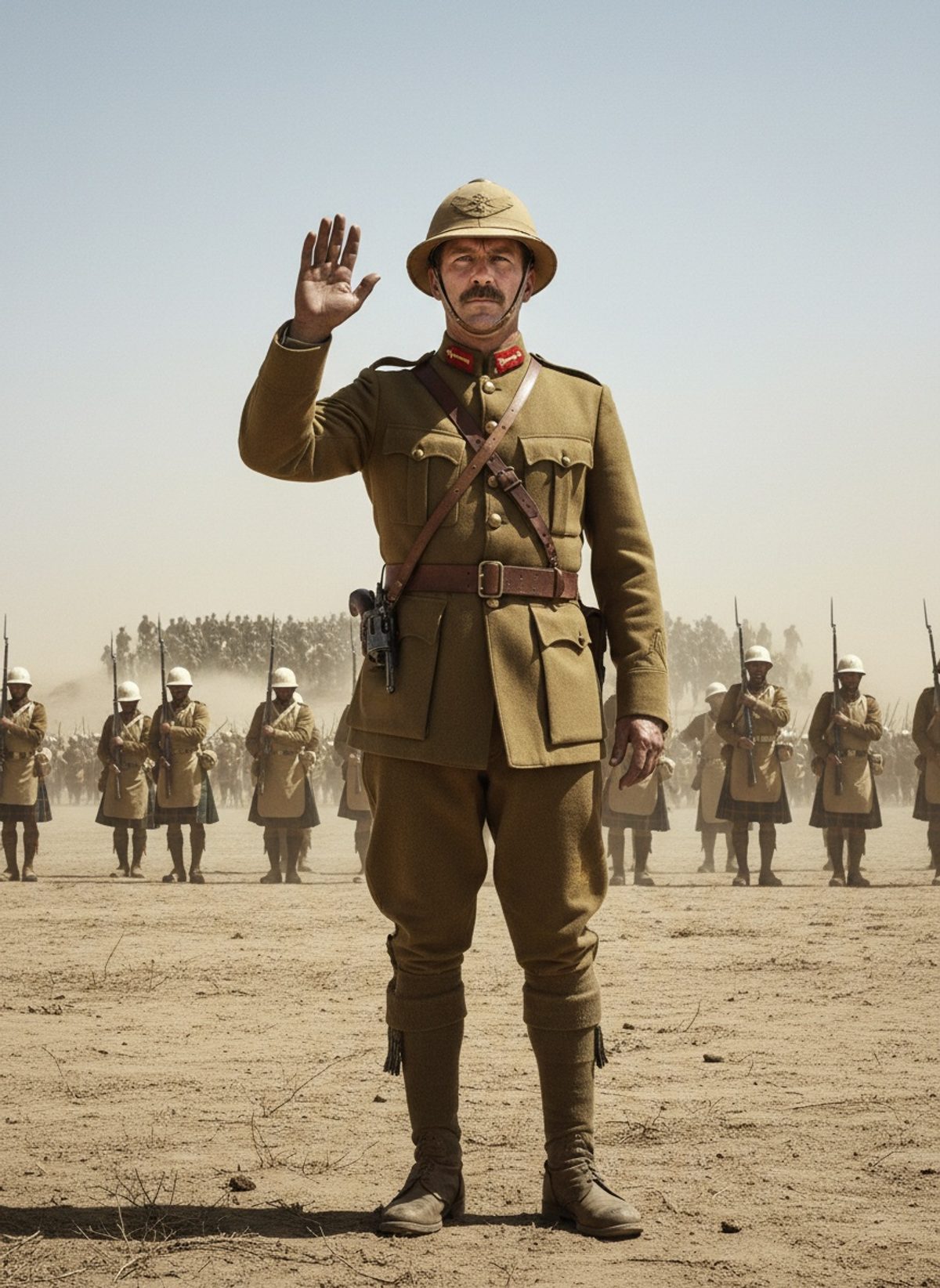
But there, amidst the chaos, stood Hector Macdonald. With the Highlands' winds that had sharpened his resolve, he was not one to falter. Surveying the battlefield with a critical eye, he understood that the next few moments could alter the course of history. This was not just a battle in Sudan; this was his chance to leave an indelible mark on the world. Rallying his brigade, Macdonald orchestrated a tactical maneuver that seemed to defy the odds. With steely determination, he turned his men to meet the encroaching force, a wall of Highlanders standing firm against the tide.
The clash was inevitable and fierce. Dust rose high into the morning sky, swirling around men locked in mortal combat. The cacophony of war reverberated across the desert plains, each gunshot, each clash of steel echoing the valor and desperation on both sides. The Dervish forces, formidable and resolute, slammed into the Highland line. Yet, they were met not with hesitation, but with the cold discipline and fierce independence borne of Macdonald's leadership. Here, on this sun-baked battleground, "Fighting Mac" lived up to his name.
Read next: When Frederick Courteney Selous Stood at the Victoria Falls, 1888
Under his command, the brigade held, absorbing the might of the advancing force before launching a counter-assault that would become the stuff of legend. As the Dervish numbers dwindled beneath a relentless wave of rifle fire, the tide of the battle began to shift decisively in favor of the British. Hector Macdonald had not only held the line; he had secured a victory that would resonate through history.
Yet for all his heroics, Macdonald's legacy is not as widely known as it should be. In a time when class barriers seemed insurmountable, and accolades were typically reserved for those of noble birth, his story is an exceptional testament to the power of merit, courage, and unwavering determination. Beyond the military tactics and the medals, it was Macdonald's spirit that inspired those around him, a spirit forged in the harsh Scottish Highlands but felt far beyond its borders.
Today, Hector Macdonald's story reminds us of the unexpected heroism that can arise from the humblest origins. His legacy goes beyond Omdurman, echoing in every tale of resilience against overwhelming odds. As with many figures left out of the traditional textbooks, his life invites us to re-examine the narratives we accept about history and heroism. The Black Isle's crofter's son not only saved Kitchener's army; he redefined what it meant to lead, to fight, and to be remembered. In understanding his journey, we understand a piece of the past that might otherwise have been forgotten, a reminder of the unsung courage embedded in the tapestry of history itself.