The sun had barely crested the horizon when the murmur of nervous anticipation filled the hall. The taut strings of tension vibrated through the air as all eyes focused on one young man stepping forward, his demeanor confident yet measured. This was no ordinary audience—it was the Kabaka's court in the heart of Uganda, and the fate of a nation rested upon the exchange of words he was about to translate.
The Lonely Emissary
In the thick of the Scramble for Africa, as European powers hungrily carved up the continent, Frederick Lugard was tasked with a mission of audacious proportions. The sun never set on the British Empire, yet as Lugard rode into Uganda, he was a solitary figure brushing shoulders with the swirling winds of history. Armed only with shrewd diplomacy, Lugard carried with him the mandate of the British East Africa Company: to preempt any French or German colonial encroachments into Uganda.
Lugard's journey to the Kabaka's court in 1890 exemplified courage tinged with desperation. There was no battalion marching at his heels, no clamor of armor or flags snapping defiantly in the wind. The isolation of his mission underscored its critical nature—failure meant perhaps not just the loss of a strategic foothold in Uganda, but possibly his own life. For the Kabaka Mwanga, he was not merely a representative of the faraway Queen Victoria; he was an intrusion into a delicate web of local politics and traditional authority.
Voices Crossed in Translation
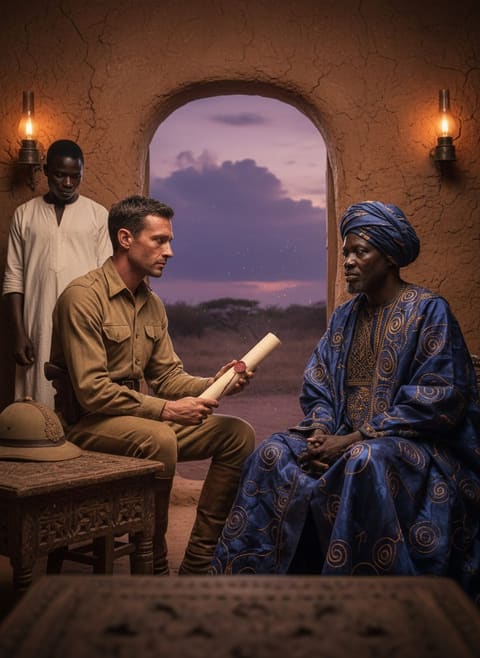
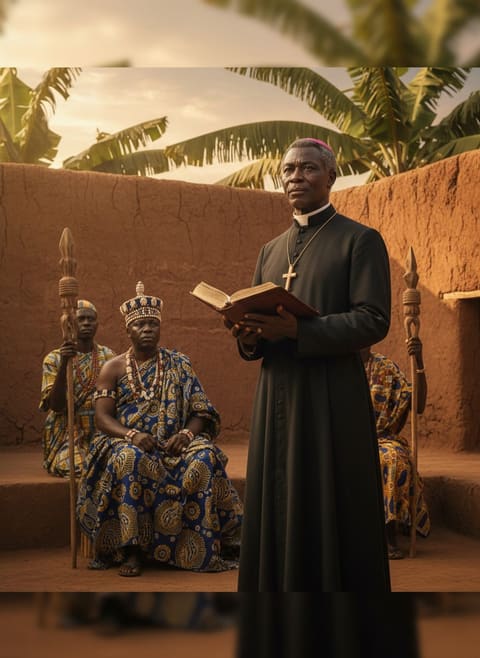
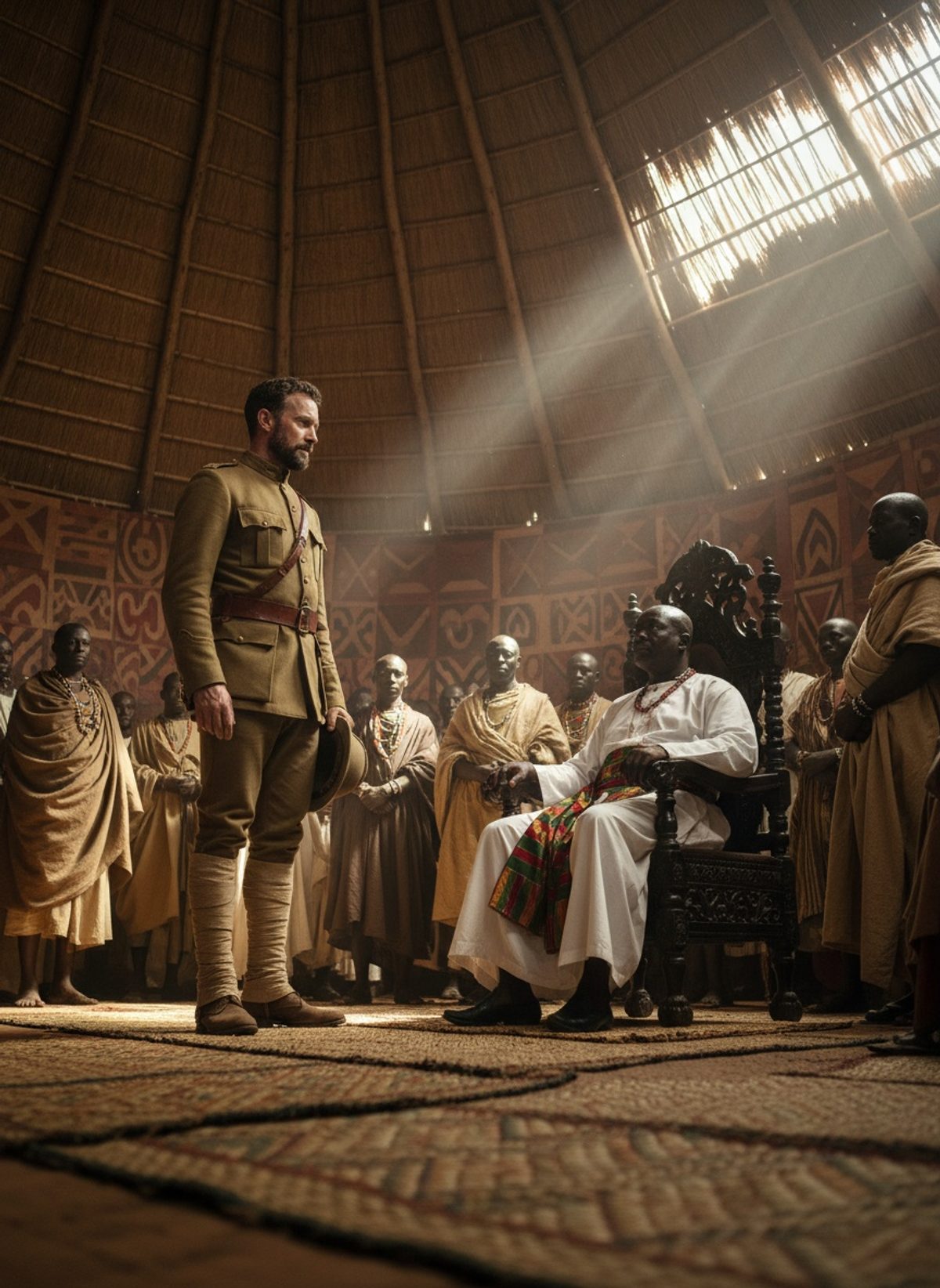
The Kabaka's court was a resplendent theater of power. Upon the gleaming wooden throne sat Mwanga II, his presence commanding yet contemplative. Around him gathered an eclectic audience: advisors, ambassadors, men of village and city. It was into this ambiance that Lugard's interpreter stepped—an interface between two worlds, a bridge between British imperial aspirations and Baganda sovereignty.
Read next: When Hicks Pasha Marched 10,000 Men Into the Desert, 1883
The narrative of the meeting hinged largely on this young interpreter. In an era before instantaneous global communication, language could build or break empires, and the weight of meaning lay in his hands. As Lugard spoke, the interpreter’s voice echoed his sentiments, yet imbued with subtle understanding of local mores and the unspoken intricacies of tradition. Here, every word was a chess piece maneuvered with deft precision.
To the Kabaka, whose court deftly balanced the influence of Catholic missionaries, Protestant envoys, and Islamic traders, each proposition Lugard urged was tested against the sovereignty and dignity of his kingdom. It was not merely political gamesmanship at play; it was a negotiation of identities and fates. Mwanga, having witnessed the tumults brought by foreign influences, was acutely aware of the stakes for his lineage and people.
Decisions in the Strata of Influence
What transpired within those four walls was a contest not of might, but of minds. The proceedings had far-reaching implications far beyond the immediate exchanges. Lugard implored the necessity of British protection, a shield against external threats that could compromise Uganda's flourishing centers of trade and culture. Though Lugard came as a representative of commercial interests, the air buzzed with the unspoken assertion of British dominance.
The Baganda were renowned strategists, their history one of complex alliances and refined statesmanship. Mwanga and his council assessed not only Lugard's words but also the underlying currents pushing the tides of colonialism into their lands. Could an alignment with the British Empire safeguard the Kiganda culture while veering it away from oppressive foreign intervention? The answer lay not just in Lugard's persuasions but in the interpreter’s ability to communicate nuances that resonated with both sides.
Read next: When Samuel Crowther Walked Into the Niger Delta Alone, 1857
Bound by the Word
In the end, the meeting wasn't merely a strategic win for Lugard or an immediate defeat for Mwanga. It was a transformative hinge in the story of colonial Africa—a blend of negotiation, compromise, and the inexorable march of imperial shadows. The single conversation, disseminated through an interpreter's voice, redefined boundaries and reshaped the region's destiny.
Whether seen as the signing of Uganda's fate into the British Empire or an astute move by Mwanga to leverage external forces for his kingdom's protection, the encounter spoke to the complexities of the colonial era. The scramble for power wasn't color-coded black and white, but painted in the in-between shades spoken through interpreters like the one at Mwanga's court—individuals whose names may have faded into history, yet whose impacts remain indelibly felt in the corridors of time.
This is why the story of Lugard, the Kabaka, and the interpreter matters. At its heart, it is a reflection on how cultural translation shapes the symbiotic dance of nations—decisions grounded in linguistic bridges as much as in strategies. As we ponder the narratives left out of the textbooks, we realize that history's legends are often penned in whispered conversations, fleeting yet powerful, like the delicate ink of empires drawn across the parchment of Africa.