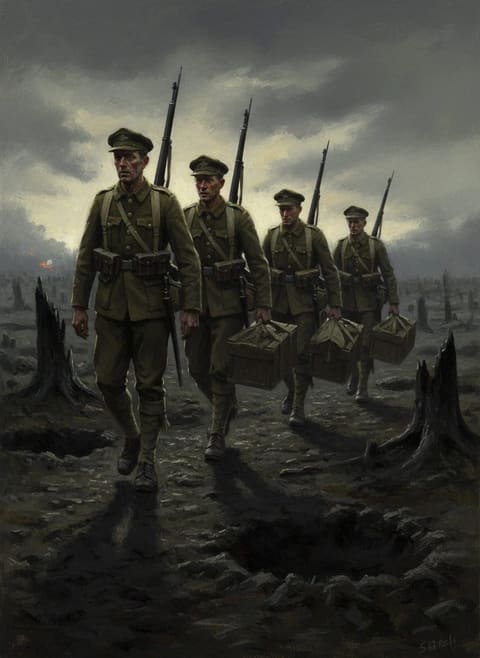
September 1898 marked a moment of triumph for the British Empire. But in Khartoum, victory walked hand in hand with echoes of past failures.
The Ghosts of Khartoum
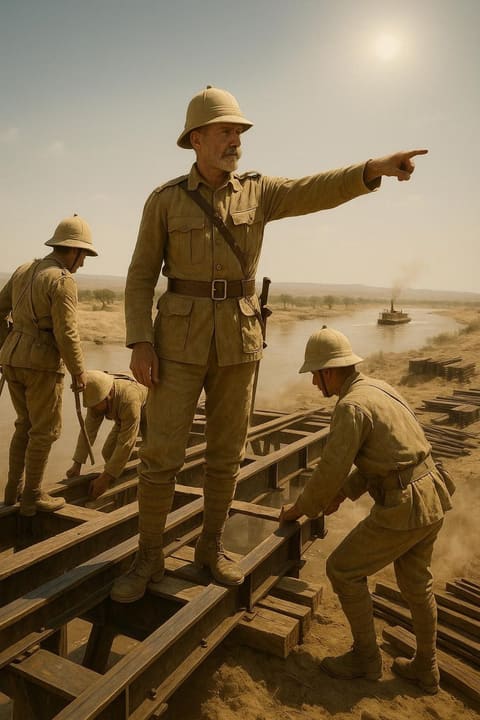
Across the sweltering sands of Sudan, a sense of vindication coursed through the veins of the Anglo-Egyptian forces. For them, Khartoum wasn't just another point on a map: it was a reclaimed chapter of imperial history. Thirteen years earlier, Major General Charles Gordon had met his tragic end in this very place.
The heroic rescue that had been promised came too late then, leaving behind sorrow and lingering tones of betrayal. Now, under Lord Kitchener’s stern command, the desert had yielded its grim toll, allowing British troops to finally step through the city's uneven thresholds.
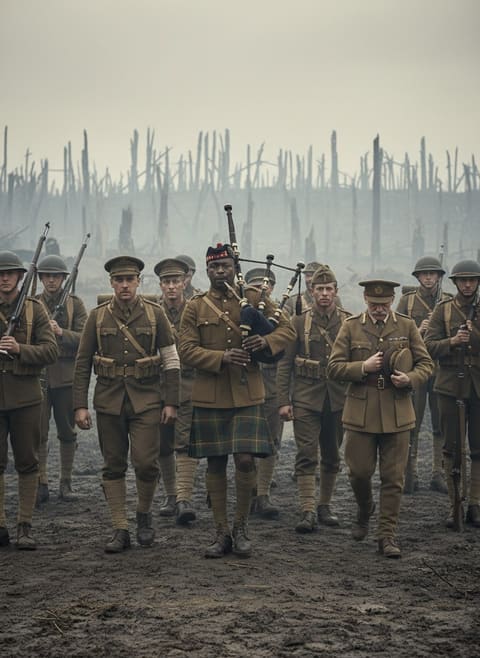
Yet as the dust settled, the thunder of artillery gave way to something entirely unexpected. At the head of the column, flanked by banners flashing regimental glory, stood a solitary figure in the uniform of the Black Watch. It was the piper, his bagpipes poised to break the oppressive silence as his companions watched with bated breath.
Read next: When the Mad Mahdi Humiliated Britain's Greatest General
The mere sight of this lone musician seemed an insignificant detail amidst the grandeur of a military parade, but what followed was something truly profound. The piper raised his instrument and filled the air with the haunting melodies of "Lochaber No More," a lament whose mournful strains reached into the hearts of hardened men.
The effect was immediate and visceral. Soldiers who had weathered the battering of both heat and battle found themselves unexpectedly overcome by emotion. The heavy notes of the pipes spoke not only of Gordon and his men but of the countless lives touched by warfare's indiscriminate embrace. Each note resonated with echoes of Scottish glens, sweeping across consciences with a reminder of mortality that transcended the boundaries of empire.
A Lament Across Time
Rudyard Kipling once wrote, "It is always a temptation to an armed and agile nation/ To call upon a neighbour and to say:— / 'We invaded you last night— / We are quite prepared to fight, / Unless you pay us cash to go away.'"
In this vein, Khartoum presented itself as both a strategic and symbolic victory for those tasked with British expansion. Yet this wasn't simply about the spoils of empire; it was a time to pause and reflect, a moment in which remorse touched even the ambitious players of the Great Game.
The decision to have the piper play was not part of any official protocol. In an age when martial music often preceded victorious speeches and proclamations, this quieter ceremony marked a break from the traditional post-battle proceedings. The unexpected solemnity seemed all the more fitting in a city still scarred by its turbulent history. As the eerie notes floated over the arid landscape, a tapestry of memory and mourning wove itself through the ranks.
In that fragile interlude, there was space to ponder the aspirations and heartbreaks tethered to this strategic nexus on the Nile. Though the official British narrative credited their historic mission in Sudan as a righteous endeavor, the self-imposed role of savior belied the heavy price borne by many. And standing there, amongst the rustling whispers of the Nile, even those soldiers who had come seeking redemption could not escape the somber realization that nothing would ever truly resurrect the fallen.
Read next: When One British Officer Held the Nile Alone at Fashoda
The Unwritten Verse
To many who carried forward from that day, the moment when the Black Watch piper played became an unwritten verse in the story of Khartoum—an echo too nuanced for the traditional triumphal pages of textbooks. Devotion to empire in the Victorian era often required the excusal of moral ambiguity, but here was an acknowledgment, however unintentional, of the deeper currents shaping colonial narratives.
There, on African soil, a Scottish tune stitched a two-way thread between the past and present, reminding those assembled of choices lost and lives left unlived. The Anglo-Egyptian forces may have marched into Khartoum with an implacable resolve to reclaim dignity and control. Yet the haunting tune of the bagpipes offered neither solace nor certainty, only an acknowledgment of the enduring complexity within the clash of cultures.
For those who paused to listen, the music lingered like a breath of wind across the Nile, an elegy for what the clash of arms had taken and what it might yet return. As the strains of the pipes faded into nothingness, Khartoum remained—a city of unresolved narratives where echoes of the past found their place amidst the living silence of the present.
And for a brief, poignant moment, the boundaries between victor and vanquished blurred under the commonality of human loss, leaving behind more than the ghosts of fame and folly—a humble testament to the persistence of memory in the unforgiving theatre of empire.