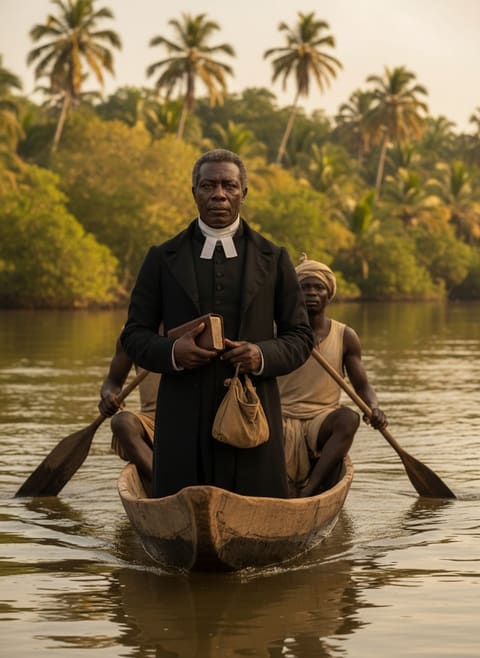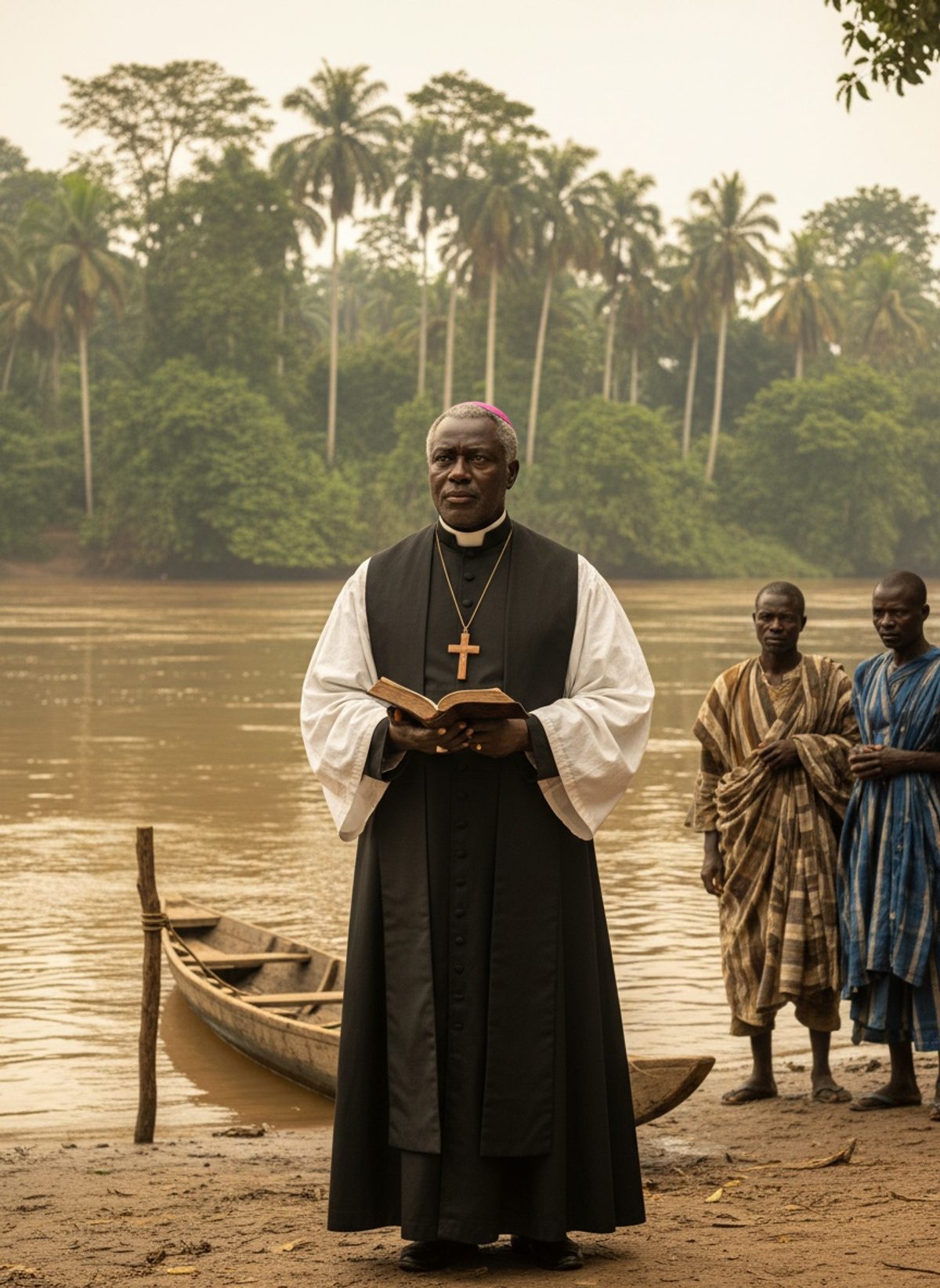
The humid air of the Niger Delta pressed down like a heavy, invisible hand. Mist rose from the mighty river, crawling over its banks to engulf the surrounding forest. The sound of water lapping against the sides of long canoes mixed with the distant chatter of birds. Somewhere amidst this lush expanse in 1888, the fate of nations was shifting. Samuel Ajayi Crowther, once a terrified boy pulled from the darkest depths of enslavement, now stood purposed and resolute. A man of God, known to some as the voice of hope and to others a symbol of untapped potential, was on the brink of performing an act that would redefine power and belief across the African continent—the baptism of a king.
The Path Unforeseen
Samuel Ajayi Crowther's life was one marked by unforeseen turns and relentless determination. Born circa 1809 in the Yoruba village of Osogun, his early years were shattered when he was captured by Fulani slave raiders at around twelve years old. Torn from his family and future, young Crowther and his fellow captives were forced to march to the coast where slave traders awaited. Yet his path diverged sharply when a chance encounter with a British anti-slavery patrol ship rescued him from the clutches of the transatlantic slave trade. This moment set Crowther on a trajectory unlike any other.
His new life began in Freetown, Sierra Leone, a British colony established as a home for freed slaves. Here, he embraced the opportunity to educate himself, eventually joining a mission school that changed the course of his life. Crowther showcased a talent for languages, eventually mastering English, Latin, and Greek among others. His intellectual dexterity charmed his mentors who saw in him the potential for bridging two disparate worlds. The Church Missionary Society soon recognized his promise, and his academic endeavors led him to England to further his studies. There, he became an emblem of the British Empire's complex dance with abolition and colonization.
By 1864, Crowther's journey had transformed him into the first African Bishop of the Anglican Church. Yet, even in this achievement, he stood as a symbol of curiosity and unease within the Empire. Crowther was a man who embodied the very tensions of the era—the desires for dominance mingling intricately with moments of genuine liberation.
Read next: When Samuel Baker Found a Lost Sea in the Heart of Africa
A King in the Fold
In the dense heart of the Niger Delta, Crowther's endeavors were far from those of an ordinary clergy. His mission was not merely spiritual but deeply political, as he navigated territories few Europeans dared to tread. His work went beyond simple evangelism; it was about building bridges across divides that had endured for generations. In 1888, upon hearing of a local king interested in converting to Christianity, Crowther recognized the profound opportunity to forge new alliances.
The king, whose name the records tantalizingly keep just out of reach, was a figure of influence and acuity—a leader whose interests lay in the strengthening of his kingdom amid the looming pressures of colonial encroachment. Crowther, acutely aware of the stakes, understood that this conversion could reshape perceptions of Christianity from that of an imperial imposition to a partnership forged on equal terms. The baptism would not merely be a statement of faith but a declaration of mutual respect and shared destiny.
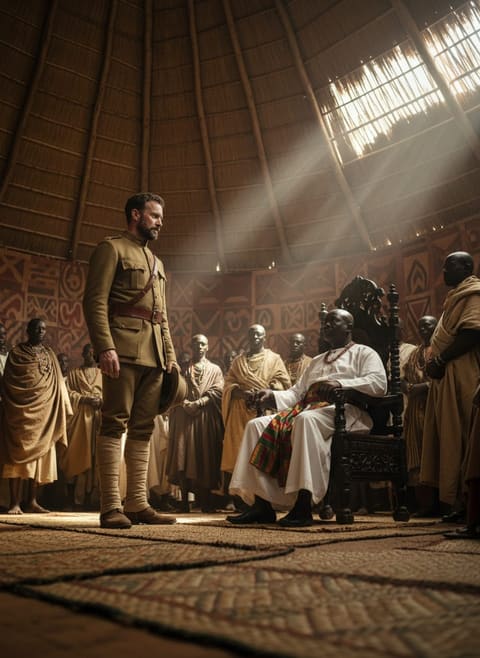
The ritual unfolded with profound solemnity amidst a congregation comprised of tribespeople and missionaries. As the king knelt before Crowther, the weight of history bore down on both men. Drops of water traced the king's brow, a symbolic washing away of old hostilities and the beginning of a communal alliance. The event was not just a baptism of belief—it was a baptism of possibilities, both for the kingdom and for what Africa could become in dialogue with the world.
Footsteps in the River's Wake
As Samuel Crowther stood overlooking the powerful river currents, he was conscious of the limited time left on his own path. His health was waning, and with it the energy that had sustained him through an extraordinary life journey. Despite failing health, Crowther continued his mission work with unyielding determination, profoundly aware that he was etching footsteps on the rippling surface of the Niger, footsteps others might one day follow.
Read next: When Hector Macdonald Broke the Khalifa's Line at Omdurman
He was a man ahead of his time and yet profoundly shaped by it, serving a cause that aimed to redefine both personal and collective African identities at the crossroads of tradition and modernity. Yet, Crowther's impact was not framed by singular events like the baptism of a king but through the legacy of interconnected cultures and shared futures he devoted himself to nurturing.
In his final years, Crowther witnessed shifting tides as the Scramble for Africa intensified. The empires grew ever more insatiable, carving African lands with arbitrary lines that neglected the intricate histories and societies they sought to govern. His endeavors stood as a poignant counter-narrative to this imperial hunger, urging recognition of a deep reservoir of local wisdom and spiritual autonomy.
The baptism of a king in the Niger Delta in 1888 may seem an isolated historical footnote, yet it encapsulates a larger truth—one of crossroads where hope persists in the face of overwhelming adversity. It speaks of a human spirit willing to journey into unknown waters, believing in a shared destiny that rises, much like the river itself, beyond the bounds of human imposition. Samuel Crowther's life echoes as a testament to what happens when individuals dare to envision a world bigger than their immediate horizons. This isn't just history; it’s an invitation to reflect on the untold stories that, like hidden tributaries, flow into the vast river of human experience.