The Church had always been a steadfast pillar of moral instruction for British soldiers. But in 1898, the army's medical corps delivered a different sermon entirely.
The March to Khartoum
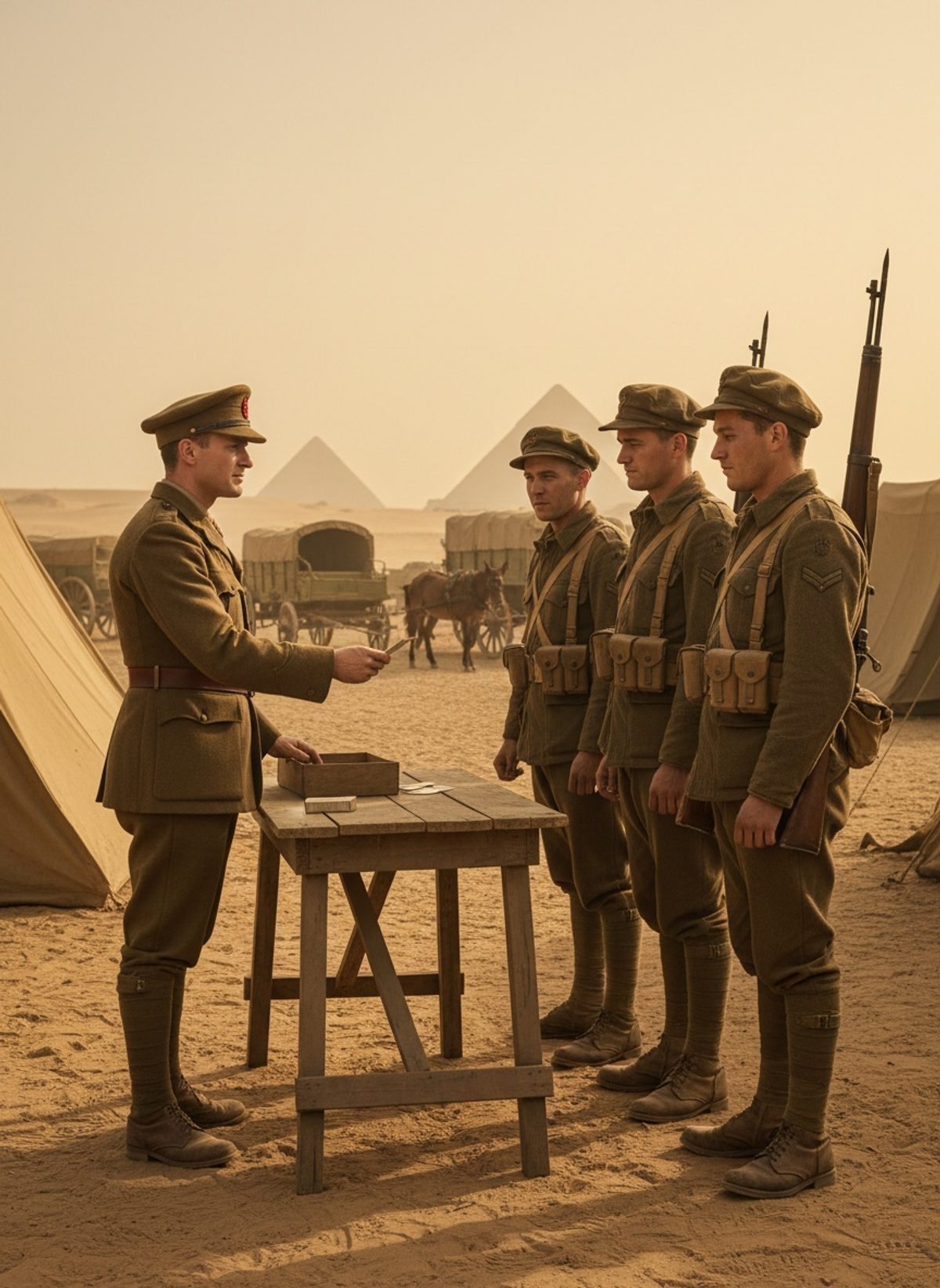
As the dust of the late Victorian Empire settled over the Sudanese campaign, the clash of cultures along the Nile was more than just a battle for territory. General Horatio Herbert Kitchener, a name synonymous with iron will and military precision, was readying his troops for the epic march to Khartoum—a mission set against the backdrop of the sprawling desert, teeming with the echoes of past conquests and looming challenges. It was not only a march of soldiers but an expedition of values, where Victorian ideals were tested in the harsh yet beguiling landscape of Sudan.
On paper, the campaign against the Mahdist forces was straightforward, but the reality involved more than just military maneuvers. Among the enemies lay one unseen, yet insidious: venereal disease. As the troops camped along the banks of the Nile, the usual soldiers’ temptations were close at hand. Unlike distant battles, this threat would follow them into every nightfall—a danger not just to health, but to the entire campaign’s success.
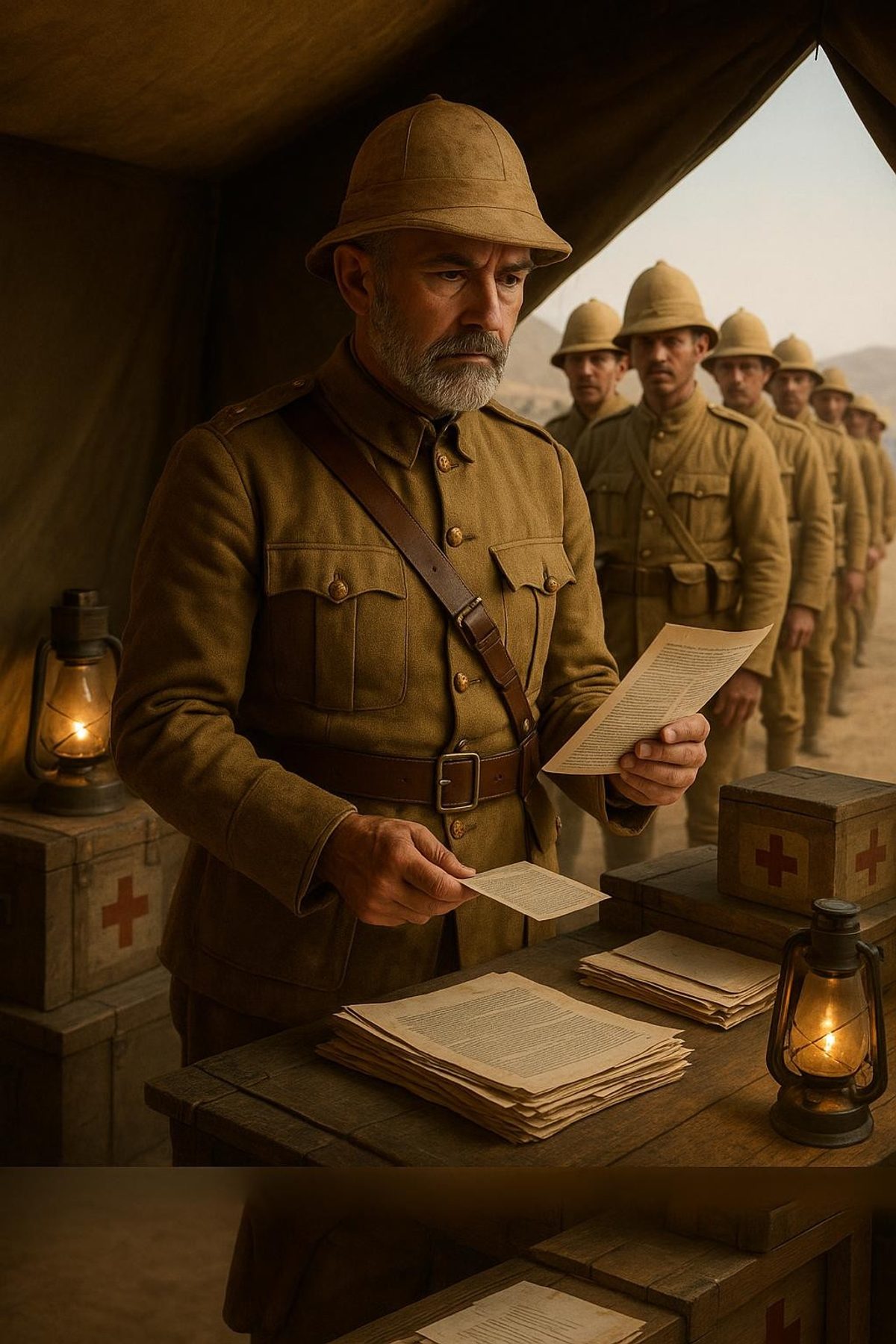
The British Army’s medical corps was acutely aware of this. The tropical climate, combined with the idyllic, languid current of the Nile, created a perfect menace: disease that could decimate ranks faster than any bullet. Doctors knew that blunt warnings, not censored sermons, were imperative. So, they took an unprecedented step. With the ink barely dry, the pamphlets—clinical, direct, flouting Victorian modesty—were distributed amongst the men. It was a calculated risk, and one that clashed starkly with the age’s moral custodians, the chaplains, who viewed such writings as a direct affront to propriety.
Read next: When Allenby's Surgeon Printed What No Officer Dared Say, 1917
The contents of the pamphlets left little to the imagination. They provided explicit information on recognition, symptoms, and the urgent need for treatment. While the Church fumed and senior officers blinked in hesitant disbelief, the strategy bore fruit. The direct communication, deemed indecent by some, was a pragmatic defense forged in necessity, steel, and paper. No other measure held the potential to preserve the health of Kitchener’s army more effectively.
Chaplains vs. Pragmatism
Military chaplains, tasked with preserving the moral fiber of the troops, soon found themselves in a peculiar bind. How could they reconcile their divine mission with what they saw as salacious medical advice? Yet, beyond the pamphlets and prayers, the clear skies over the Sudanese dunes bore witness to an awkward dance between morality and survival. The soldiers' reality was starkly pragmatic, a battlefield where the chaplains' message was unceremoniously interrupted by the voice of medical necessity.
Officers caught in the crossfire between their traditional loyalties and the realpolitik of warfare faced a difficult choice. Chief among them was balancing the soldiers' wellbeing against Victorian sensibilities. The British army was already planning to scribe its name in the annals of victory—a plan that relied heavily on the health and readiness of its men. The chaplains’ objections, though heartfelt, could not outweigh the practical needs of an empire stretched to its limits. And so, the pamphlets stayed, their blunt content immortalized not just in print but in the robust health of the soldiers poised for combat.
Kitchener himself, a man of few words but monumental action, understood the unique nature of this conflict. Disease did not discriminate and would sideline his mission faster than a barrage of enemy bullets. When faced with calls for suppression, he chose loyalty to his campaign’s success. The thousands of soldiers under his command were given a choice—armor not wrought in metal but written in stark, unyielding ink.
In retrospect, the decision seemed almost revolutionary. It acknowledged the stark reality of soldiering life and identified venereal disease not as a mark of personal failing, but as a collective threat to strategy and survival. Thus, in the arid fields of Sudan, amidst spiritual protests and pragmatic decisions, history observed an unspoken revolution—not just in military protocol, but in the candid addressing of human vulnerabilities.
The Campaign Within
The pamphlets’ stark advice spread through the barracks with the same effective clarity as any order given on the parade ground. Soldiers took their words to heart, understanding that in the unforgiving desert around them, vigilance against unseen threats was as vital as their readiness to face the enemy head-on. Through these silent pages, the Army unwittingly sowed seeds of pragmatic education amidst a conscripted force far from home, an anticipative acknowledgment that challenged norms and quietly laid foundations for future health campaigns.
This was a secondary front on a campaign characterized by its first—against the Mahdist forces. A campaign within a campaign, it showcased the army's willingness to adapt, to update its code with what was necessary rather than what was simply traditional. While Kitchener’s forces swept triumphantly into Khartoum, the unseen battles also left a legacy; skirmishes fought in the hearts and habits of men whose perseverance laid the cornerstones of an empire.
The success of Kitchener’s campaign, punctuated by the lesser-known victory of these pamphlets, holds a mirror to the ingenious adaptability of military wisdom. It is a tale of how necessity often bends the arc of tradition and how blunt truth served as an unadorned sword, slicing through potential decimation greater than any enemy could impose. It reminds us that sometimes courage is found in quiet defiance, in the choice to safeguard lives through the precision of words spoken plainly, even in the face of hallowed opposition.