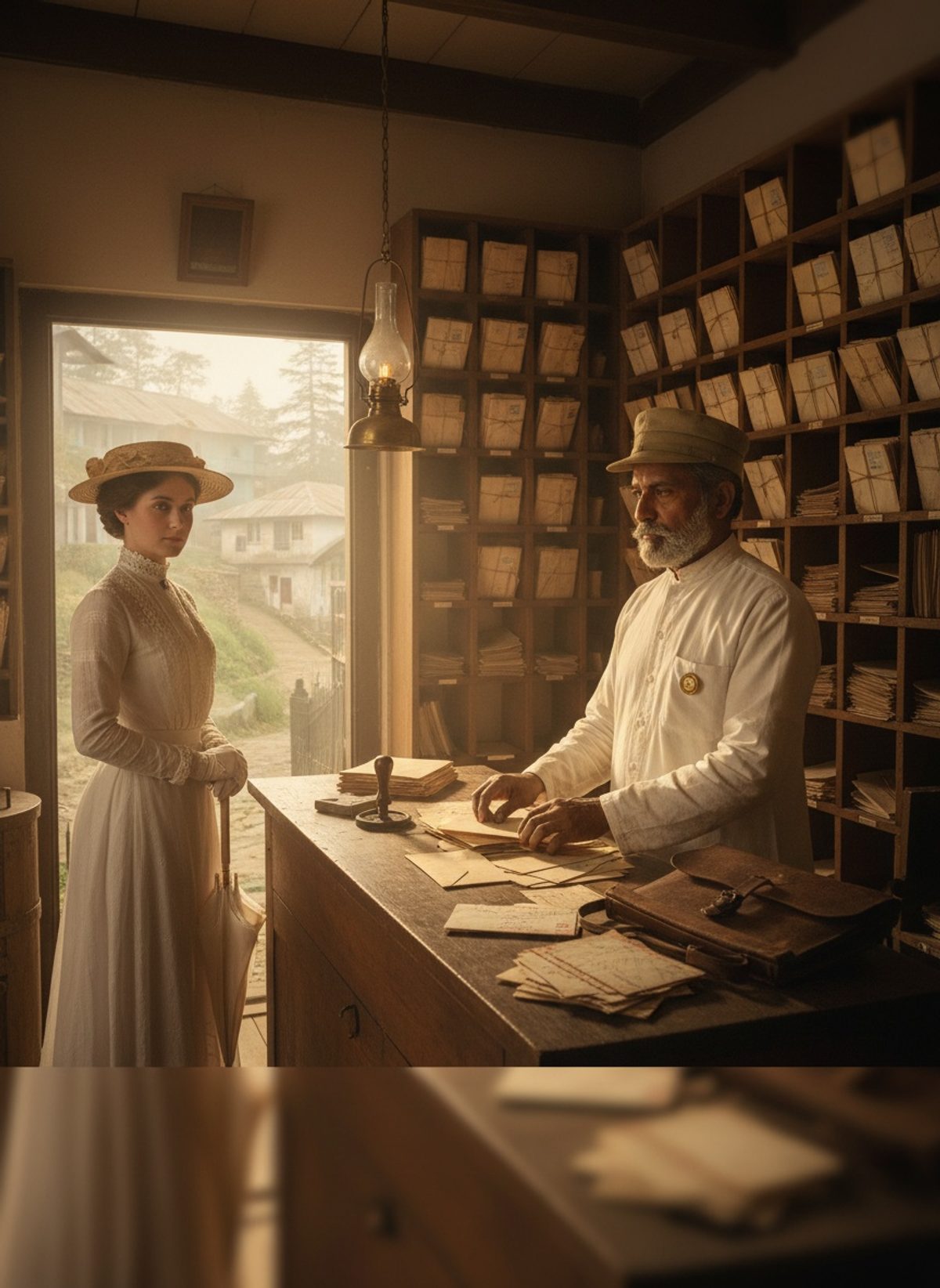
He never traveled more than twenty miles from his village. Yet, he connected the farthest reaches of the British Empire. In the year 1885, nestled in the Himalayan foothills of India, a solitary postmaster in Simla managed a small post office that served as the nerve center for Victorian ambitions.
The Heartbeat of the Empire
Simla, basking in its cool air and panoramic vistas, was more than just a summer escape for the British Raj. It had transformed into the administrative heartbeat during the humid months when the heat made Calcutta unbearable. While the Viceroy and his entourage planned policies that would ripple across continents, a less conspicuous yet equally crucial operation unfolded in a modest building—the hill station post office. It was here that the whole spectrum of human emotion and imperial proclamation found its passage.
Imagine a room no larger than a typical drawing-room, cluttered with shelves stacked high with leather-bound volumes, indifferent clock faces, and eternal scents of faded ink and beeswax. In one corner, beneath a flickering oil lamp, the postmaster sorted through letters, his fingers stained with newsprint and hopes. Each morning began with bundles of correspondence, eloquent testimonies to relationships spanning nations and classes. From the meticulously penned instructions of distant mandarins to hastily scribbled wordings soaked in longing, every letter was a bridge between worlds.
The Empire's sprawling geography meant mails spent weeks navigating seas and railways before ascending to Simla. Soldiers' reassurances to worried families sat beside brisk orders from one colonial administrator to another. The hierarchy of the Empire dissolved within these four walls, where each missive was treated with equal reverence. Scanning the lines and weighing the pages, the postmaster unwittingly became an archivist of untold stories, gleaning insights into lives that neither he nor their authors would ever fully know.
Read next: When the Dak Bungalow Keeper Welcomed Every Stranger, 1880
Threads in a Complex Tapestry
The postmaster, though restricted to this tiny corner of the vast empire, was witness to its multifaceted tapestry. Consider the letter from a soldier stationed on the Northwest Frontier, vividly recounting encounters with local tribes or describing the monotonous cadence of barrack life with the yearning for home. Another envelope might contain pages of veiled desperation from an officer’s wife, navigating the delicate intricacies of social life, all while trying to instill a sense of normalcy for her children thousands of miles from their heritage.
While each post made its journey uphill, it carried with it the weight of expectations and the burden of brief connections. Sometimes, a simple absence of news told tales too, as families waited in agony, reading and rereading the silence as if it were a letter in itself. In equal measure, official documents charted the course of empire—dispatches that would dictate battleground tactics or negotiations with princely states.
The postmaster himself remained an enigmatic figure. By keeping hundreds of stories moving seamlessly through time and geography, he effectively became a quiet guardian of life’s grand theater. His days spent tucked away amid ridges and valleys, far removed from the metropolitan cynosure of London or even the stately durbar of Calcutta, were still no less significant. The stamps he affixed became passports for humanity’s myriad expressions—pains, joys, and solitary musings—linking queen and subject, officer and servant, parent and child.
Read next: When the Fishing Fleet Girls Arrived at Bombay's Gate, 1890
Power in Simple Gestures
In the grand narrative of empire, it’s easy to overlook moments steeped in quietude, far removed from the pomp and din of orchestrated spectacles. Yet, it’s these silent acts of connection—of a village postmaster’s unending task of sorting letters—that kept the visceral threads of the empire unbroken. In the twilight hours, as the circle of light from the oil lamp narrowed, the postmaster would pause and wonder at the intimacy he had with countless strangers, an intimacy borne not of personal acquaintance but of shared narrative lineage.
There were no medals for these simple services, no grand acknowledgments in gubernatorial dispatches; instead, there was only the steady, unceasing drumbeat of the imperial mail. This unnamed steward facilitated exchanges that solidified alliances, nurtured ambitions, and sustained morale. Quite often, it’s the individuals behind the scenes whose undaunted resolve shapes the invisible clockwork of history.
The hill station post office stands as more than a relic of the past; it echoes the timeless reality of connection—a reminder that even amidst vast imperial ambitions, it was the extent of human emotion, threaded through ink and paper, that linked two worlds. High on that hill, the postmaster of 1885 embodied the silent, enduring heartbeat of an empire reliant on hope and the written word.