April 12, 1805. London lay shrouded in a crisp morning fog.
As the city sprang to life beneath the veil of mist, somewhere within its heart, inside a workshop replete with the intoxicating aroma of wood shavings and varnish, a model ship slowly began to emerge from the skilled hands of a craftsman.
Scale models, whether on land or at sea, offer a tactile connection to history, allowing us to engage with the British Empire's storied past. For those who dedicate themselves to recreating these models, each piece is not just a static representation but a vivid relic of an era that sculpted the modern world.
Fragments of The Empire: Battleships and Barracks
The British Empire, spanning 1583 to 1947, was an era defined by naval dominance. At its core lay the majestic tall ships such as the HMS Victory, whose formidable presence resonates within the annals of maritime achievement. As modelers delve into the nuanced reconstruction of this legendary vessel, they often begin with the intricate details of its triple wooden gun decks.
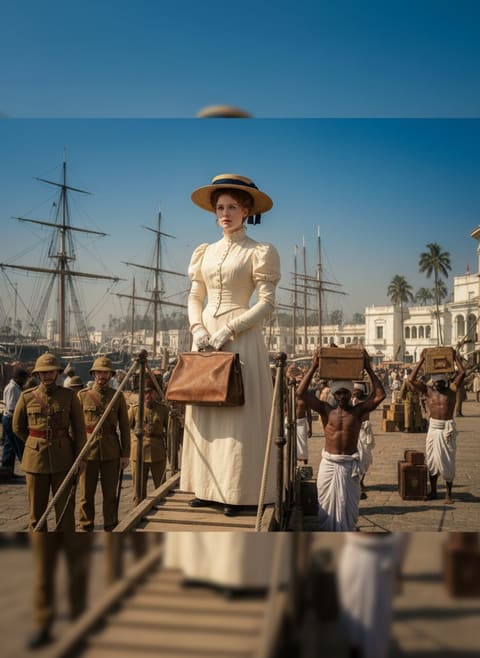
Read next: When the Lascars Crewed the Empire's Ships and Got Nothing
Each tiny cannon is carefully positioned with precision, the masts stretch toward imagined skies, and the sails unfurl as if they could once catch a gale. The HMS Victory is more than ship; it is an icon marking Britain's naval strength and strategic prowess.
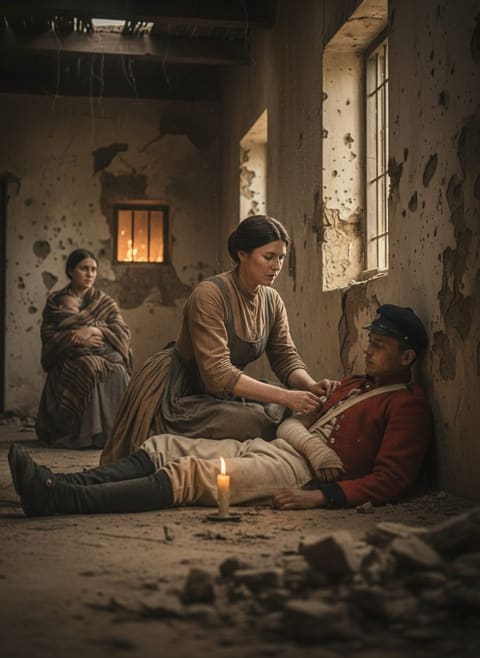
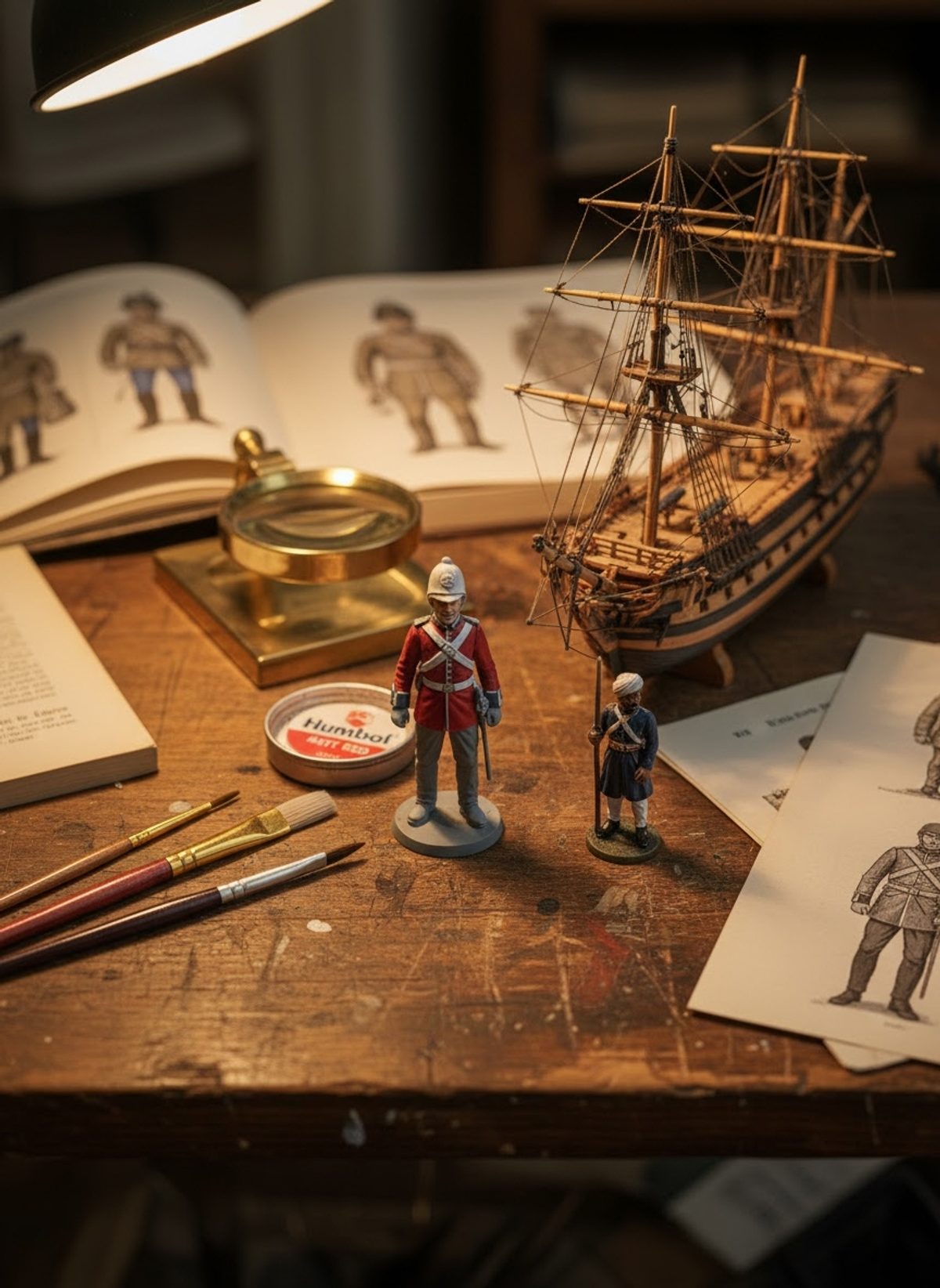
Yet, the seas were not the Empire’s only arena of influence. On land, modelers turn their attention to the Zulu War redcoats or the stout blockhouses of the Boer War. The vibrant crimson of a redcoat’s uniform, contrasting against the arid landscape of Africa, tells a story of courage and conflict.
Each button, each thread that the adept historian-modeler adds, whispers tales of heroism and hardship. Meanwhile, the Boer War's blockhouses—those squat structures of defense rising from South Africa’s rugged terrain—stand as silent sentinels in miniature form, bringing to life a time when ingenuity in warfare strategy marked the evolving tides of Empire control.
Both land and sea models capture the times when these realms were inseparable extensions of Britain's imperial ambitions. They remind us why control over seas was crucial and how infrastructure on land consolidated that control, maintaining order across vast colonies with challenging terrains.
Sails to Saddles: Cavalry and Colonies
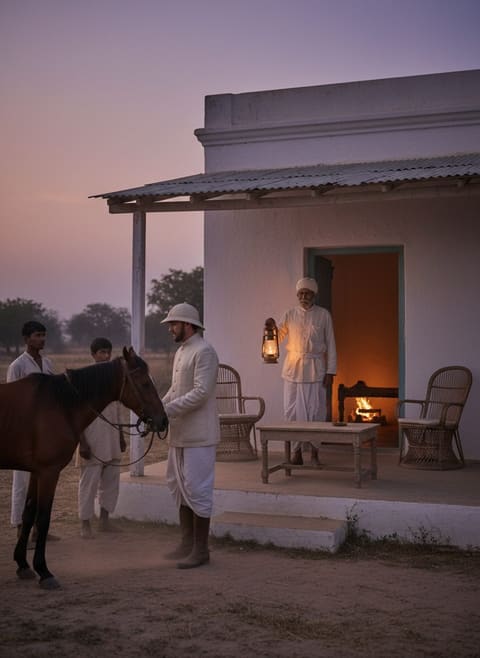
Migrating from the scale elegance of marine and military monoliths to the intricate artistry required by cavalry models, builders find a rich tapestry stretched across territories from India to Africa. The Bengal Lancers, with their turbans and spears, embody the symbiotic amalgamation of East meeting West through military alliance and cultural exchange.
Modelers dedicating their craft to these figures painstakingly bring to life the vivid blues and bold reds of their uniforms, capturing the lancers’ glory as part of the British Indian Army.
By carefully painting the regalia of the Lancers, historians recreate more than a soldier; they capture a persona etched with narratives of loyalty and colonial complexity. These figures muster the Empire's reach into the Indian subcontinent, a place where cultures intertwined, creating legacies that continue to shape modern societies.
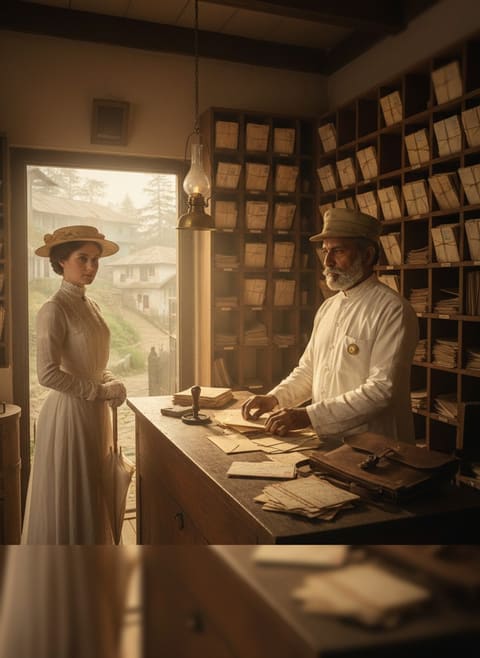
Read next: When the Box Wallah Knocked on Every Door in India, 1880
Additionally, model enthusiasts often find themselves seduced by the allure of the pith helmet, an emblematic element of health and fortitude against the tropical heat. Whether atop a young lieutenant in the Sudan or covering the head of an explorer deep within the Congo, the pith helmet represents adaptability, conquest, and often overlooked, the unwavering spirit of adventure.
Each rivet, each contour on the pith helmets meticulously crafted in miniature serves as an homage to those who wore them on expeditions and skirmishes far from home.
The Past in Scale: Reflections in Miniature
These models are more than mere collections of pieces; they are manifestations of enthusiasm and a keen desire to learn. Scale modelers are historians in their own right, bringing to life the sweeping narratives of a long-past empire. The Empire's legacy is not without its complexities, comprising stories of both imperial grandeur and its darker shadows. Through the meticulous creation of these models, enthusiasts distill the triumphs and tribulations within the British Empire's timeline.
In every well-measured beam or finely detailed attire, they preserve stories that textbooks often simplify or overlook. Modelers act as time-travelers of sorts, piecing together what history has left fractured with loss or indifference. Their models serve as pedagogical tools, revealing the Empire’s vast tapestry one painstakingly crafted piece at a time. Viewing a scale HMS Victory provoke thoughts on Britain's old maritime strategies, while a Bengal Lancer brings colonial history into stark relief.
These miniaturized creations do more than re-enchant history—they challenge it, invite dialogue, and expose the complexity of empire. Through their hands and eyes, modelers ensure history remains tactile, engaging, and ever-evolving. Will the next model on your workbench expand the dialogue or delve deeper into this empire that shaped our world? The legends they left out of the textbooks lie waiting for discovery on your workbench.