
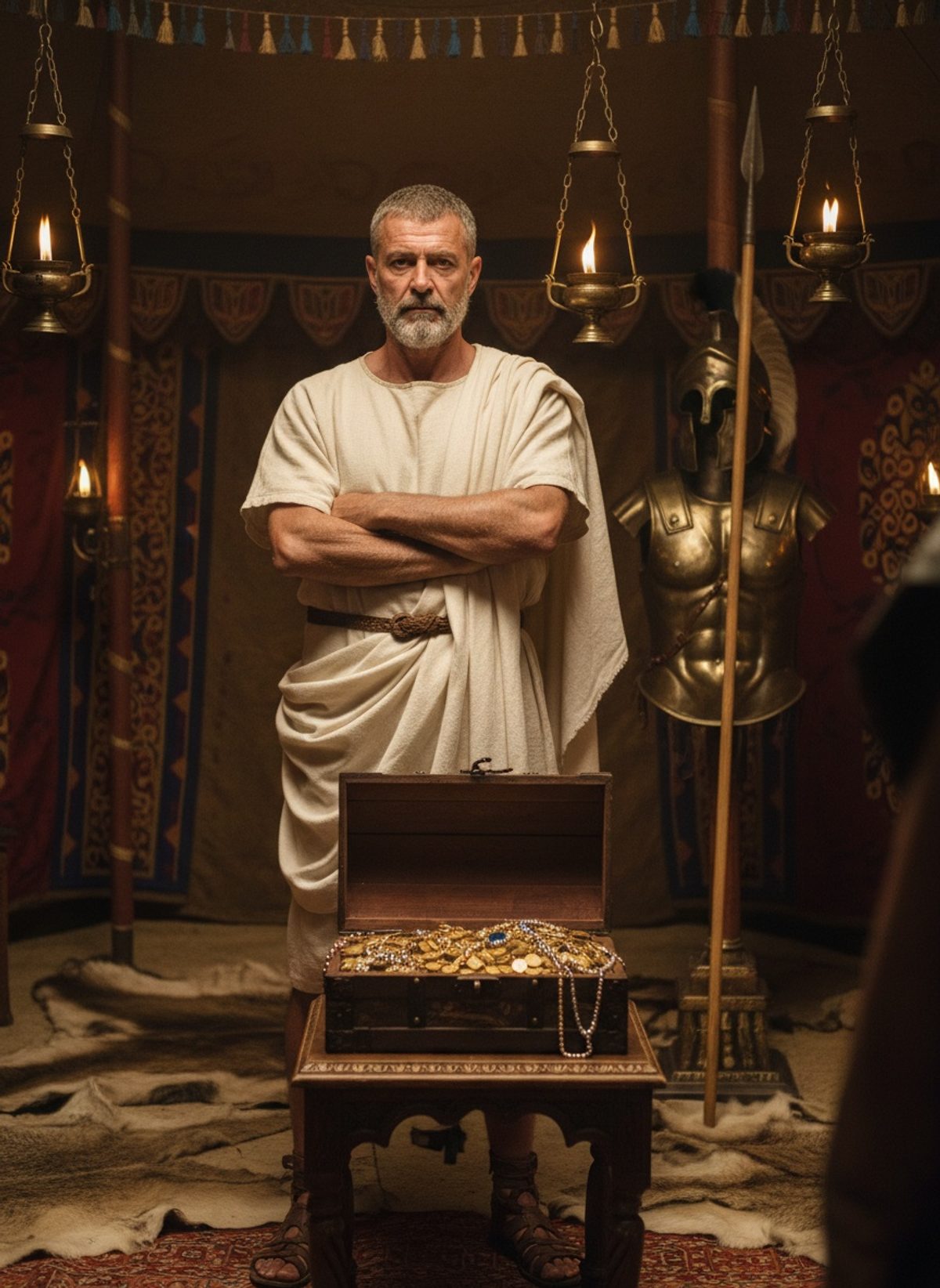
He was a man of extraordinary principle. Gaius Fabricius Luscinus was practically unknown outside his circle, yet he would leave a mark on Rome's character that fortune could never tarnish.
The Flamboyant King and the Stalwart Roman
In 280 BCE, Rome stood on the brink of what many feared was its impending doom. At the forefront of this crisis was the charismatic and cunning Greek king, Pyrrhus of Epirus. Recently arrived on the Italian peninsula, Pyrrhus had not only defeated Roman arms at Heraclea but also held numerous Roman prisoners captive. His military prowess impressed allies and foes alike, yet his ambitions stretched far beyond mere territorial conquest. Where swords failed, he believed silver could succeed.
Unlike Pyrrhus, Gaius Fabricius Luscinus wasn't a man of riches or ostentation. A man of humble beginnings known for his austere lifestyle, Fabricius embodied the Roman virtues of duty and honor. These were principles he was not merely born into but had rigorously cultivated over years of public service. His contemporaries viewed him as a rather unexciting figure, but it was precisely this ordinariness that made him extraordinary in an era filled with opportunistic power players.
When summoned by Pyrrhus with the promise of luxury, lands, and power, Fabricius found himself in a lavish camp far removed from Spartan Rome. But the allure of wealth didn't cloud his judgment. Surrounded by opulence, he kept his focus on his mission: negotiating the release of Roman captives. It wasn’t long before Pyrrhus, always the tactician, attempted to bend Fabricius's will with treasures. Rather than negotiate, Fabricius listened, pondered, and ultimately declined, demonstrating an unyielding spirit that neither gold nor glitter could compromise.
Read next: Todd Beamer Never Made It Home. His Daughter Did.
Unyielding Resolve in a Power Play
The scene was set for a clash not just of armies but of ideals. As Fabricius walked away from what many would see as a once-in-a-lifetime offer, it signaled something profound to both the Greeks and his fellow Romans. News spread quickly that Fabricius had rejected the royal bribe, leaving Pyrrhus both incredulous and impressed—a testimony to a steadfastness that even a monarch’s wealth couldn’t sway. Pyrrhus's response was to call Fabricius a man who "could not be moved by either money or fear." Little did he know that this straightforward refusal would ripple through Rome like an awakening call.
Fabricius’s act wasn’t merely an individual’s decision but a crystallization of Roman values at a time of severe crisis. By keeping his integrity intact, he painted Rome in hues that rivaled even the gold he had been promised. His resolve was buoyed by the ancient ideals of virtus and gravitas—virtues that shaped the early Republic and would continue to define it in the centuries to come. In doing so, he strengthened Rome’s cornerstone: the belief in a state that no foreign gold could undermine.
Back in Rome, news of Fabricius’s encounter seeped into the collective consciousness and slowly transformed into legend. It became a teaching moment, a narrative of moral resilience that even generations later, young Romans would internalize as they were taught the values of their Republic. His uncloaked rejection of bribery became an unspoken mandate for public service that no civic handbook could author.
The Legacy Beyond Riches
The encounter between Pyrrhus and Fabricius wasn't merely an episode of diplomatic negotiation but a defining moment of character versus riches. In the foreboding shadows of the Punic Wars and the eventual rise of the Roman Empire, these quiet stories often serve as more lasting lessons than treaties or battles. The stoic resistance of Fabricius against Pyrrhic opulence illustrates the strength of cultural values amid external pressures and temptations.
By saying no to Pyrrhus, Fabricius demonstrated that Rome's greatest strength lay in its ideals—truths forged not in markets of silver but in battlefields of principle. Although not as visibly spectacular as military achievements, these silent skirmishes of morality would inform Rome's identity long after the cries of war had faded.
Service to one’s nation is not always recorded in annals of conquest but often in silent pauses where the choice to stand firm offers the most potent legacy. Fabricius’s decision teaches that integrity can be as indomitable a defense as any wall or legion. His simple but profound decision ensured that Rome would be more than just another empire; it ennobled the city as a beacon of values that gold couldn't corrode. And through this triumph of spirit over material wealth, we are compelled to ponder: In today’s world, how often do we, like Fabricius, walk away?