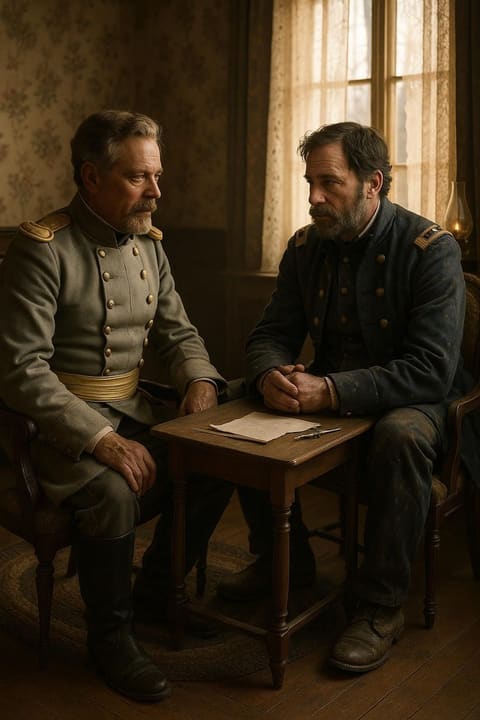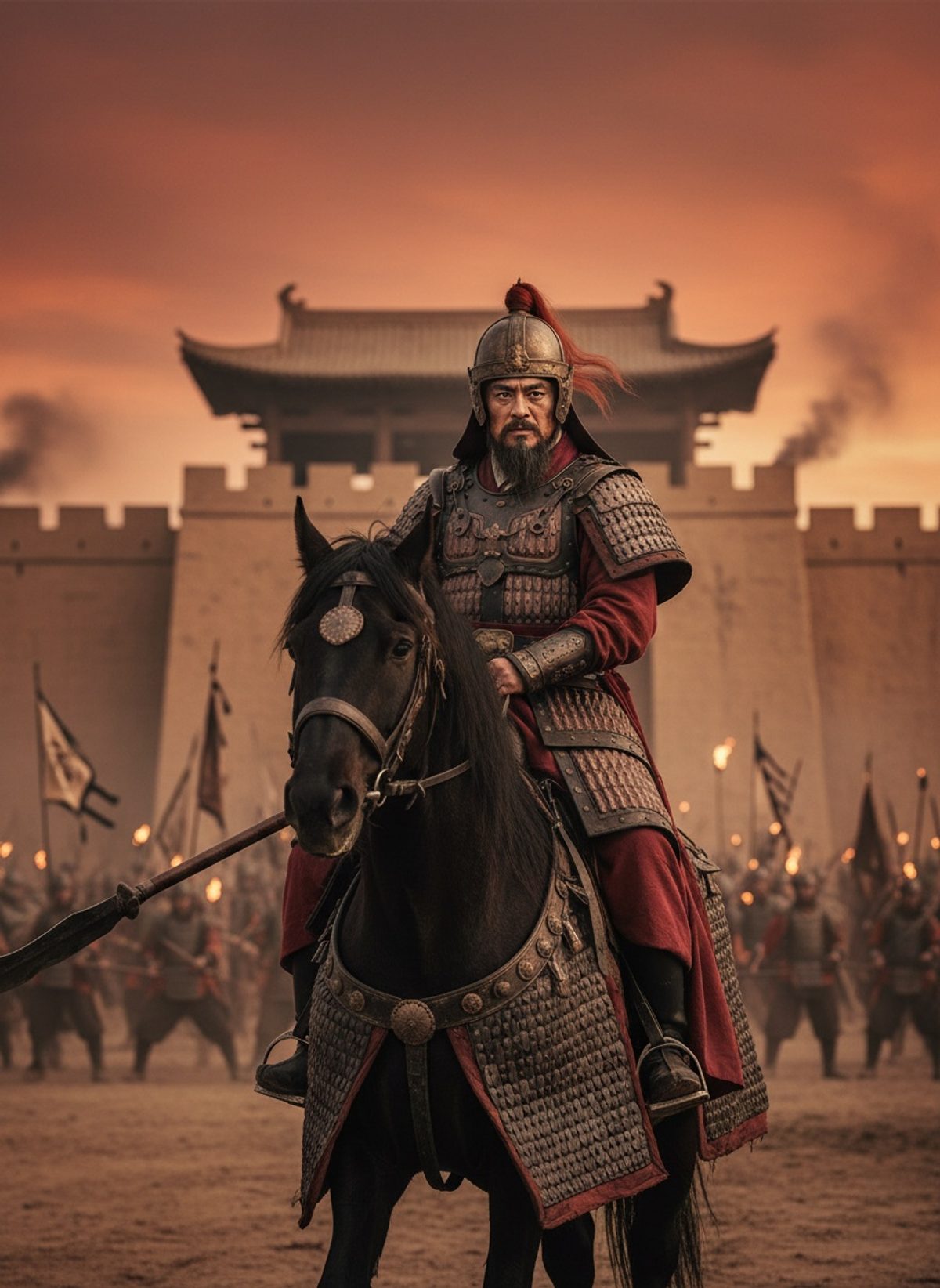
198 CE. The dust of Xiapi’s crumbling walls filled the air, a suffocating reminder of the city’s imminent fall. Under the relentless siege of Cao Cao’s forces, with provisions dwindling and morale fleeting, General Guan Yu faced the inevitable defeat that had been inching closer with every passing day. This was not a mere military engagement; it was an encounter steeped in legend, where personal honor would weigh as heavily as the battle’s outcome.
The backdrop to this showdown lay in the turbulent waning years of the Han dynasty, a time marked by chaos and ambition. Cao Cao, the ever-cunning warlord, had slowly consolidated power, deftly maneuvering through the political labyrinth of the era. His victories in central China against formidable adversaries like Lü Bu and the celebrated Yuan Shao had only solidified his feared reputation. Now, the city of Xiapi was one more piece in his effort to tightly knit the fragmented realms of China under his iron will.
In the city, General Guan Yu stood not just as a soldier but a paragon of loyalty and righteousness. Known for his striking visage—a red face and long, flowing beard—he was as iconic as he was respected. But beyond these legendary traits, Guan Yu was also known for his utmost fidelity to his brother in arms, Liu Bei, imprisoned by circumstance yet driven by honor.
As Cao Cao encircled Xiapi, his eyes glittered with more than just the prospect of territorial gain. Capturing Guan Yu was akin to obtaining a cornerstone of power, for his reputation preceded him as the most fearsome general in the fractured land of China. Cao Cao, with his acute understanding of human psyche and affection for poetic nuance, was driven to convert Guan Yu from foe to ally. He devised a plan as clever as it was audacious.
Read next: The Lifeboat Held 12. Bernie Webber Brought Home 36.
Even amidst the tightening noose of siege, news reached Guan Yu. His beloved comrade Liu Bei was perceived to be defeated, perhaps even dead. The illusion of hopelessness was masterfully woven into the reality of the siege. However, surrender alone did not color Guan Yu's decisions; honor was ever his guiding light. So under a white flag, not of surrender, but as a beacon of parley, he rode out, alone.
No doubt the sight was mesmerizing—a single rider on horseback, cloaked in serenity amidst the storm of warfare. His meeting with Cao Cao was a moment frozen in time, a quiet yet momentous exchange amidst the chaos. Cao Cao, admiring of talent and charismatic persuasion channeled through cunning prowess, offered Guan Yu more than just survival. Wealth, rank, and safety were laid tantalizingly at his feet.
Guan Yu accepted, but not without setting forth stern conditions—ones woven into the very fabric of his loyalty and honor. Firstly, his acceptance was conditional upon the sanctuary for the remainder of Liu Bei's family. Secondly, the very armor and weaponry bestowed upon him as gifts from Cao Cao were cloaked in symbolism of loyalty to the Han, the beleaguered dynasty he still served, despite its guise of decline. Lastly, there was a promise implicit yet inexorable—that should Liu Bei reappear, Guan Yu's departure would be as silent as the wind.
For the time being, Guan Yu served obediently under Cao Cao, earning merit and trust through valor on the battlefield. His prowess did not diminish, and Cao Cao, though mindful of the dragon he harbored, delighted in the spectacle and strength Guan Yu brought to his campaigns. Within the span of months, the balance of power shifted in Cao Cao’s favor, reinforced by Guan Yu’s deeds on the field.
Read next: He Had One Order. He Ignored It. Thousands Lived.
And then, like a long-forgotten whisper carried on the breeze, word came of Liu Bei. He lived. A reunion would transcend even the poetry of war, eluding the hearts of those overcome by the lure of ambition. Without fear or falter, with the swiftness as startling as it was silent, Guan Yu rode away—loyal not to opportunity’s call but to a brother’s bond, bounding distances as effortlessly as the tales destined to follow.
The moment of departure, seamless and eloquent in its execution, underscored the transient nature of power governed by ambition alone. Cao Cao, though vexed by the loss of his esteemed general, remained ever the master of patience. The wild dance of destiny, warlord against statesman, was not a tale of loss but rather the commemoration of letters and stories left in its wake. As the lines between ally and foe blurred, so too did the impact of loyalty and honor transcend mere victory or defeat.
Why does this story hold us still, beyond the march of centuries? Guan Yu’s ride from Xiapi captures a narrative of enduring principles—the relentless tides of loyalty and duty that cut through the transient triumphs of warlike conquests. We witness a story beyond strategic victories, perhaps into the essence of human honor. In an era shadowed by fleeting powers, the actions of one man shrouded in red and steel echo into the echoes of history, intertwined with a brotherly bond that neither time nor empire could sunder.